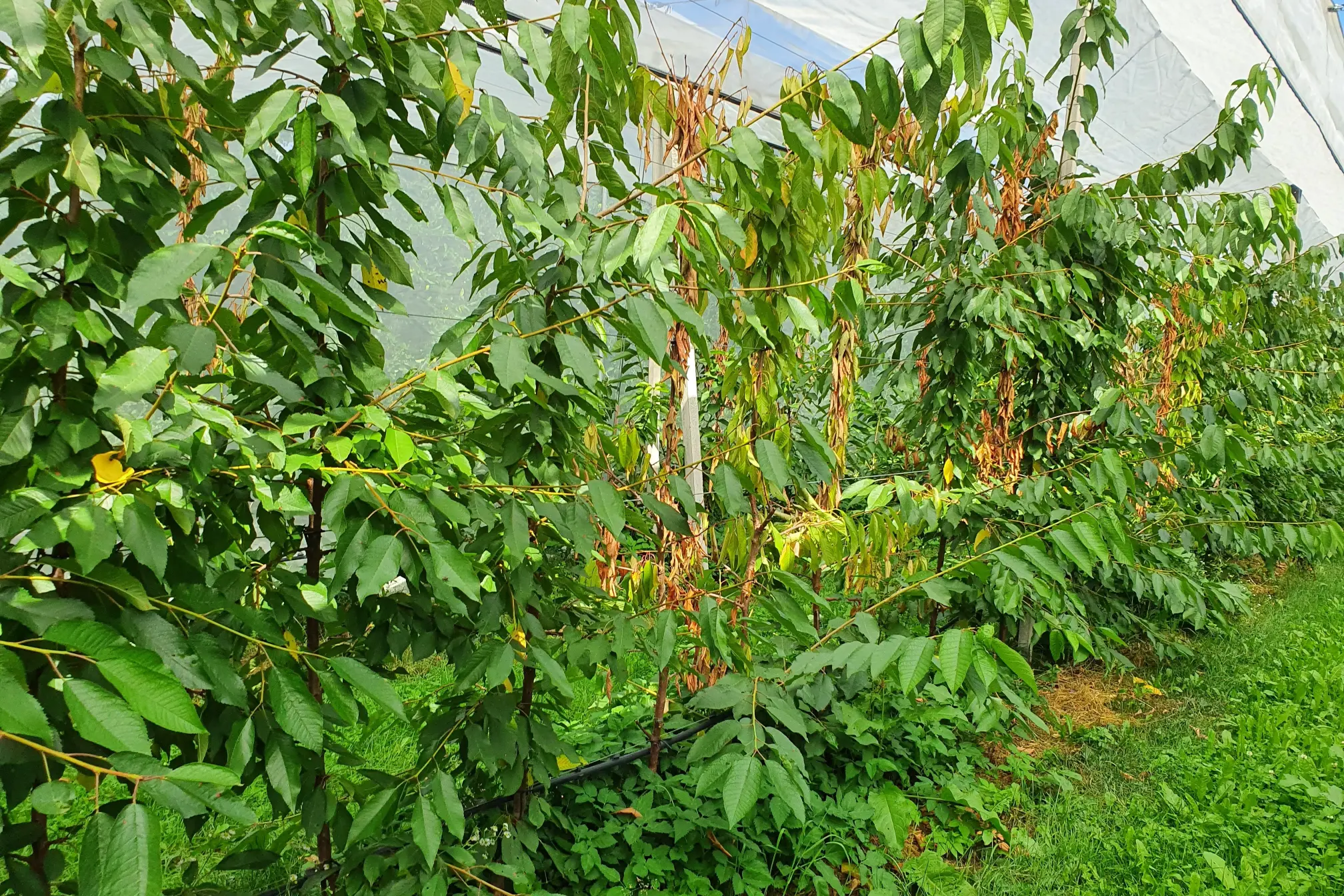
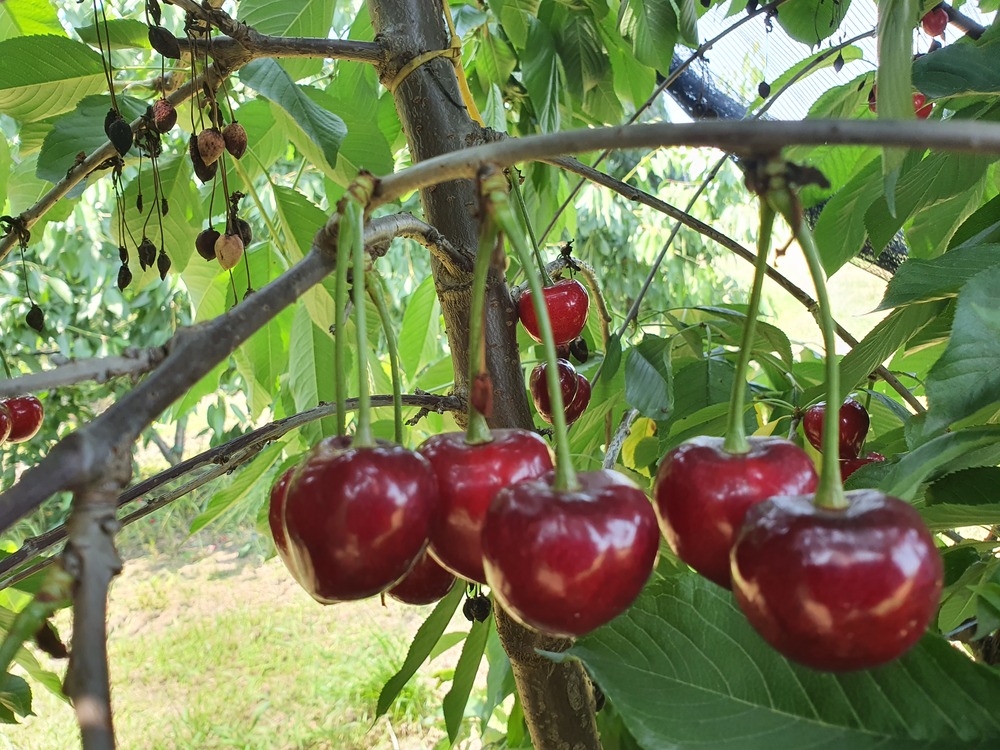
Over the past ten years, Peruvian agriculture has cautiously assessed a possibility that until recently seemed unlikely: producing cherries with commercial potential.
Agronomic trials carried out in high-Andean regions such as Arequipa, Junín, Ayacucho, Huancayo, Cajamarca and Huaraz have made it possible to identify varieties with lower chilling requirements, greater tolerance to temperature fluctuations and fruit size and firmness compatible with international standards.
In this article, we take a closer look at the efforts currently underway in cherry cultivation. Will it follow in the footsteps of blueberries?
The Ministry of Development
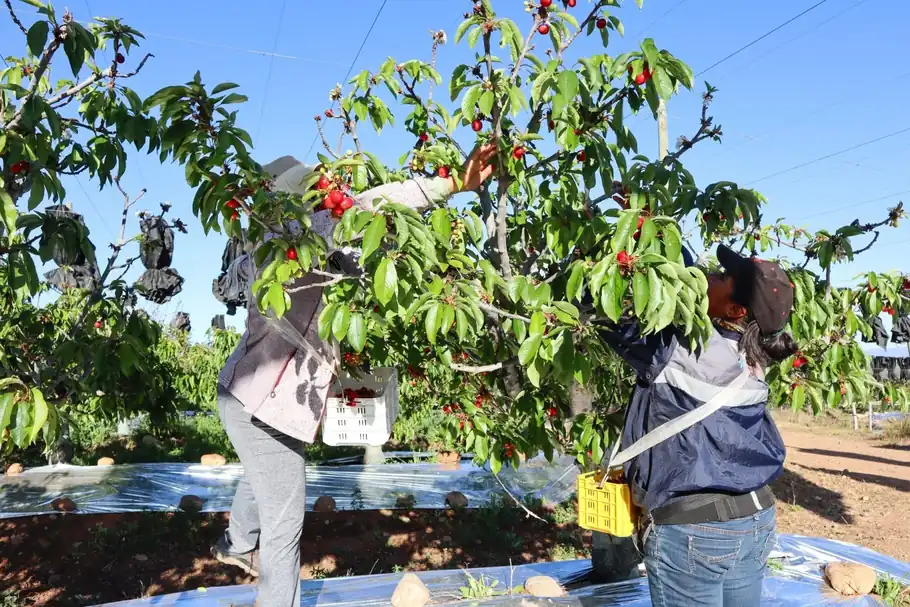
The Ministry of Agrarian Development and Irrigation (Midagri), together with INIA, Senasa and agro-export companies, estimates that 2026 could mark a turning point, with the first commercially valuable harvests.
However, consolidating an export industry would require between 7 and 10 years, given the highly technical and delicate nature of the crop.
Unlike blueberries, which enabled Peru to exceed USD 1.88 billion annually (approximately EUR 1.73 billion) in exports thanks to varieties adapted to warm climates, cherries require prolonged cold (between 800 and 1,500 hours below 7°C) followed by a defined warm period to achieve color, sweetness and firmness.
This limitation explains why cultivation is not viable on the Peruvian coast and concentrates its potential in the high-altitude inter-Andean valleys.
Indicators and Monitoring
In this context, to monitor the actual progress of the project, specialists propose several key indicators: i) experimental hectares established, ii) yield per hectare, iii) percentage of varieties authorized after phytosanitary quarantine and iv) average time to production.
Without these indicators, they warn, the risk of overestimating expectations is high.
China and Chancay: an unprecedented logistical window.
It is particularly relevant to emphasize that the attractiveness of cherries is directly linked to China, the world’s largest importer.
Chinese Market and Global Scenario
In 2023 alone, that market moved approximately USD 3 billion (around EUR 2.76 billion), driven by the strong cultural value of the fruit during Lunar New Year.
Chile currently dominates over 90% of this market, with exports between January and October 2025 reaching 463,565 tons worth USD 1.846 billion (approximately EUR 1.70 billion).
However, the global scenario is beginning to show cracks.
Climate-related issues in Turkey, the United States and Europe could lead to a decline of more than 10% in global production in the 2025/26 campaign, according to the USDA.
Logistics and the Early Window
This context opens a window for new suppliers, provided they can guarantee quality and logistical precision.
Here comes into play one of the most relevant factors for Peru: the Chancay mega port.
With its entry into operation, maritime transit time to Asia could be reduced from 33–40 days to just 21–23 days, a crucial difference for a highly perishable fruit.
This advantage would allow Peru to target the so-called “early window” (September and early October), before the massive entry of Chilean fruit.
Prices and Competitive Strategy
During that period, prices in China can range between USD 80 and 120 per kilo (approximately EUR 74–110), compared to USD 10–12 (around EUR 9–11) typical of the peak season.
However, competing in this window requires extreme precision.
Key indicators include total transit time, percentage of premium fruit upon arrival, average harvest date, logistics cost per kilo and speed in opening phytosanitary protocols with China.
If this strategy consolidates, associations such as AGAP estimate that cherries could match or even surpass, between 2028 and 2035, the revenues currently generated by Peruvian blueberries.
Territorial Impact, Health and Sustainability
Beyond the international market, cherries could become a driver of rural development in high-Andean areas, where productive alternatives are limited.
Establishing orchards would require formal employment, technified irrigation, cold infrastructure, rural road networks and specialized technical training, integrating small producers into high value-added supply chains.
Impact can be measured through indicators such as direct jobs generated per region, hectares under technified irrigation and percentage of small farmers integrated into the export chain.
In a context where family farming still concentrates a significant share of rural poverty, this approach is particularly relevant.
Benefits and Food Policies
At the same time, several international studies highlight the health benefits of cherries: reduction of inflammatory markers, improved blood pressure and high content of antioxidants such as anthocyanins, quercetin and melatonin.
In a country with rising prevalence of obesity and hypertension, cultivation also opens opportunities for healthy food policies, measurable through per capita consumption, access to antioxidant-rich fruit and incidence of metabolic diseases.
Finally, the underlying challenge will be sustainability.
Peru has the advantage of starting from scratch, incorporating best practices from the outset.
The Cherry on Top
Indicators such as water footprint per kilo produced, environmentally certified surfaces and use of agrochemicals per hectare will be decisive to ensure that Peruvian cherries are not only competitive, but also responsible.
Cherries will not be the next blueberry in terms of speed or volume.
All signs indicate that this will be a highly technical, niche crop, but with potentially high returns.
The strategic question is no longer whether Peru can produce cherries, but what type of cherries it intends to produce, in which territories and with what level of standards.
If the country succeeds in articulating scientific research, modern logistics, territorial development and sustainability, cherries could become, between 2026 and 2035, one of the most sophisticated and strategic projects of modern Peruvian agriculture.
Source: Gestion
Image source: Vigoflex
Cherry Times - All rights reserved