Far from being a secondary phase, post-harvest defines reserve accumulation, tree recovery, and what future fruit quality will be.
Integrated programs and regenerative practices are gaining ground in a sector that is once again seeking to focus on quality.
The crucial role of the post-harvest phase
The harvested fruit is the result not only of the nutrition supplied to trees after flowering and during fruit development, but also of the combined applications and management practices implemented throughout the entire season.
Previously considered a less important phase in this equation, post-harvest life on the tree represents a critical moment to ensure nutrient flow.
"Cherry trees produce fruit mainly based on the reserves accumulated during the previous year," explains Dr. Rodrigo Ortega, an expert in soil fertility, plant nutrition, and precision agriculture.
He adds that, alongside fruit formation, the tree develops its photosynthetic structure, which contributes to production.
As the expert explains, after this period trees are depleted of reserves and show partial canopy deterioration due to the mechanical action of harvesting.
"In addition, some growers reduce irrigation during harvest, so we end up with fairly stressed trees that need to recover."
Agronomic management programs for this stage of the season include a wide range of products and technologies, in which biological solutions and regenerative agriculture strategies are playing an increasingly important role.
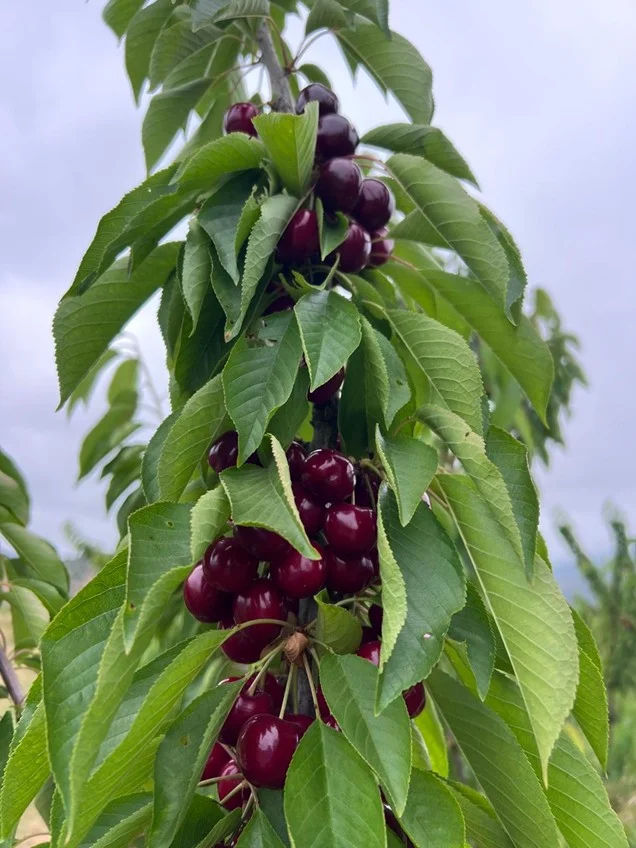
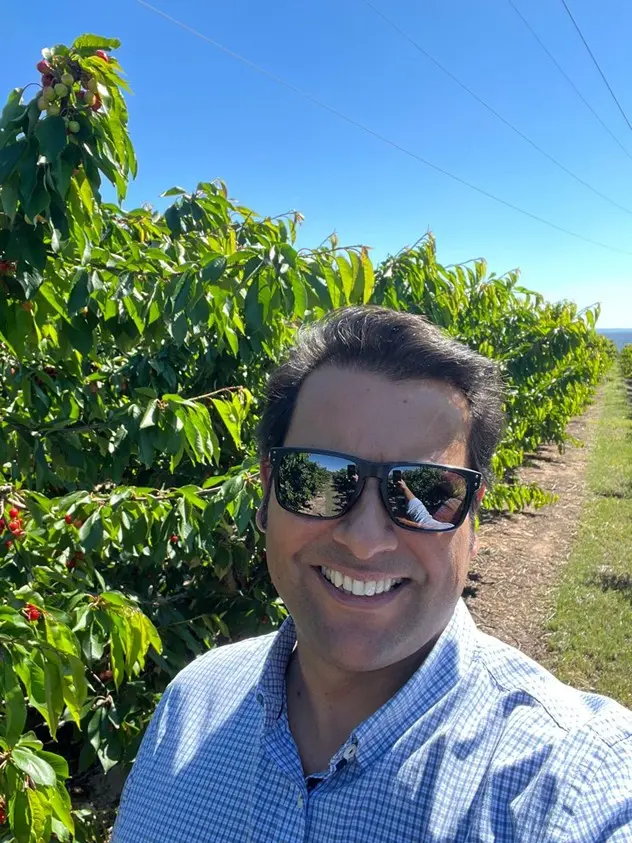
ORGANIC CHERRY ORCHARD IN SAGRADA FAMILIA. IMAGE COURTESY OF LORENA SEPÚLVEDA.
Working toward proper reserve accumulation
"After harvest, the tree has given everything to the fruit, and the combination of nutritional depletion and climatic stress creates suboptimal conditions for continued plant production," says Diego Romero, a cherry production consultant.
One of the consultant’s first recommendations is not to reduce irrigation, as fruit for the following season is being prepared, where "water becomes a stress trigger if not managed properly, especially during peak demand periods."
Dr. Ortega agrees and adds that "proper irrigation management is essential for system functionality."
To help the plant recover and optimally accumulate carbohydrate and nutrient reserves for the following season, post-harvest care should begin as early as possible.
Lorena Sepúlveda, an organic cherry producer from Sagrada Familia, explains that in her orchard this phase begins the day after harvest.
"That’s when we start providing nutritional support, but above all we focus on improving nutrient retention by managing soil structure with highly concentrated humic acids."
Nutritional management and biological strategies
We also carry out root growth biostimulation so that plants absorb nutrients better and more efficiently."
She explains that she nourishes her orchards with protein-rich NPK fertilizer derived from fresh fish hydrolysates, so that the plant does not expend energy assimilating nutrients.
Rodrigo Ortega suggests conducting a soil analysis to determine nitrogen balance based on actual yield.
"If supply exceeds actual demand, additional nitrogen is unnecessary. However, a nitrification inhibitor is still applied to the soil to minimize N losses and ensure that ammonium (NH₄⁺), which contributes to organic matter mineralization, can be metabolized at the root level," he notes.
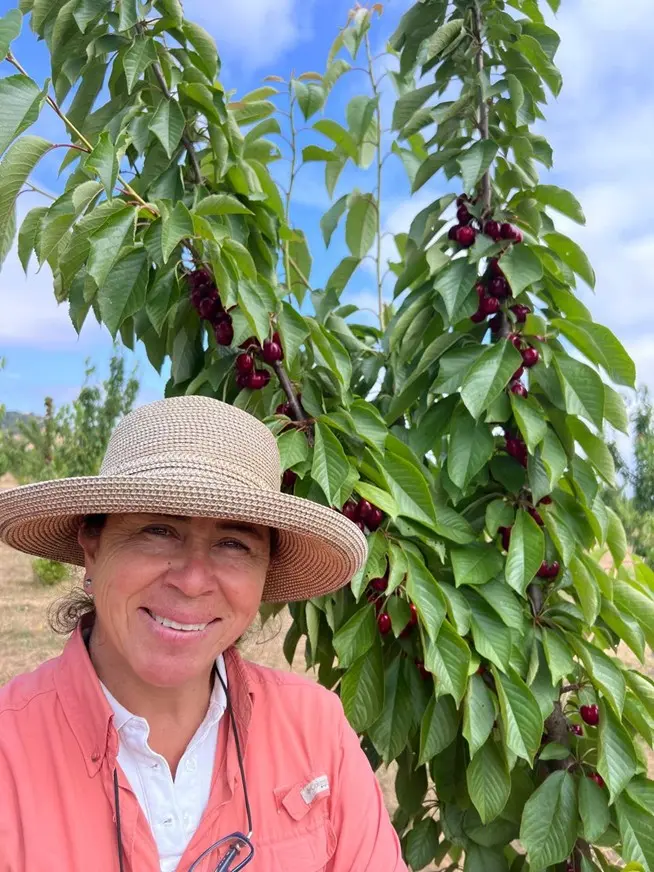
IN LORENA SEPÚLVEDA’S ORCHARD IN SAGRADA FAMILIA, POST-HARVEST BEGINS THE DAY AFTER HARVEST, WHEN NUTRITIONAL SUPPORT IS PROVIDED.
In fertigation-based nutrition, Romero focuses on leveraging the root growth phase with applications of Ascophyllum nodosum, a brown seaweed that promotes root growth and development, along with humic acids as soil-structuring agents and a readily available carbon source for the plant.
"We also aim to increase the number of soil microorganisms, which act in synergy with the plant and, in addition, solubilize nutrients so that the plant can absorb them," he explains, referring to a combined strategy aimed at achieving a functional root structure ready for the next phase.
Quality outcomes and biological integration
Regarding microorganism incorporation, Sepúlveda explains that she applies them to revitalize the soil, protect the rhizosphere of the trees, and use them as biofertilizers.
At the foliar level, the strategy is to maintain an active canopy capable of tolerating radiation stress, for which nitrogen sources are applied along with other nutrients such as zinc, transparent sun filters and biostimulants, which may be seaweed or plant extracts.
Regarding the effects of these management practices on fruit characteristics, Ortega states that "accumulating a good level of reserves is essential for producing quality fruit.
However, adequate levels of other key nutrients, such as calcium, must also be present in the soil."
The expert adds that during the post-harvest phase, soil amendments can be applied to increase calcium levels or correct deficiencies of phosphorus, potassium, and magnesium.
"Firm fruit that ships properly requires good calcium levels and moderate concentrations of nitrogen," he states.
Integrated management and future potential
Whether driven by market demands, restrictions on the use of certain molecules, or the inclusion of more sustainable practices, biological products have carved out a niche in Chilean cherry production.
"Today, most orchards implement what we call integrated nutrient management (INM), an essential component of regenerative agriculture, which combines the use of biological products (biostimulants/amendments and microorganisms) with conventional nutrients and nitrification inhibitors, delivering excellent results.
"If good yields and high quality are to be achieved, management practices must be integrated," emphasizes Rodrigo Ortega.
Many producers have incorporated biological inputs into their processes in response to problems that agrochemicals were unable to solve.
"The use of biological tools in organic production provides inputs to solve conventional problems. I believe it is very important today to adopt this perspective of addressing conventional problems with biological solutions," Romero emphasizes.
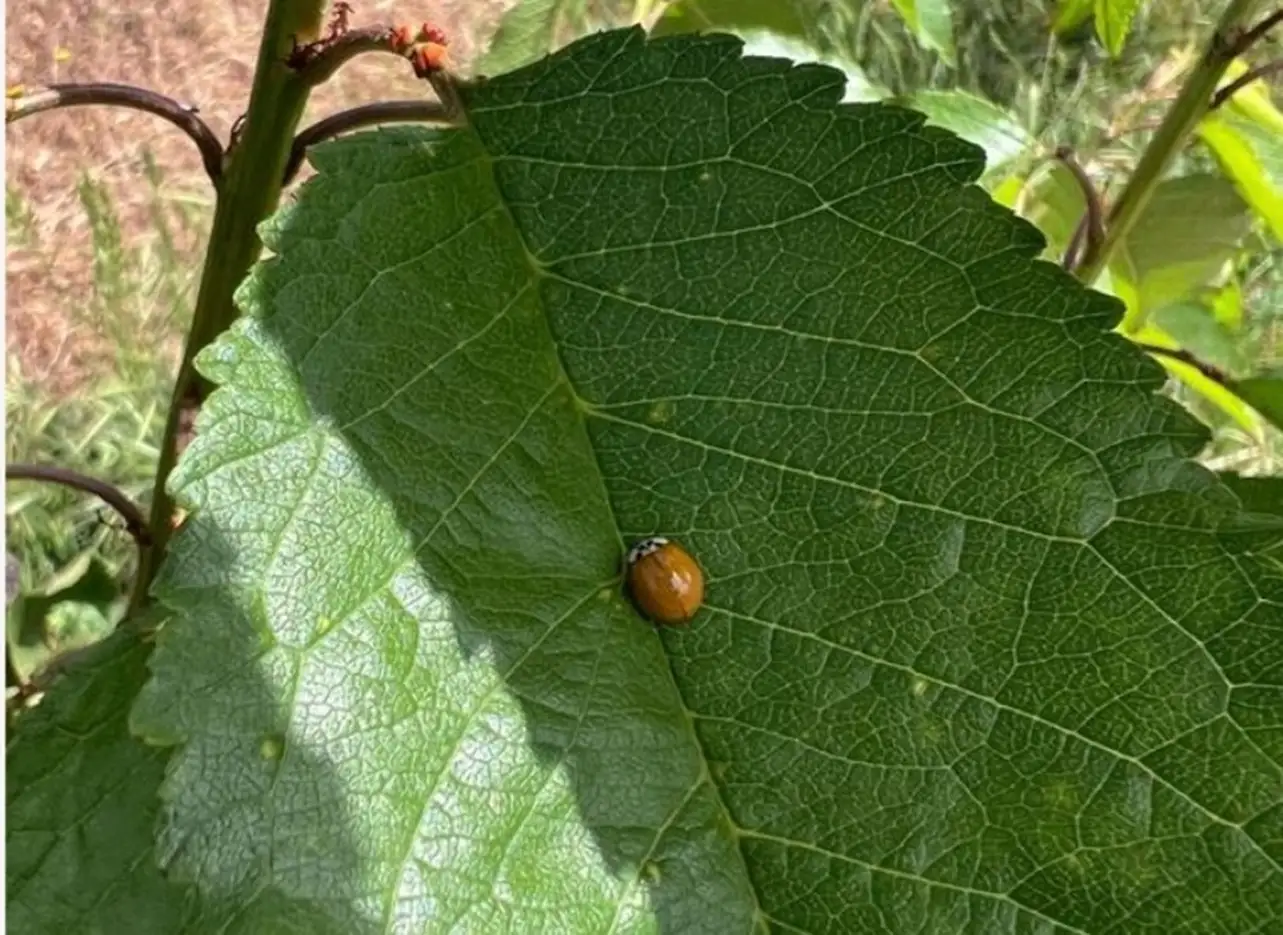
Thanks to organic farming practices, Lorena Sepúlveda notes that extensive biodiversity has developed in her orchard, where ladybugs play a biological control role against pests.
"The biodiversity we have generated has created a balanced ecosystem," she emphasizes.
Organic production and the KISS system
Although the area currently dedicated to organic cherry production in Chile is limited, it is expected to continue expanding, both through new producers and conventional orchards seeking to diversify their offering.
Contexts such as last season, when yields were significantly lower than usual, have generated increased interest in exploring alternative options.
"IN SITUATIONS LIKE LAST SEASON, ORGANIC PRODUCTION IS AN INTERESTING OPTION," SAID DIEGO ROMERO, CHERRY CONSULTANT.
Diego Romero explains that this is currently an activity oriented toward frozen pulp with good returns.
"Faced with situations like the one we experienced last year, when we had a very poor season, it becomes an attractive activity, and the feeling is that it will continue to grow."
The validation of fully organic nutrition, phytosanitary, and management programs is already a reality in the country, according to the consultant, meaning Chile has the technologies and tools to continue down this path.
Lorena Sepúlveda notes that several conventional producers have visited her orchard with the aim of launching similar projects.
"I offer very competitive prices compared to the intense competition in the conventional sector, where costs have increased significantly in recent seasons."
Regarding shipping conditions for frozen organic cherries, the producer explains that she can harvest fruit without stems, receiving payment fifteen days after shipment.
"We have customers shipping fruit to the United States, Europe, and Japan. The issue is that there are no processing lines for organic fruit. Our volume is too small for a dedicated organic line.," she explains, highlighting current limitations for fresh export.
By overcoming this barrier, Chilean organic cherries have everything they need to reach diversified markets.
"The inputs and tools are available; you just need to know where to source them. There are high-level technological packages we are working with through probiotic nutrition and fertilization, meaning when an equilibrium is achieved in which microorganisms generate optional synergy and their effects are transferred to the plant," explains Lorena Sepúlveda.
The KISS system and efficiency
In a context where labor accounts for over 60% of production costs in a project, it is essential to design orchards that require minimal management to avoid increasing those costs.
The strategy Diego Romero is implementing in his cherry orchards is the KISS system, or Keep It Super Simple, which aims to simplify the management of single-leader trees.
This set of management practices aims to generate yields of 15 to 20 metric tons per hectare in the fourth or fifth year of implementation.
The system uses vigorous rootstocks, without the need to install tree supports, and promotes good fruit quality and size, reducing the need for specialized labor, which increases execution costs.
"Our goal is to minimize human impact on orchards, which translates into overall benefits.
By improving tree structure, light penetration is increased, yields rise, ventilation improves, and sun damage to wood is reduced.
It is a philosophy that goes hand in hand with organic agriculture," explains the consultant.
Source: Mundoagro Magazine, Cherry Special, 2025
Opening image source: Stefano Lugli
Cherry Times – All rights reserved