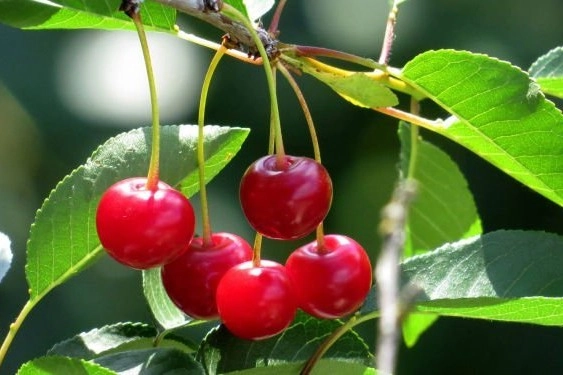
Let’s talk about postharvest. Specifically, about a key point in the cold chain that often goes unnoticed, yet can make the difference between good fruit and exceptional fruit: the raw material storage room.
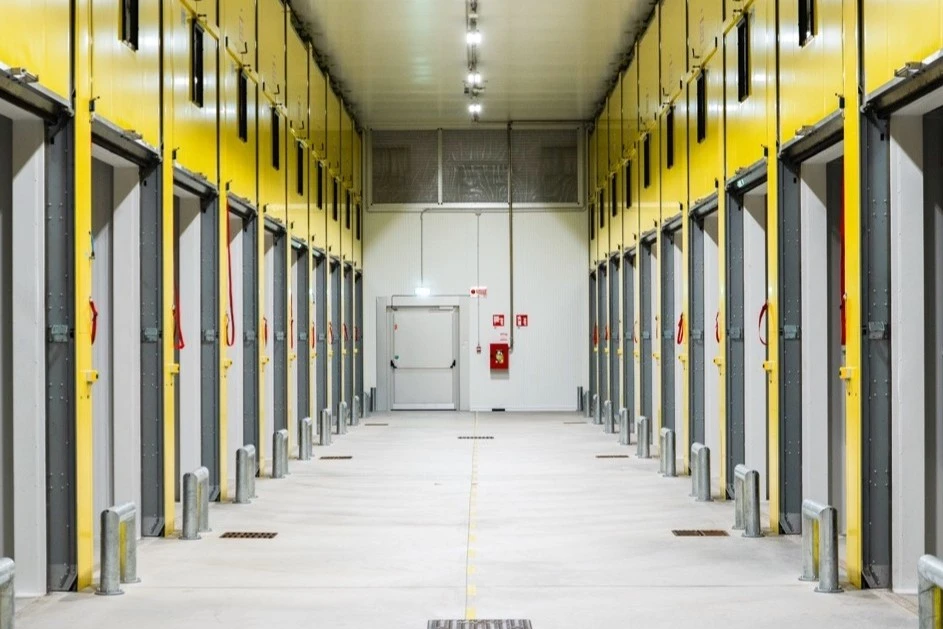
In practice, this room stores the fruit after it passes through the hydrocooler, when it is already pre-cooled and ready to go into the processing and packing lines. However, at the peak of the season, many facilities face a common challenge: they receive more cherries than their lines can process in a single day.
This bottleneck creates a temporary accumulation of fruit, which ends up being stored for several days in the raw material rooms, waiting for its turn to be processed.
What we learned
During the first two days of cold storage, no significant dehydration problems are observed in the cherries. This is because, when coming out of the hydrocooler, the fruit remains covered with a thin film of water. This surface moisture acts as a temporary barrier against water loss, since what evaporates initially is only this free water, not the water contained within the fruit tissues.
However, once this surface moisture evaporates, the actual dehydration process begins. The evaporators, which are the components responsible for maintaining the cold airflow inside the rooms, carry out their function through a mechanism that also reduces the humidity of the air. At first, they remove humidity from the residual hydrocooler water present in the environment. But once this source is exhausted, the system starts extracting moisture directly from the stored fruit.
This occurs because the vapor pressure inside the cherry is higher than that of the surrounding air, especially in a cold and dry environment. This difference generates a gradient that causes water to migrate from the fruit into the environment in an attempt to reach equilibrium. However, since the evaporators continue removing water vapor from the air, this equilibrium is never reached, and the cherry continues to gradually lose moisture.
Measuring to understand
In the 2020-2021 season, due to increased production and delayed operations, cherries were stored in raw material rooms for up to eight consecutive days. Faced with this new scenario, our R&D department at Proyectos Industriales Johnson carried out a test to study dehydration over that period. The result was clear: in eight days, the fruit lost an average of 2.6% of its weight due to dehydration.
To put this into perspective: if we assume that a cherry can lose between 3% and 3.5% of its weight throughout the entire postharvest chain (from harvest to the final consumer), that 2.6% represents over 80% of the total loss, concentrated exclusively in the raw material storage room.
How did we face this challenge?
Some opt for caps or covers, but this implies a compromise between logistical efficiency and practical application of the technology. We decided to take a different path and designed a high-pressure humidification system for the raw material rooms. This system allows for uniform and efficient humidification by simply pressing a button.
Thanks to this system, we managed to reduce dehydration by up to 80% inside the room, without interfering with the daily logistics of the facilities. In other words, we combined efficiency and ease of use, two fundamental pillars for any technology that aims to integrate into a real agricultural process.
Concrete results
Innovation in postharvest is not always about gigantic revolutions; sometimes it’s simply about observing, understanding, and improving a key point in the chain. The raw material room has stopped being just an intermediate step and has become a fundamental link that requires attention and proper technology. The cherry appreciates it. And the market does too.
Many exporting facilities have reported to us that their fruit does not remain more than two days in the raw material rooms, so they consider implementation of this system unnecessary. Under normal conditions, they are right. However, this system was conceived as a key contingency measure, precisely because it is impossible to predict, until the very start of harvest, whether the process will develop more concentrated or distributed over time.
In the case of a highly concentrated harvest, the fruit can easily remain in the rooms for two, three, or even four days, significantly increasing the risk of deterioration. Considering that producing such a delicate fruit implies an investment of approximately $15,000 (about €14,000) per hectare per year, we cannot afford to leave it without adequate protection during the later stages of the process.
This system acts as an additional assurance to maintain the condition and quality of the cherry at destination, ensuring that it arrives in perfect condition at the final market, even in scenarios of highly concentrated harvest or operational contingencies.
Sebastián Johnson Roig
Johnson Industrial Projects
Image credit: Sant'Orsola
Cherry Times - All rights reserved