Climate change is creating increasingly complex challenges for the agricultural sector. Rising temperatures, decreasing water availability, and the growing frequency of extreme weather events make the adoption of innovative water management techniques essential.
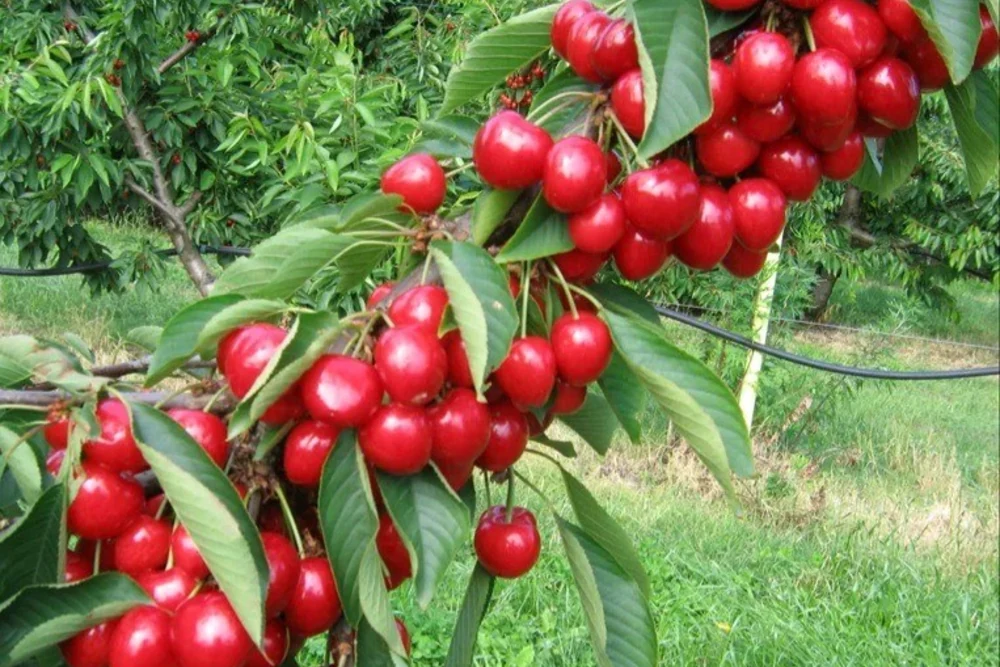
Spain ranks as the second-largest producer of sweet cherries in Europe and the fifth worldwide. The main production areas are located in the regions of Aragón and Extremadura, with the Jerte Valley standing out as the country’s leading cherry-growing district, renowned for the exceptional quality of its fruit.
In this region, cherry orchards are mainly established on mountain slopes and are influenced by a continental Mediterranean climate. Average annual rainfall reaches approximately 1,119 mm, occurring predominantly between November and May. The area experiences pronounced seasonal temperature fluctuations, with hot, dry summers and cold winters, while the mean annual temperature is around 15.8°C.
Environmental context
Altitude and slope orientation significantly affect local environmental conditions, creating substantial differences in temperature, humidity, and water availability across orchards.
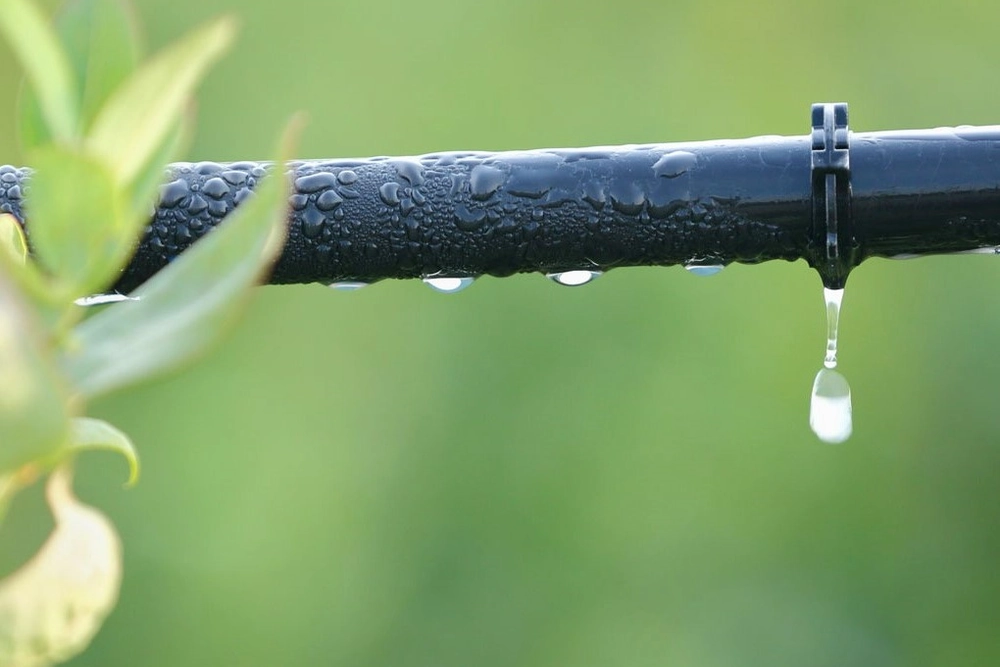
Against this backdrop, a recent study investigated the response of sweet cherry trees (Prunus avium L.) to two contrasting irrigation strategies: a precision irrigation system supplying 25% of crop evapotranspiration and a conventional irrigation approach based on standard agricultural practices.
The research also examined the influence of environmental factors such as altitude and slope exposure, which can alter microclimatic conditions and consequently affect water availability for plants. The findings demonstrate that precision irrigation can significantly improve water stress management.
Irrigation strategies
Trees subjected to the deficit irrigation regime exhibited a more favorable water balance and reduced cumulative stress throughout the growing season. Despite receiving less water, these plants maintained adequate stomatal conductance, a key physiological parameter regulating gas exchange and photosynthesis.
This effect was particularly evident at higher elevations and in sites with more favorable solar exposure. One of the most interesting outcomes concerns fruit quality. Contrary to common expectations, reducing irrigation did not result in lower productivity.
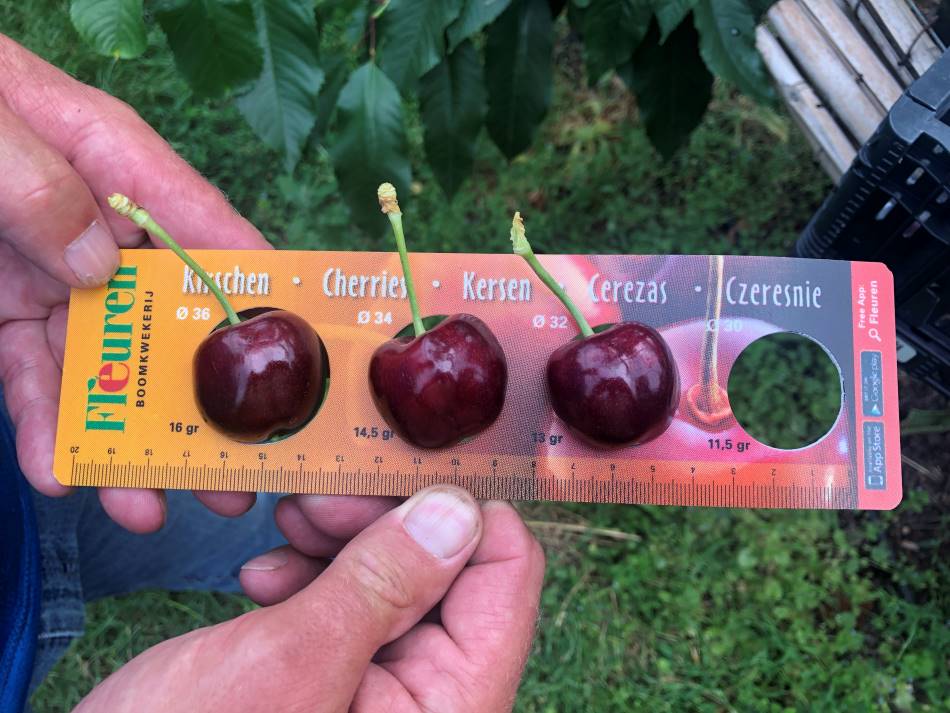
On the contrary, cherry trees receiving less water than under conventional irrigation produced larger fruits and achieved higher yields per tree.
Productive quality
These benefits were especially pronounced in orchards located in environmentally advantageous positions, highlighting the importance of tailoring irrigation practices to local site conditions. The study also explored the physiological and biochemical mechanisms that enable plants to cope with water scarcity.
Under drought stress, cherry trees accumulated greater amounts of proline and soluble sugars, compounds known as osmoprotectants. These molecules play a crucial role in maintaining cellular balance, protecting membranes and other cellular structures from dehydration-induced damage.
Particularly innovative was the analysis of aquaporins, membrane proteins responsible for regulating water transport within plant tissues. Leaves from trees managed under precision irrigation showed increased abundance of aquaporins belonging to the PIP1 and PIP2 families, especially under the most challenging environmental conditions.
Water transport
This finding suggests that plants can actively regulate their internal water transport systems to optimize water use efficiency and enhance drought tolerance.
Overall, the study demonstrates that the effectiveness of irrigation strategies depends not only on the quantity of water supplied but also on the integration of physiological, biochemical, and molecular information into agronomic management. The interaction between precision irrigation, altitude, and slope orientation allows growers to take advantage of local microclimatic conditions, reducing water waste while improving crop resilience and long-term sustainability.
Source: Nieto-Serrano, Elena and Chaparro-Arias, María and Prieto, María Henar and Señorans, Jorge and Calvo-Polanco, Mónica, Precision irrigation improves cherry trees (Prunus avium L.) production and water status in the Jerte Valley (Cáceres). Available at SSRN: https://ssrn.com/abstract=6115427 or http://dx.doi.org/10.2139/ssrn.6115427
Image source: SATI
Melissa Venturi
Ph.D. in Agricultural, Environmental, and Food Sciences and Technologies – Fruit Tree Physiology and Cultivation - Bologna, Italy
Cherry Times - All rights reserved