The first cherries of the season have arrived on the shelves of Romanian retailers, but their debut has the flavor of luxury. In Romania, the price per kilogram ranges between 80 and 100 RON/kg (around €16-20/kg), a figure that is pushing many consumers to limit themselves to small purchases, often just to satisfy the desire for a first taste.
While the markets of Bucharest and Romania’s main cities are mainly dominated by cherries imported from Spain, anticipation is growing for the domestic product, expected in June. Consumers hope that the arrival of Romanian cherries may help bring prices down.
According to Libertatea, cited by logos-press.md, the current price of the first cherries in Romania remains so high that it turns a seasonal fruit into a product perceived as premium. The comparison made by the publication is effective: in one European country, in 2026, cherries cost less than a portion of ice cream on Calle Victoria in Bucharest.
This price gap highlights an increasingly clear difference between European markets, where weather trends, early harvests and local availability are directly affecting the final value paid by consumers.
Portugal, the most affordable market in 2026
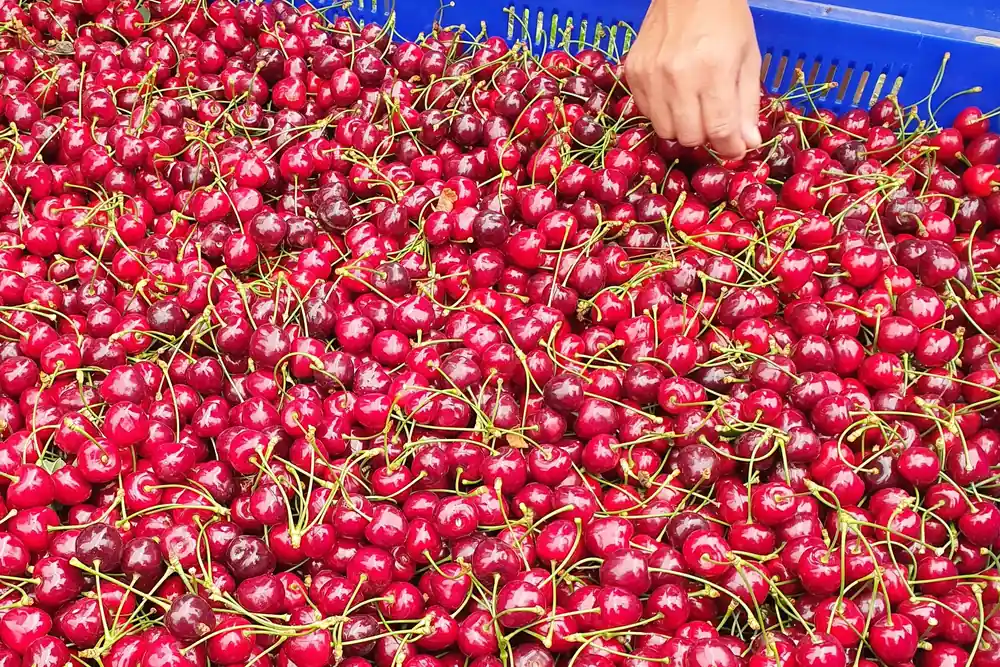
The cheapest destination for buying cherries in Europe, according to the cited text, is Portugal. Based on data from the monitoring platform Selina Wamucii, in the markets of Lisbon, one kilogram of fresh cherries is sold for between €3.80 and €6.50/kg, equal to around 19-32 RON/kg.
The reason is linked to the production season: in 2026, Portugal benefited from weather conditions considered ideal, with a particularly abundant harvest. The high availability of product quickly filled the markets, encouraging a drop in consumer prices.
Spain and Greece boost European competitiveness
After Portugal, Spain and Greece also stand out among the European countries where cherries are already more affordable. Analyses published by FreshPlaza indicate that Spain started the harvest much earlier than usual. In Spanish markets, the price of cherries does not exceed €5/kg, or around 25 RON/kg.
Greece, for its part, confirms its position as an increasingly relevant player in the European supply chain. In recent years, the country has been described as a true “fruit orchard of Europe,” especially for cherry production. Thanks to a 40% increase in production compared with the previous year, Greek producers are selling in local markets at around €5/kg, helping to contain prices on a European scale as well.
A market looking toward June
For Romanian consumers, June remains the key moment. The arrival of local cherries could change the balance of supply and make the product more accessible. In the meantime, the comparison with Portugal, Spain and Greece shows how much the competitiveness of cherries depends today on three decisive factors: harvest timing, production volume and the ability of local markets to quickly absorb supply.
The first cherries of the season have arrived on the shelves of Romanian retailers, but their debut has the flavor of luxury. In Romania, the price per kilogram ranges between 80 and 100 RON/kg (around €16-20/kg), a figure that is pushing many consumers to limit themselves to small purchases, often just to satisfy the desire for a first taste.
While the markets of Bucharest and Romania’s main cities are mainly dominated by cherries imported from Spain, anticipation is growing for the domestic product, expected in June. Consumers hope that the arrival of Romanian cherries may help bring prices down.
Romania, expensive cherries and “hundred-gram” purchases
According to Libertatea, cited by logos-press.md, the current price of the first cherries in Romania remains so high that it turns a seasonal fruit into a product perceived as premium. The comparison made by the publication is effective: in one European country, in 2026, cherries cost less than a portion of ice cream on Calle Victoria in Bucharest.
This price gap highlights an increasingly clear difference between European markets, where weather trends, early harvests and local availability are directly affecting the final value paid by consumers.
Portugal, the most affordable market in 2026
The cheapest destination for buying cherries in Europe, according to the cited text, is Portugal. Based on data from the monitoring platform Selina Wamucii, in the markets of Lisbon, one kilogram of fresh cherries is sold for between €3.80 and €6.50/kg, equal to around 19-32 RON/kg.
The reason is linked to the production season: in 2026, Portugal benefited from weather conditions considered ideal, with a particularly abundant harvest. The high availability of product quickly filled the markets, encouraging a drop in consumer prices.
Spain and Greece boost European competitiveness
After Portugal, Spain and Greece also stand out among the European countries where cherries are already more affordable. Analyses published by FreshPlaza indicate that Spain started the harvest much earlier than usual. In Spanish markets, the price of cherries does not exceed €5/kg, or around 25 RON/kg.
Greece, for its part, confirms its position as an increasingly relevant player in the European supply chain. In recent years, the country has been described as a true “fruit orchard of Europe,” especially for cherry production. Thanks to a 40% increase in production compared with the previous year, Greek producers are selling in local markets at around €5/kg, helping to contain prices on a European scale as well.
A market looking toward June
For Romanian consumers, June remains the key moment. The arrival of local cherries could change the balance of supply and make the product more accessible. In the meantime, the comparison with Portugal, Spain and Greece shows how much the competitiveness of cherries depends today on three decisive factors: harvest timing, production volume and the ability of local markets to quickly absorb supply.
Source: logos-pres.md
Image source: Stefano Lugli
Cherry Times - All rights reserved