The increasing spread of Drosophila suzukii (Matsumura) has made it essential to develop more sustainable pest management strategies than the conventional use of chemical insecticides.
Among the most promising biological solutions are entomopathogenic nematodes (EPNs), naturally occurring soil organisms that infect and kill insect pests. Once they enter the host through natural openings or directly through the cuticle, they rapidly kill the insect, allowing the nematodes to complete their life cycle.
Owing to their high host specificity, environmental safety, and compatibility with Integrated Pest Management (IPM) programs, EPNs represent an attractive biological control option against a wide range of insect pests.
Evaluation of EPN strains
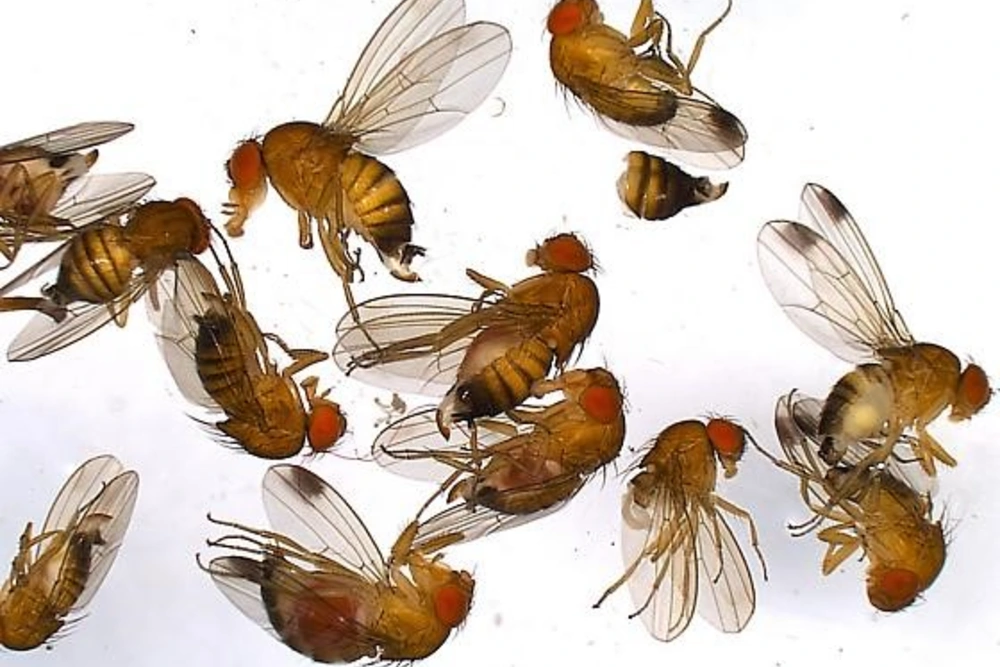
A recent study evaluated the potential of as many as 92 EPN strains against the larvae of D. suzukii. Through direct exposure assays, researchers identified four highly virulent strains: Steinernema carpocapsae HSC-Han, S. carpocapsae NC116, S. carpocapsae S.AF.Bi, and Steinernema feltiae SN.
These strains were subsequently subjected to more detailed investigations to assess the effects of different inoculum concentrations, their ability to infect pupae buried just below the soil surface, and their efficacy when applied directly to infested cherries.
The results showed that Steinernema carpocapsae NC116 was the most effective strain against D. suzukii larvae, demonstrating a high capacity to induce larval mortality.
Response of developmental stages
This finding confirms that the larval stage is the most suitable target for EPN applications, as larvae are considerably more susceptible to infection than later developmental stages.
In contrast, experiments conducted on pupae revealed relatively low mortality levels, suggesting that this developmental stage possesses a natural resistance to nematode infection.
Nevertheless, the study highlighted an important finding: even when the nematodes did not kill the pupae, they induced significant sublethal effects. Adults emerging from treated pupae exhibited reduced flight ability and altered spatial distribution, traits that could limit the pest's dispersal and, consequently, its capacity to colonize new orchards.
Efficacy on infested cherries
The efficacy of the nematodes was also evaluated under conditions more closely resembling commercial production by applying them directly to infested cherries. In this case, however, the results were less encouraging, as population suppression was limited.
This reduced effectiveness may be attributed to the difficulty of the nematodes in reaching larvae protected within the fruit, as well as to microenvironmental conditions that may not be favorable for nematode survival and movement.
Overall, these findings indicate that EPNs—and S. carpocapsae NC116 in particular—have considerable potential as biological control agents against D. suzukii. However, further optimization is required before they can be widely adopted under field conditions.
Application prospects
The development of improved formulations, the use of adjuvants to enhance nematode persistence on plant surfaces, and the identification of the optimal timing for application could substantially improve their performance.
Taken together, the study confirms that entomopathogenic nematodes could become an important component of Integrated Pest Management programs targeting Drosophila suzukii.
In addition to causing direct larval mortality, the sublethal effects observed in surviving adults suggest a broader ecological impact on pest population dynamics, highlighting the potential contribution of EPNs to more sustainable and environmentally friendly fruit production systems.
Source: Jie Sun, Yuanhu Tang, Ailing Wang, Xianqin Wei, Weibin Ruan, Entomopathogenic nematodes as biological control agents against Drosophila suzukii (Diptera: Drosophilidae), Crop Protection, Volume 203, 2026, 107573, ISSN 0261-2194, https://doi.org/10.1016/j.cropro.2026.107573.
Image source: Bioguide
Melissa Venturi
Ph.D. in Agricultural, Environmental, and Food Sciences and Technologies – Fruit Tree Physiology and Cultivation - Bologna, Italy
Cherry Times - All rights reserbed