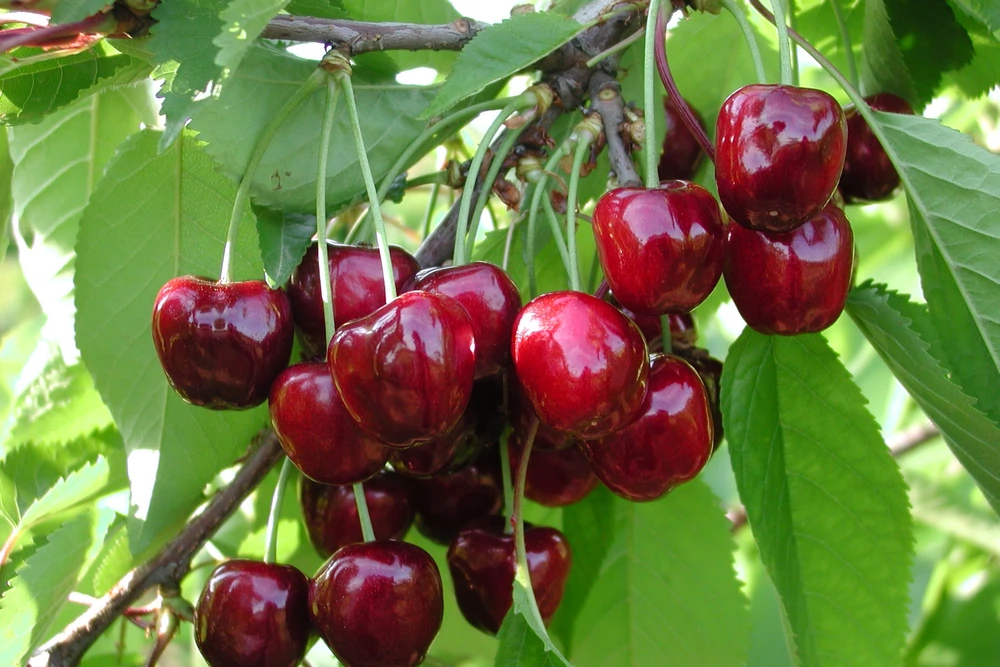
Fresh cherries are highly susceptible to rapid microbiological and chemical degradation due to their high water content.
Drying is a well-established method to stabilize them, but it can compromise nutritional quality and organoleptic characteristics.
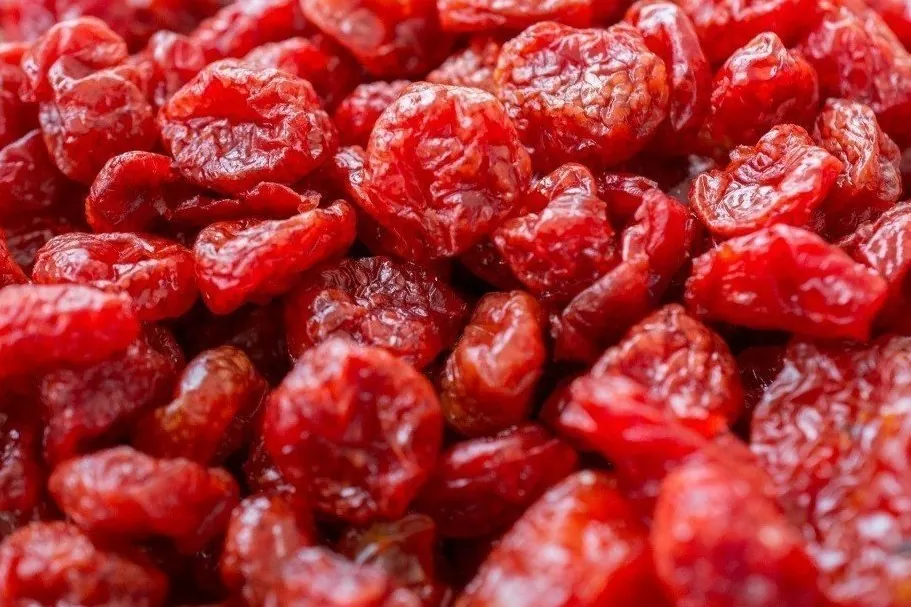
A study conducted in collaboration between several Turkish research institutes and the Islamia University of Bahawalpur (Pakistan) addresses the issue of sweet cherry perishability and proposes a comparative evaluation of three drying techniques, with the aim of extending shelf life while preserving nutrients, bioactive compounds, and visual properties such as color.
Advanced drying methods
The researchers focused on advanced drying methods, considering various operational parameters to achieve an effective and industrially applicable process.
The study compares three main technologies: 1) Microwave Drying (MWD): drying using microwaves only at different power levels (180, 360, 540 W); 2) Microwave-Assisted Hot Air Drying (MWHAD): microwaves combined with a hot air flow at different temperatures (100, 180, 230 °C); and 3) Solar Tunnel Drying (STD): passive drying in a solar tunnel, with and without pre-treatment.
The different approaches were evaluated by analyzing all operational variables such as drying time and drying rate, while assessments of color quality, sugar content, organic acids, and phenolic compounds were carried out because these parameters are key indicators of both nutritional value and the cosmetic appeal of the final product.
Main findings
Among the main findings, the use of MWHAD significantly reduced drying time compared to MWD alone, achieving approximately a 25% reduction.
This points to greater energy efficiency and productivity—crucial factors for industrial-scale applications.
Color stability is a sensitive parameter for consumers: dried cherries retained a color more similar to the fresh fruit when processed using MWHAD with microwaves at 180 W and hot air at 160 °C, without a pre-treatment solution.
This condition appears to reduce oxidation and degradation of natural pigments.
Internal quality parameters
Regarding internal quality, sugars (glucose and fructose) were better preserved with MWHAD (180 W, 160 °C) after solution pre-treatment, while organic acids such as malic acid showed better retention without pre-treatment at higher microwave power (540 W).
Finally, phenolic compounds—associated with antioxidant properties—were better preserved with MWHAD at low microwave power and moderate temperature, especially when combined with pre-treatment.
These results suggest that there is no single universal “optimal condition”; instead, parameters must be balanced according to the final objective, such as prioritizing nutrient retention, color, or process efficiency.
Industrial implications
Microwave-assisted hot air drying (MWHAD) stands out as the most effective method for balancing speed, nutritional quality, and color stability in dried sweet cherries.
This approach can be applied to large-scale industrial processes, offering an efficient and scalable solution for high-quality dried products.
This work provides detailed operational parameters on how each technique affects the different attributes of the product, forming a solid basis for future technological developments in the food industry.
Source: Tunahan Erdem, Sevil Karaaslan, Muhammad Waseem, Nurten Yilmaz, Kamil Eki̇nci̇, Ayşe Gül Özaydin, Handan Çulal Kiliç, Hürkan Tayfun Varol, Anıl Albayrak, Optimization of microwave-assisted drying methods for optimizing quality, nutrient retention, and color stability of sweet cherries, LWT, Volume 233, 2025, 118476, ISSN 0023-6438, https://doi.org/10.1016/j.lwt.2025.118476
Image source: Fresh Fruit Turkey
Melissa Venturi
University of Bologna
Cherry Times - All rights reserved