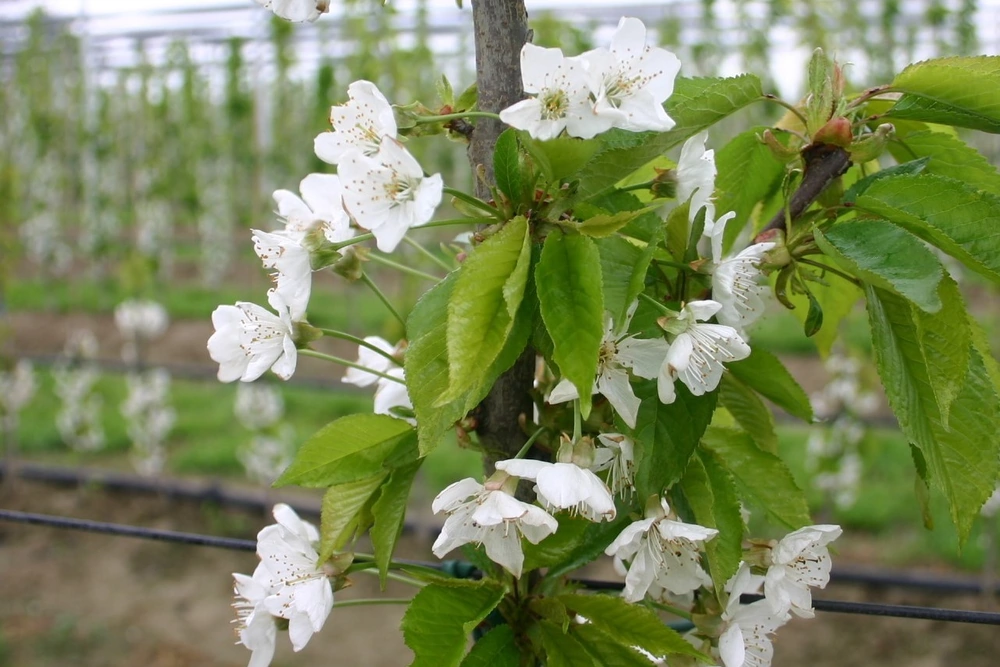
Flowering in temperate fruit trees results from a complex interaction between genetic and environmental factors. Among the main processes regulating the transition from dormancy to flowering are exposure to low winter temperatures, known as chilling, followed by the accumulation of mild temperatures, or forcing.
The proper balance between these two processes is essential for synchronizing flowering and ensuring adequate fruit production. However, climate change is profoundly altering this balance. Progressively warmer winters may reduce or delay the accumulation of the cold required to release dormancy, while higher temperatures during late winter and early spring may accelerate vegetative growth and flowering.
This combination creates an important agricultural paradox: trees may flower earlier while simultaneously becoming more exposed to late spring frost. Conversely, if the chilling requirement is not adequately fulfilled, flowering may become irregular or reduced, with negative consequences for fruit set, yield, and product quality.
Phenological study
To investigate this phenomenon, the study presented at the EGU General Assembly held in Vienna in May 2026 analyzed 44 years of phenological observations. From 1981 to 2024, data were collected from numerous sweet cherry cultivars at the INRAE experimental station in southwestern France.
This extensive time series made it possible to investigate how the responses of different cultivars to winter and spring temperatures have changed over recent decades. Because the cultivars were not all monitored during the same periods, the researchers first corrected the data for the effect of year using an ANOVA statistical model.
This allowed more reliable comparisons among cultivars and enabled their classification into six flowering-precocity groups, ranging from very early- to very late-flowering cultivars. The researchers then identified the periods of the year during which temperature conditions exerted the strongest influence on flowering dates.
Shifting temperature sensitivity
The results reveal a particularly interesting shift. Between 1981 and 2000, the periods during which winter chilling and spring forcing influenced flowering were largely separated. Over the last two decades, however, sensitivity to chilling has tended to shift toward later periods, whereas sensitivity to forcing has emerged earlier in the season.
As a result, the two phases increasingly overlap, producing a more complex physiological response to temperature. This phenomenon may be associated with progressive changes in seasonal temperature patterns. Milder autumns and winters may extend the period during which chilling temperatures accumulate, while warmer conditions during winter and spring can trigger an earlier response to forcing.
This shift appears particularly pronounced in early-flowering cultivars, potentially making them more vulnerable to climatic anomalies. These findings have important implications for fruit production of the future. Traditional phenological models, which assume that chilling and forcing occur in two strictly sequential phases, may no longer be sufficiently accurate for predicting flowering under warming conditions.
Future perspectives
New models should therefore account for overlapping and dynamic temperature-sensitivity windows, improving the prediction of flowering dates and the assessment of frost risk. At the same time, these findings could support breeding programs, helping breeders identify and select cherry cultivars capable of maintaining stable flowering patterns and high productivity under future climate scenarios.
Source: Wenden, B., Mariadassou, M., and Vitasse, Y.: Increasing overlap of chilling and forcing sensitivity periods in sweet cherry flowering under warming conditions, EGU General Assembly 2026, Vienna, Austria, 3–8 May 2026, EGU26-12635, https://doi.org/10.5194/egusphere-egu26-12635, 2026.
Image source: Stefano Lugli
Cherry Times - All rights reserved