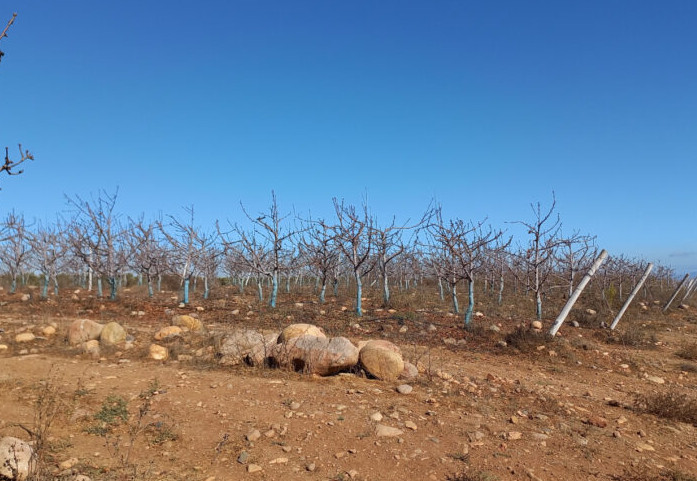
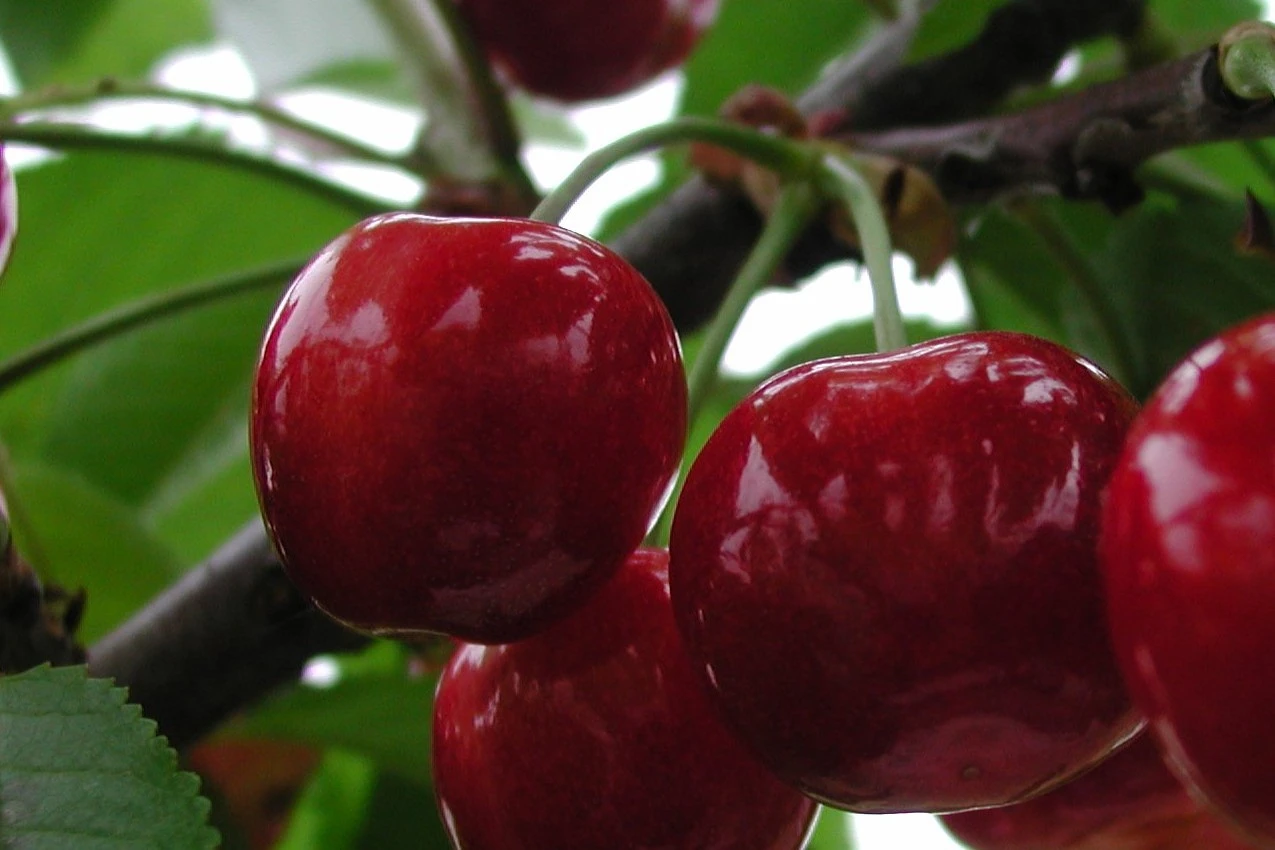
Climate change is profoundly altering the environmental conditions in which fruit crops develop, with significant effects on reproductive processes.
In sweet cherry, successful pollination and fertilization largely depend on pollen viability and the ability of the pollen tube to develop rapidly; traits that can be strongly influenced by spring temperature conditions.
A recent study analyzed how temperature affects pollen germination and pollen tube growth in different sweet cherry cultivars, with the aim of identifying more stable genotypes in an increasingly variable climate context.
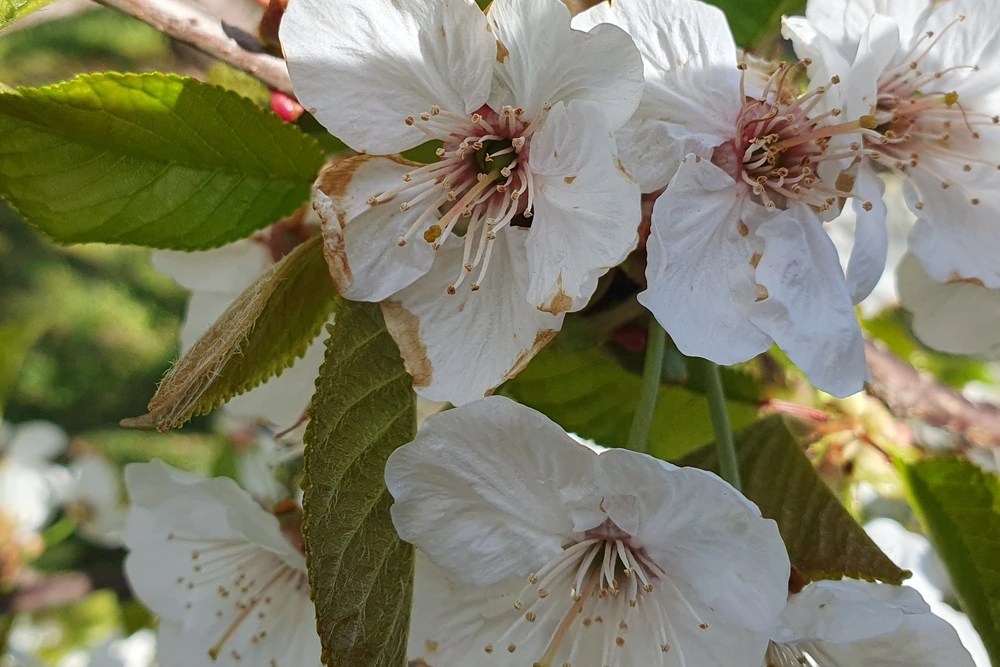
The study
The study was conducted in Serbia on eight genotypes: ‘Burlat’, ‘Canetova’, ‘Dolga Šiška’, ‘G-2’, ‘Kordia’, ‘Lapins’, ‘Rita’ and ‘Sunburst’, evaluating in vitro pollen germination and pollen tube length over two consecutive years, 2022 and 2023.
The experiments were carried out at two temperatures, 17 °C and 20 °C, considered representative of the conditions that may occur during the flowering period in cherry orchards.
The results highlighted marked variability among the genotypes analyzed.
Germination values ranged from 9.3% observed in ‘Kordia’ to 53.9% recorded in ‘Lapins’, while pollen tube length showed even greater variability, ranging from about 180.8 μm in ‘Dolga Šiška’ to 669.3 μm in ‘Lapins’.
Germination
Contrary to what is often assumed, pollen germination was generally higher at 17 °C than at 20 °C, suggesting that slightly cooler spring temperatures may favor some reproductive processes in sweet cherry.
The statistical analysis also showed that pollen tube growth is mainly determined by genotype, indicating a strong genetic component for this trait.
By contrast, pollen germination was more strongly influenced by the interaction between genotype and year, indicating that annual environmental conditions can modulate the response of different genetic materials.
Among the genotypes examined, ‘Lapins’ stood out for its excellent performance, showing high and consistent values for both germination and pollen tube elongation over the two years of testing.
The genotypes
‘Canetova’ and ‘G-2’ also showed good stability, maintaining moderate but relatively constant levels for both parameters analyzed.
These results suggest that these genotypes possess greater resilience to environmental variations and may therefore represent good candidates as reliable pollinizers in orchard planning.
By contrast, ‘Dolga Šiška’ and ‘Sunburst’ showed a marked reduction in performance under less favorable conditions, indicating greater sensitivity to environmental stress.
From an applied perspective, the study confirms that pollen viability traits represent an important indicator of the reproductive resilience of sweet cherry genotypes.
Applications
In a climate context characterized by unstable springs, with episodes of abnormal heat or sudden temperature fluctuations, identifying cultivars capable of maintaining good pollen viability becomes strategically important to ensure fruit set and production stability in orchards.
Integrating this information into breeding programs and varietal choices could help make sweet cherry growing more resilient.
Source: Čolić, S., Marić, S., Đorđević, M., Glišić, I., Radičević, S., Lukić, M., & Rakonjac, V. (2025). In vitro pollen germination and pollen tube length as indicators of temperature effects on sweet cherry genotypes. Voćarstvo, 59(225-226), 85-94. https://doi.org/10.18485/pomology.2025.59.225_226.2
Image source: Stefano Lugli
Andrea Giovannini
PhD in Agricultural, Environmental and Food Science and Technology - Arboriculture and Fruitculture, University of Bologna, IT
Cherry Times - All rights reserved