Vacuum microwave drying is emerging as a faster, more efficient way to extend the shelf life of delicate fruits like berries and cherries while preserving their quality better than conventional drying methods.
Who doesn’t love berries and cherries? They’re delicious, but they’re also expensive, delicate, and taste best when freshly picked—their postharvest life is brief.
“We need to develop a technology to extend their shelf life, but at the same time retain their quality,” says Youngsoo Lee, an associate professor at Washington State University’s Department of Biological Systems Engineering.
Drying technologies
Lee is investigating better ways to keep small, delicate fruits in good shape with the use of drying technologies. He is the lead author of a recent review paper published in Journal of Food Science that investigates the pros and cons of currently popular drying technologies.
In their investigation, the researchers identified an outlier—vacuum microwave drying (VMD)—as the most promising processing approach.
The research came about, says Lee, from conversations he had with Washington State University extension specialists about cherries. Washington is the premier cherry producer in the United States, followed by California. But because of climate change, the two states’ harvest seasons have begun to overlap, he explains, and that means a glut of fruit.
Cherry market
Cherries have only about two to three weeks of shelf life when fresh, says Lee, and there’s only so much that can be shipped, stored, purchased, and consumed in such a short time frame. The market has also become more competitive.
Chile, for example, has grown its export cherry production capacity in recent years, and its fruit is much less expensive than the domestic supply.
“What we’re trying to do is help farmers and producers have another way of creating a product from the cherry,” Lee says.
Existing methods
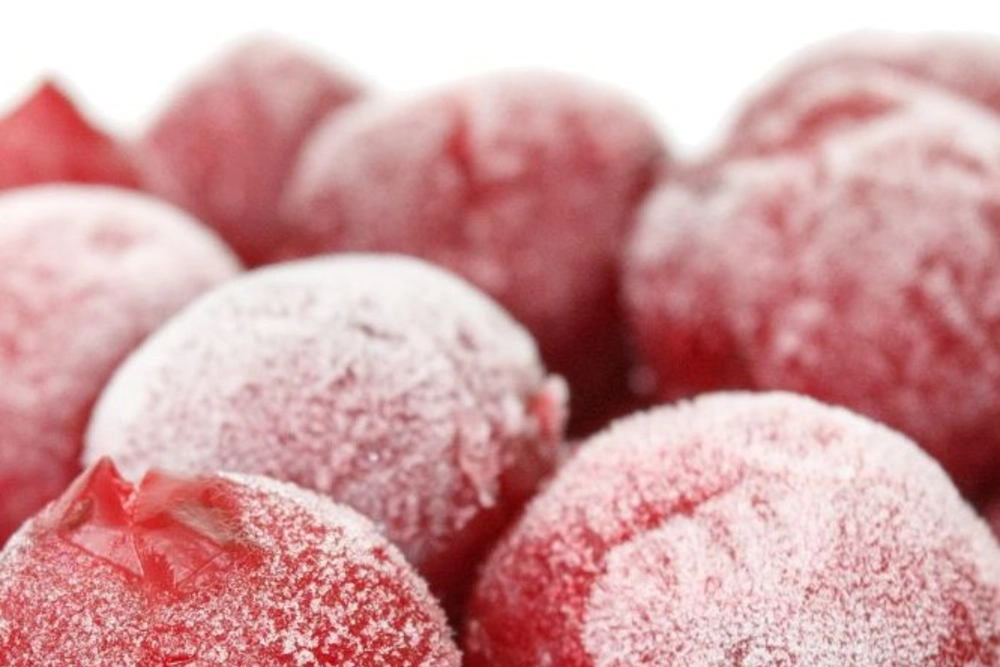
Existing drying technologies commonly used for preserving small fruits like cherries and berries all have drawbacks. For example, flash freezing is a popular method but requires a cold supply chain, which is expensive.
Another approach, hot air drying, is a common and simple process, says Lee, but it takes time, which means energy and money. Using this method, the fruit’s surface also dries first. That’s not great for two reasons: It reduces how much moisture can be drawn out from the fruit’s interior, and the surface might crack.
Hot air drying also decreases a berry’s nutritional qualities. Then there’s freeze-drying, which does preserve a fruit’s structure and nutrient content, but also requires a significant amount of time and energy.
Vacuum microwaving
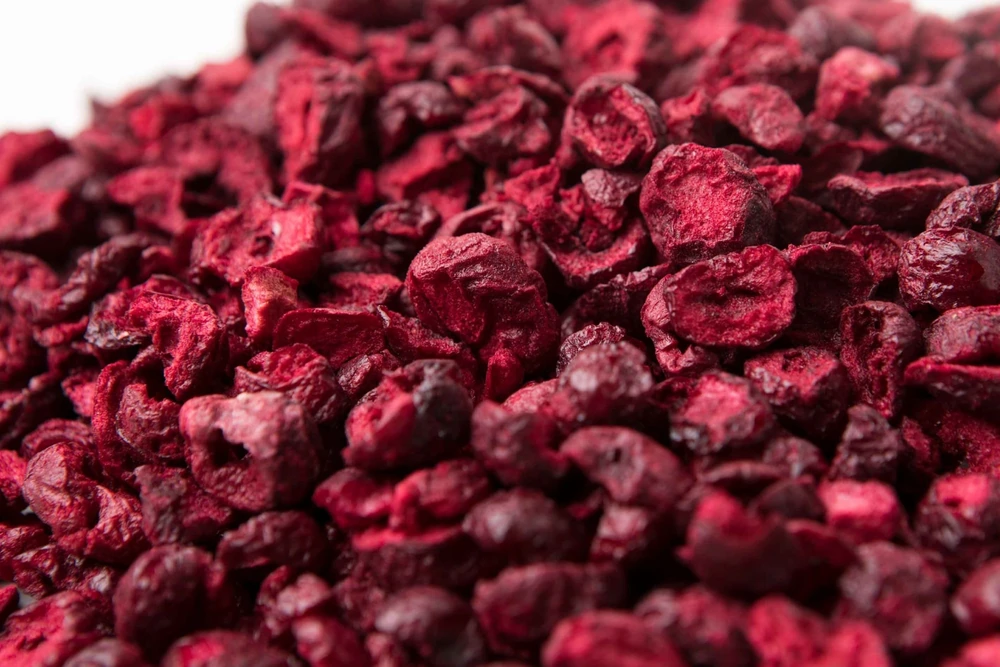
Drying fruit using vacuum microwaving is a much faster process. “Sometimes, depending on the sample, in less than an hour you can drop the moisture content,” says Lee.
A VMD system has a vacuum microwave chamber that looks like a clothes dryer (some have a conveyor belt). The fruit is put inside the chamber, which extracts moisture, and the microwave heats up the entire fruit evenly at a low temperature.
This process helps it maintain nutritional content, color, and shape.
Heat levels
The research Lee did for the review paper made him realize how important heat levels are when using VMD. “Something that I have to be careful of when I actually dry these cherries is the amount of power,” he says. “You don’t want to apply a high power of microwave when you have a small sample.”
That matters because this summer Lee will be working at the U.S. Army Natick Soldier Systems Center in Natick, Mass., where the army develops food for the military. Ahead of his arrival, Lee will be shipping 300 pounds (136.1 kg) of cherries to the center for on-site processing.
While Lee’s research is currently focused on the physical quality, nutrients, and food safety of cherries processed using VMD, he hopes to do a sensory study soon. He predicts that VMD will be “the next generation of drying technology.”
Image source: Vera Miklas
Danielle Beurteaux
IFT
Cherry Times - All rights reserved