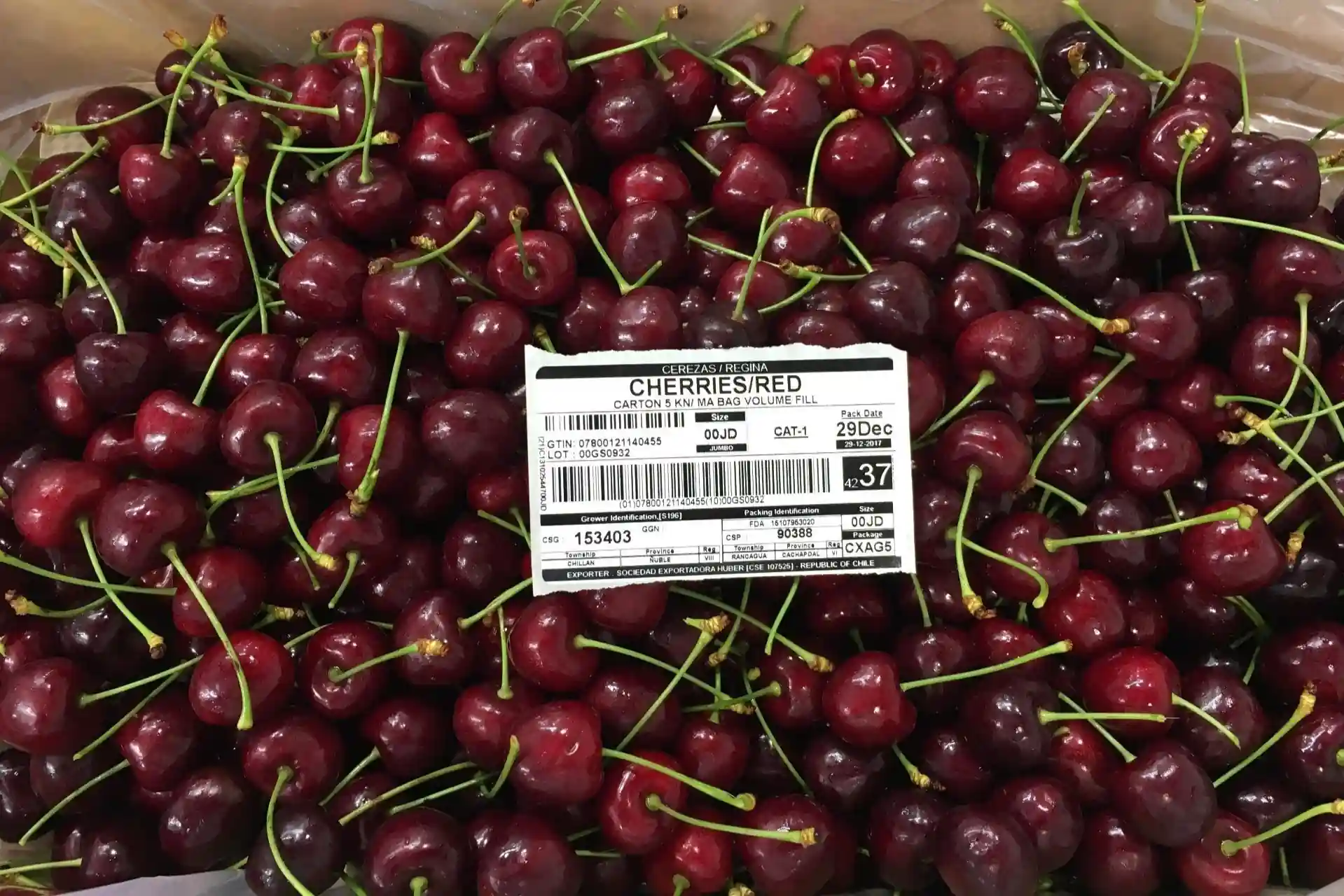
The Cherry Express season is coming to an end, and Chile's booming cherry industry has been bustling. From orchards to shipping ports, every season is a race to deliver the prized fruit to global markets at its peak freshness. A key player in Chile's cherry export sector is Hapag-Lloyd, ensuring seamless transportation during the crucial harvest months.
Employees like Nicolas Ruiz constantly check that everything is working as it should. With rising demand for cherries, particularly in China, the 2024 season has brought challenges and opportunities that tested the limits of innovation and collaboration.
A race against time and nature
Managing the cherry season of 2024 was no small feat. The outbreak of the fruit fly loomed as a potential disruptor, threatening to compromise nearly a third of Chile's cherry harvest. But Hapag-Lloyd reacted swiftly, leading a cold treatment protocol that safeguarded the fruit while maintaining tight shipping schedules.
“It's all about precision and teamwork,” commented Nicolas Ruiz, Sales Director for Chile. “With so much at stake, every detail matters. The collaborative effort between our operations, health authorities, and warehouses ensured that no stone was left unturned to protect the cargo.”
The result? Cherries traveling thousands of kilometers to markets like Hong Kong, Shanghai, and Busan, arriving as fresh and vibrant as the day they were harvested.
 Image 1: Nicolas Ruiz (FLTR) with colleagues Daniela Hidalgo, SV Sales Manager, and Christian Seydewitz, Managing Director.
Technology at the forefront
This year, technological innovations added a new dimension to Hapag-Lloyd's logistics capabilities. Amid the buzz of port activity and meticulous monitoring of reefer containers, Hapag-Lloyd Live emerged as a game changer.
Imagine this: when containers loaded with cherries leave Valparaiso (Chile), their onboard sensors come to life, transmitting real-time updates on temperature, humidity, and cold treatment status. These updates seamlessly feed into Hapag-Lloyd’s cloud-based system, enabling immediate adjustments if necessary.
For exporters, this level of visibility has been revolutionary. With Hapag-Lloyd Live, customers now have a clear window into their cargo's journey, obtaining vital insights that help them make informed decisions.
Collaboration behind the technology
The introduction of Hapag-Lloyd Live during the 2024 season was a testament to global teamwork. Engineers and logisticians in Chile and Germany worked hand in hand with the Digital Container Shipping Association (DCSA) to bring this cutting-edge system to life. Their efforts ensured the technology was fully operational just in time for the cherry season's busiest weeks.
The DCSA, a nonprofit organization dedicated to the digitization and standardization of the shipping industry, played a crucial role in this innovation. Thanks to this partnership, cherries are not just transported but also monitored, managed, and cared for at every stage of their journey.
Moreover, a significant milestone achieved this season was the first Application Programming Interface (API) for Hapag-Lloyd Live. “We integrated the API with one of our top reefer customers, GLOBAL REEFERS. This showcases all the hard work and support from the local Chilean team and the global headquarters, which has been key to our success. We’re thrilled that it’s finally fully operational,” proudly noted Nicolas.
A milestone for Cherry Express
While Hapag-Lloyd Live takes center stage, other technological advancements have also strengthened the Cherry Express. The HID (Hapag-Lloyd Immobilization Device), for instance, provides unprecedented control over cold treatment processes, ensuring that every container adheres to strict quality standards.
“These tools aren’t just about efficiency,” observed Ruiz. “They represent our promise to customers: to go beyond, setting a new benchmark for the industry.” Image 2: Hapag-Lloyd Reefer container onboard the Valparaiso Express.
A faster path to freshness
The Cherry Express service has long been a marvel of logistical ingenuity. Each year, from November to January, Hapag-Lloyd adjusts its ship rotation to provide a direct route from Valparaiso to Hong Kong (China). This express service saves five critical days off the typical journey, reducing transit time to just 22 days.
At the heart of this operation is meticulous planning. During cherry season, reefer containers are exclusively handled at the first port of discharge, ensuring the fruit heads to Chinese markets with minimal delay—a key factor in preserving freshness and maximizing value.
The cherry boom in Chile
Chile’s cherry industry is experiencing an unprecedented boom. Last season, the country exported over 22,400 containers of cherries, with China accounting for an astounding 94% of purchases. The rising demand has driven Chilean exporters and Hapag-Lloyd to scale up operations.
To keep up, Hapag-Lloyd has continued investing in its reefer fleet, equipping containers with advanced cooling systems that maintain temperatures between -1°C and -0.5°C. This precision ensures that cherries' journey across the Pacific is as smooth as possible, preserving their vibrant appearance and taste.
Looking ahead
As the Cherry Express enters its final weeks for 2024, the lessons learned this season are already shaping plans for the future. The integration of advanced technologies, the spirit of collaboration across continents, and the relentless pursuit of excellence have solidified Hapag-Lloyd’s position as a leader in logistics innovation. “Our goal is always to stay one step ahead,” reflects Ruiz.
“Every challenge we overcome strengthens our ability to deliver services to our customers, ensuring their success becomes our success. That’s what drives us forward.” For now, as containers of bright red cherries continue their journey across oceans, one thing is clear: in the fast-paced world of perishable logistics, Hapag-Lloyd is setting a standard others can only aspire to follow.
Read the full article: Hapag-Lloyd
Images: Hapag-Lloyd
Cherry Times - All rights reserved