With increasingly unpredictable and severe weather, cherry growers are facing heavier pressure to achieve yield targets and protect fruit quality for consumers. Harvista™ 1,3 SC, a near-harvest application product from AgroFresh, offers an innovative solution that helps growers take control of fruit quality and increase yield.
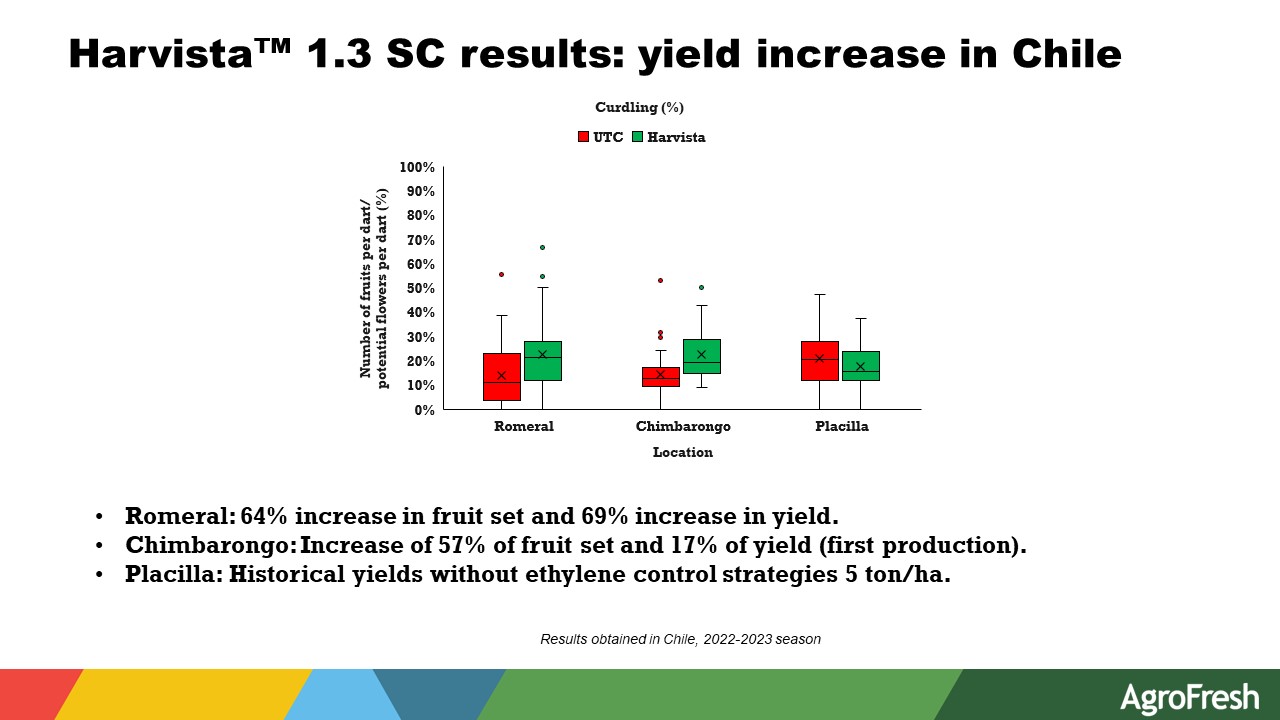
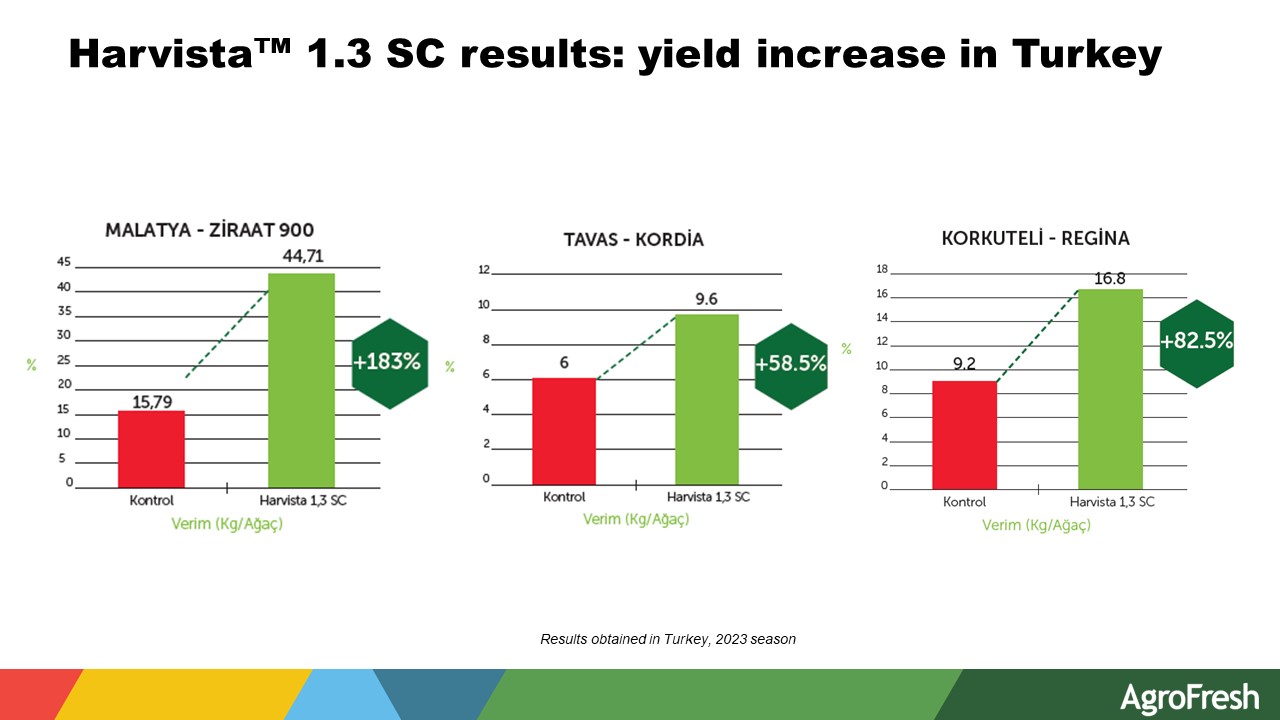
While results vary by region and variety, growers in Chile who completed two applications of Harvista, reported an average increase of 35% more cherries per branch and 15% more yield. Similar trials in Turkey ranged from an overall 36% yield increase to as high as 82%.* (*Results obtained in trials in Chile and Turkey in season 2022-2023. Results may vary).
“Harvista is a growth regulator based on 1-methylcyclopropene (1-MCP), and when applied to cherry trees at between 10 and 50% bloom, it interrupts the negative impacts of ethylene during flowering,” said AgroFresh Chief Technology Officer Duncan Aust. “This interruption allows more flowers to develop into fruit and keeps cherries on the tree for longer, reducing cherry drop and waste and increasing yield and income potential."
In addition to yield and quality improvements, Harvista gives growers greater flexibility in harvest timing. “Customers looking for solutions to help improve their cherry quality and increase control of their harvest can find both by using Harvista™ 1,3 SC,” said Marek Grzęda, technical manager for the company’s Europe and Middle East markets.
“As part of an integrated, data-driven system, Harvista™ 1,3 SC can improve flowering cherry trees with fruiting problems. This allows growers to optimize their yield and revenue potential.
Currently, AgroFresh has a presence in more than 50 countries with experts sharing knowledge and data across regions to solve challenges. The company is commercializing Harvista with great success for cherries in Turkey, the United States and Chile. Contact your regulatory agency or your local AgroFresh account manager to determine product registration in your country.
AgroFresh has a wide near- and post-harvest portfolio for cherries, including liquid fungicides (ActiSeal™ and Scholar) to protect the fruit during transport and storage and a disinfectant (FreshStart™) to help decrease contaminants in water treatment and help make water recycling more efficient and less costly. Additionally, the digital solution (FreshCloud™ Inspection) digitizes the formerly manual quality control process by capturing, organizing and analyzing quality metrics in real-time.
For more details about Harvista and other ways AgroFresh is helping customers produce abundant, sustainable, quality fresh produce, be sure to check AgroFresh.com.
Source: AgroFresh
Image: AgroFresh; SL Fruit Service
Cherry Times - All rights reserved