The national decision to register "Cereja de Alfândega da Fé" as a Protected Geographical Indication (PGI) was published yesterday, 10 February, in the Diário da República (Official Gazette).
This represents a key milestone in the process of enhancing and officially recognizing one of the most emblematic products of the Northeast of Trás-os-Montes.
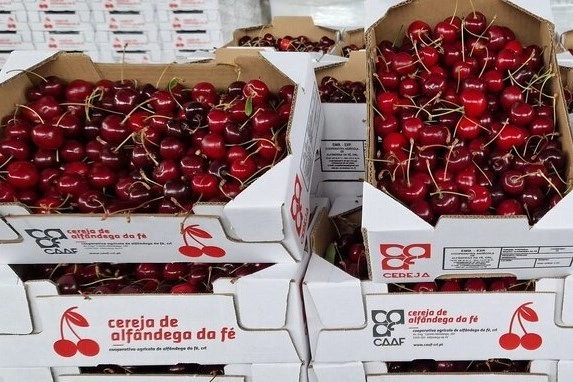
National protection and European procedure
This decision, for now, grants national protection, safeguarding the designation within Portuguese territory and strengthening its defense against misuse of the name.
The designation "Cereja de Alfândega da Fé" is legally protected and may only be used by producers within the defined geographical area who comply with the relevant product specifications.
The process now moves to the European Commission for evaluation, a necessary step to obtain final recognition as a Protected Geographical Indication (PGI).
The role of the cooperative
The application was promoted by the Cooperativa Agricola Alfândega da Fé, with the support of the Municipality of Alfândega da Fé, reflecting technical and institutional work carried out over several years.
The objective is to formalize the historical, geographical and qualitative link between the cherries and the production area of the "Cereja de Alfândega da Fé" (Alfândega da Fé Cherry).
The "Cereja de Alfândega da Fé" (Alfândega da Fé Cherry) stands out for its unique organoleptic characteristics, resulting from the region’s climatic conditions and the know-how accumulated by generations of local growers.
Cherry production plays a significant role in the municipality’s economy and represents a widely recognized symbol of local identity, celebrated every year during the Festa da Cereja&co (Cherry Festival).
Recognition and future prospects
The decision now published represents a formal national recognition of the product’s unique character and reputation, strengthening its market value and creating new opportunities for promotion and differentiation.
For producers and the region, this is a particularly significant moment, reinforcing the path toward PGI certification of the "Cereja de Alfândega da Fé".
For more information: https://www.cm-alfandegadafe.pt/pages/1075
Source: Municipality of Alfândega da Fé
Image credit: Stefano Lugli
Cherry Times - All rights reserved