Floral induction, bud differentiation, reserves and previous-cycle management are key factors in sweet cherry productivity. Cherry production is not determined only in spring or in the weeks immediately before harvest. A substantial part of the crop potential is built during the previous season, when flower buds are formed, their quality is defined, reserves are accumulated and the tree enters winter with a specific vegetative-reproductive balance.
This concept is essential for understanding sweet cherry productivity. Abundant spring flowering does not appear suddenly: it results from a previous sequence involving floral induction, differentiation of floral primordia, bud maturation, carbohydrate accumulation, water status, leaf health and crop load management. When a season shows irregular flowering, low fertility, weak fruit set or poor uniformity, the causes often originate in the previous cycle.
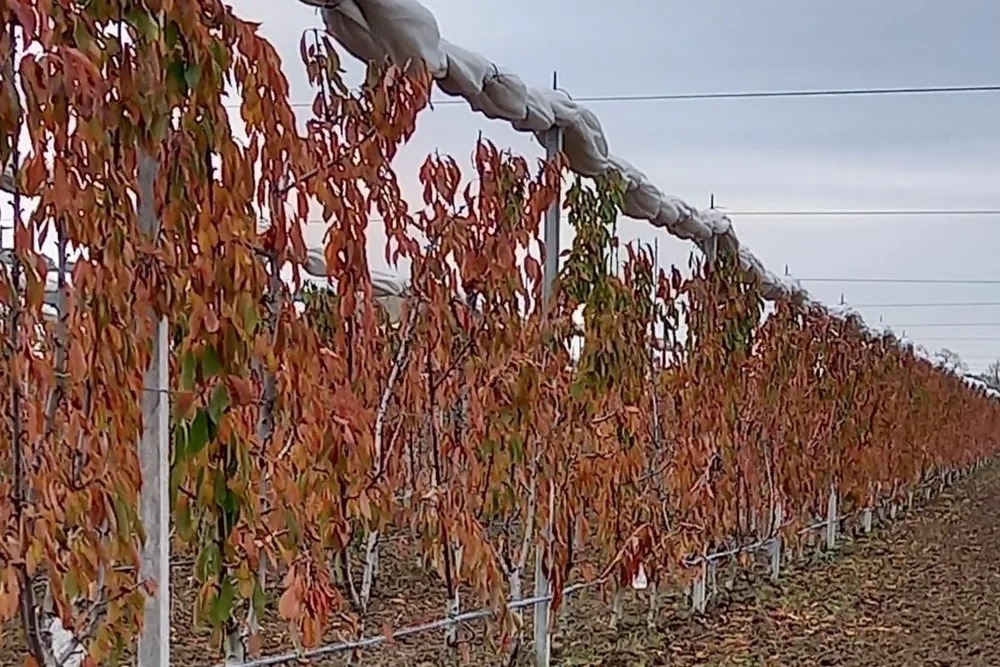
The productive cycle of sweet cherry goes beyond a single season
In the sweet cherry productive cycle, the visible harvest phase is only the final result of a much longer process. During the year before production, the tree defines the number and quality of the floral structures that will support the following season. This means that agronomic decisions taken after harvest, during summer and in autumn, have a direct effect on flowering and fruit quality in the following year.
Sweet cherry is particularly sensitive to the relationship between vegetative growth and reproductive development. If the tree maintains healthy foliage, balanced water availability and adequate nutrition, it can support bud formation and reserve accumulation. Conversely, heat stress, water stress, early defoliation, excessive crop load or nutritional imbalances may compromise bud quality before winter even begins.
| Cycle phase | Main process | Effect on the following season |
|---|
| Post-harvest | Physiological recovery of the tree and maintenance of photosynthetic activity | Reserve accumulation and bud preparation |
| Summer | Floral induction and beginning of internal bud differentiation | Definition of flowering potential |
| Late summer-autumn | Bud maturation, lignification and carbohydrate accumulation | Improved winter hardiness and more regular flowering |
| Winter | Dormancy and fulfilment of chilling requirements | More uniform spring budbreak |
| Spring | Flowering, pollination and fruit set | Expression of the potential built in the previous cycle |
Floral induction and bud differentiation
Floral induction is the stage in which a bud begins its transition towards a reproductive function. This process is not always visible from the outside, but it is decisive because it establishes the basis for the following spring flowering. In sweet cherry, floral induction and subsequent bud differentiation occur while the tree is still completing other important processes, such as fruit maturation, vegetative growth and reserve management.
Flower bud differentiation refers to the internal development of floral primordia. The quality of this phase depends on the overall balance of the tree: sufficient light within the canopy, active leaves, regular water availability, balanced nutrition and the absence of excessive stress. A bud formed under favourable conditions is more likely to produce functional flowers, with better fruit set potential and greater uniformity.
By contrast, inadequate management during the previous cycle may lead to weak buds, uneven flowering or reduced fertility. High temperatures, prolonged water stress, excessive shading or vigour imbalances can interfere with the correct formation of floral structures. For this reason, the post-harvest period should not be considered a secondary phase: it is a technical window in which much of the future productivity is defined.
| Factor | Effect on buds | Agronomic risk |
|---|
| Canopy light | Promotes floral induction and bud differentiation | Shading and reduced bud quality |
| Water status | Supports photosynthesis and metabolism | Water stress, less fertile buds and lower reserve accumulation |
| Crop load | Influences competition between fruit, shoots and buds | Overcropping and weaker return bloom |
| Leaf health | Ensures production of photoassimilates | Early defoliation and lower energy availability |
| Summer temperature | Affects the internal formation of buds | Heat stress and possible floral abnormalities |
The role of reserves in spring recovery
Carbohydrate and nutrient reserves accumulated during the previous cycle are essential to support spring recovery. In sweet cherry, flowering and the early stages of fruit development occur when the new leaf area is not yet fully efficient. At this stage, the tree depends largely on reserves stored in roots, trunk, branches and perennial tissues.
A good supply of energy reserves helps the tree sustain budbreak, flowering, early shoot growth, fruit set and the first stages of fruit cell division. This is particularly important in sweet cherry, where fruit development is rapid and competition between vegetative and reproductive organs can be intense. A tree with depleted reserves starts the season at a disadvantage, even when spring weather conditions appear favourable.
The post-harvest period is therefore decisive for tree recovery. After harvest, the foliage must remain healthy and functional in order to continue producing assimilates. Post-harvest photosynthesis does not simply keep the tree active; it contributes directly to the quality of flowering and production in the following season.
Vigour, balance and canopy management
Tree vigour must be interpreted as a matter of balance, not as a simple push for growth. An excessively vigorous tree may invest too much in vegetative growth, shade the inner canopy and reduce bud quality. A weak tree, on the other hand, may lack sufficient photosynthetic capacity and reserves to support floral differentiation and future fruit set.
The management of light distribution within the canopy is one of the most important factors. A well-lit canopy promotes the formation of high-quality buds and allows leaves to maintain high photosynthetic efficiency. Dense, shaded or poorly ventilated canopies may reduce bud fertility and increase production unevenness.
Summer and post-harvest pruning, when applied correctly, can help improve light distribution, vegetative balance and the quality of fruiting structures. However, overly aggressive or poorly timed interventions may reduce useful leaf area and limit reserve accumulation. For this reason, pruning should be adapted to tree vigour, training system, variety, rootstock and production objectives.
| Agronomic objective | Indicator to monitor | Possible intervention |
|---|
| Vegetative-reproductive balance | Relationship between shoot growth and crop load | Adjustment of pruning and fruit load |
| Improved light exposure | Presence of shaded inner canopy areas | Canopy management and opening of productive zones |
| Reserve accumulation | Healthy and active foliage after harvest | Plant health protection, irrigation and post-harvest nutrition |
| Stress reduction | Symptoms of water, heat or nutritional stress | Regular irrigation, heat protection and soil monitoring |
Irrigation and summer stress
Summer irrigation plays a central role in building the following year’s production. After harvest, the tree continues to carry out fundamental physiological processes: bud differentiation, photosynthetic activity, reserve accumulation and tissue maturation. Insufficient water management can reduce photosynthesis, accelerate leaf ageing and compromise bud quality.
Controlled water stress may be used in some contexts to regulate vigour, but it must be managed with great precision. If the deficit becomes excessive or coincides with sensitive phases of flower bud differentiation, the risk is a reduction in productive potential. In sweet cherry, the boundary between vigour control and physiological damage can be narrow, so management should be based on soil, climate, rootstock, variety and the actual condition of the orchard.
High summer temperatures can also influence bud development. Heat, intense radiation and low humidity may increase pressure on the tree system, especially when combined with inadequate water availability. Under these conditions, maintaining active foliage and a functional canopy becomes essential to protect future productivity.
Post-harvest nutrition and bud quality
Post-harvest nutrition should be considered an integral part of the production strategy. After harvest, the tree needs to recover energy, support leaf activity and accumulate reserves for the following spring. Nitrogen, potassium, calcium, boron, zinc, magnesium and other elements may contribute to bud quality, but they must be managed in a balanced way and according to analyses and real agronomic objectives.
An excess of nitrogen can stimulate undesirable vigour and delay tissue maturation, while a deficiency can limit reserve formation and the quality of spring recovery. Potassium, calcium and micronutrients also play specific roles in tree physiology, leaf function and final fruit quality. Nutrition should therefore not be treated as a generic addition, but as a technical tool connected to the phenological stage.
| Management area | Purpose | Critical period |
|---|
| Leaf health | Maintain photosynthesis and reserve accumulation | Post-harvest and summer |
| Irrigation | Avoid water stress during bud differentiation | Summer and early autumn |
| Nutrition | Support buds, reserves and tissue maturation | Post-harvest and autumn |
| Canopy management | Improve light, ventilation and vegetative balance | After harvest and during the growing season |
| Crop load control | Reduce competition between fruit, shoots and future buds | From pruning to harvest |
Crop load affects the following season
The crop load of one season can directly influence return bloom in the following year. An overloaded tree concentrates many resources on fruit development and may reduce the availability of assimilates for shoots, roots and developing buds. This does not mean that the goal should simply be to produce less, but that the crop load must be consistent with the actual capacity of the tree.
Crop load regulation, pruning and fruiting structure management should aim for a sustainable productive balance. High production obtained at the expense of reserves may compromise orchard continuity. In modern sweet cherry production, where quality, size, firmness and uniformity are crucial for commercial value, productivity cannot be separated from tree physiology.
From diagnosis to field strategy
To improve sweet cherry productivity, the orchard must be observed through a logic of seasonal continuity. Spring flowering should be interpreted as the result of what happened during the previous cycle: canopy management, nutritional status, irrigation, crop load, summer stress, leaf health and reserve accumulation. Intervening only when problems are already visible in spring often means acting too late.
An effective strategy should integrate bud monitoring, vigour assessment, leaf and soil analyses, water status control, canopy health observation and production record keeping. Only by connecting data from the previous cycle with results from the current season is it possible to understand whether a problem is related to climate, management, variety, rootstock or orchard imbalance.
Conclusions
Cherry production does not begin with flowering, but much earlier. The buds that bloom in spring are the result of a process that started in the previous cycle, during which the tree either built or lost part of its productive potential. Floral induction, bud differentiation, reserves, vigour, light, irrigation and nutrition are interconnected elements and must be managed as a single system.
To obtain regular production and high-quality fruit, the sweet cherry tree must enter winter with well-formed buds, adequate reserves and mature tissues. Post-harvest, summer and autumn are therefore not secondary phases, but decisive periods for setting up the following season. In practical terms, the future harvest is built when the previous one appears to be already completed.