Susceptibility to surface pitting is a major postharvest issue in sweet cherry production, with significant consequences for fruit storability and commercial value in both domestic and export markets. This physiological disorder, characterized by the appearance of surface depressions following mechanical stress during harvesting, handling, and transport, can affect up to 80% of marketed production.
A recent study conducted at the Holovousy research center in the Czech Republic investigated the relationships between genotype, fruit biochemical composition, maturity stage, and resistance to surface pitting in 35 sweet cherry accessions, providing valuable insights for breeding programs and postharvest management.
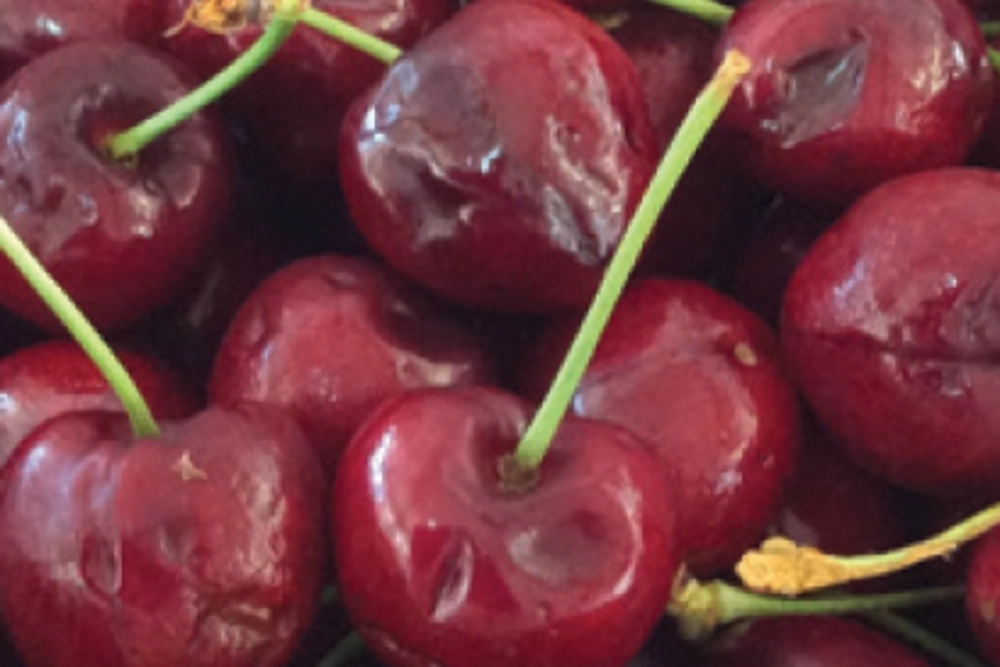
The study, carried out over two consecutive seasons, revealed marked genetic variability in the response to mechanical damage. The Damage Index (DI), used as a quantitative parameter of pitting susceptibility, ranged from 1.18 to 2.87. Accession ‘10072’ proved to be the most resistant, maintaining high stability across years and maturity stages, whereas ‘16806’ was identified as the most susceptible. These findings confirm that genetic background is the primary factor determining resistance to surface pitting, with some accessions capable of maintaining consistent performance under different environmental conditions.
Among the physiological parameters evaluated, total dry matter content emerged as the most reliable indicator of mechanical resistance. A negative correlation was observed between dry matter content and the damage index: as dry matter increased, susceptibility to pitting decreased. This finding suggests that fruits characterized by higher tissue density and better structural integrity are less prone to developing surface depressions during storage. Dry matter therefore represents a highly valuable and easily measurable operational parameter. Ascorbic acid also showed a favorable relationship with pitting resistance. The most resistant accessions contained higher concentrations of vitamin C than susceptible genotypes. Ascorbic acid may indirectly contribute to membrane stability and tissue redox balance, limiting oxidative processes that accelerate cell wall degradation following mechanical injury.
Antioxidant capacity
The interpretation of total antioxidant capacity was more complex. Contrary to previous assumptions, the study identified a positive correlation between high antioxidant activity and increased susceptibility to pitting. This behavior may depend on the different metabolic pathways involved among genotypes and on the interaction between antioxidants, enzymatic activity, and cell wall remodeling. Anthocyanins and polyphenols also showed weak correlations with mechanical resistance, indicating that the phenomenon is regulated by far more complex physiological interactions than simply the concentration of antioxidant metabolites.
Fruit maturity stage significantly affected biochemical composition, with marked increases in anthocyanins, dry matter, and ascorbic acid in fruit harvested at advanced maturity. However, these variations did not produce statistically significant differences in the damage index, highlighting the predominant role of genetics over fruit maturity in determining resistance.
Differences observed between the two growing seasons further confirmed the strong influence of environmental conditions. Temperature, rainfall, and solar radiation affected dry matter accumulation, phenolic compound content, and fruit tissue firmness, contributing to year-to-year variability in pitting susceptibility.
Breeding programs
Overall, the study provides valuable indications for sweet cherry breeding and postharvest quality management. The identification of highly resistant accessions such as ‘10072’ opens new perspectives for the development of cultivars with greater tolerance to mechanical damage, while parameters such as dry matter content and ascorbic acid concentration could become rapid screening tools in breeding programs and in the commercial selection of fruit intended for extended storage.
Source: Suran, P., Danková, V., Bílková, A., & Plecitá, L. (2025). Influence of Genotype, Maturity Stage and Year on Surface Pitting Susceptibility and Related Physiological Traits in Sweet Cherry (Prunus avium L.). Plants, 15(1), 63.
Image source: Mundoagro
Andrea Giovannini
PhD in Agricultural, Environmental and Food Science and Technology - Arboriculture and Fruitculture, University of Bologna, IT
Cherry Times - All rights reserved