International Plant Selection (IPS) has been selecting new cherry varieties suited to all production areas in Europe since 1962. The French company maintains exclusive collaborations with numerous breeders worldwide and, thanks to these close relationships, has signed an exclusive agreement with Zaiger Genetics, a California-based program that includes several projects dedicated to cherries. IPS acts as the exclusive publisher and manager of the varieties developed within this program, coordinating the introduction of these patented varieties through a selected network of nurseries and growers.
Over more than 60 years, the company has built a solid reputation thanks to its varietal selection work, innovation capacity, and ability to adapt to the needs of different countries. Its goal has always been to offer varieties that are attractive to growers. To adapt to the market and meet their expectations, IPS is now announcing a change in its cherry business model.
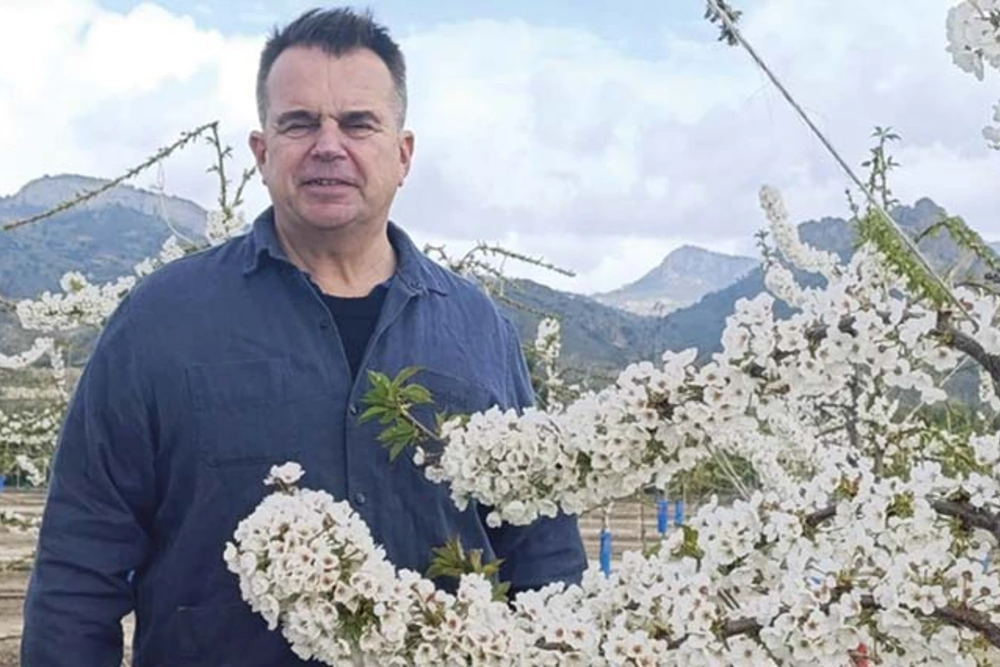
As explained by Alexandre Darnaud, director of International Plant Selection (IPS), a cherry growers' club called ZIC (Zaiger IPS Cherry) has been created.
“It is a club with an original structure: only members of this group can access the planting of varieties from the Zaiger Genetics program, but distribution remains free and they can market under their own brand. Our job is to find good varieties for growers, not to sell the fruit.”
At the marketing stage, the only requirement is that each grower commits to applying a small ZIC label with a QR code to ensure batch traceability, while the main brand remains that of the grower or marketer.
The initiative started in France and already includes members with varieties planted in Spain, Morocco, and Turkey. IPS is committed to managing all new varieties exclusively through the members of this group.
Challenges in the cherry sector
The cherry production sector is currently facing several challenges, and one of the most complex is climate change. For this reason, identifying varieties adapted to changing climate conditions is one of IPS’s main priorities.
Changes in weather patterns are causing phenomena such as delayed dormancy in cherry trees, due to a lack of chilling hours, as well as the appearance of double or deformed cherries caused by extreme heat or drought.
“All these factors are making it more difficult to grow traditional varieties, and we are very concerned about finding cherries that can adapt to this climate change. In this regard, the Zaiger Genetics program in California is very dynamic, and every year we import between 20 and 25 new cherry types to test,” says Alexandre Darnaud.
IPS has 15 hectares of experimental fields in the Drôme Provençale (France) and 6 hectares in the Region of Murcia. In these farms, new varieties from California are tested along with their adaptability to different European production areas. The agreement with Zaiger Genetics allows IPS to access a wide varietal range, with solutions covering all production stages and adapting to different climatic conditions.
“In Murcia, we have tested all the new varieties, and some have proven to be very promising, with optimal performance. Climate change is a major concern, and these varieties adapt very well,” adds Darnaud.
“We have also observed a strong concentration of cherry production at a global level: there are fewer producers, but they are larger. Investments per hectare have increased, and the sector is undergoing a radical transformation. The creation of this club allows us to follow this evolution,” concludes the IPS director.
“Another important aspect is that growers increasingly want to acquire knowledge. At International Plant Selection, we have an agronomist responsible for coordinating the group and facilitating the exchange of technical information between the breeder, IPS, and growers,” concludes Alexandre Darnaud.
Oscar Or Zanco
Valencia Fruits
Image source: IPS
Cherry Times - All rights reserved