It all began in Zadar, in Dalmatia, although the idea came from the Genoese Girolamo Luxardo who founded the Maraschino distillery here in 1821, inspired by his wife's passion for producing Rosolio Maraschino, a recipe born in convents from the infusion of marasca cherries in alcohol with the addition of sugar and rose essence.
From a family-scale operation to an industrial enterprise thanks to the introduction of steam distillation and the cultivation of the first large industrial orchard of this tart cherry variety. In 1829 Luxardo even obtained from the Emperor of Austria a “privilege”, essentially a patent granting exclusive production rights for fifteen years.
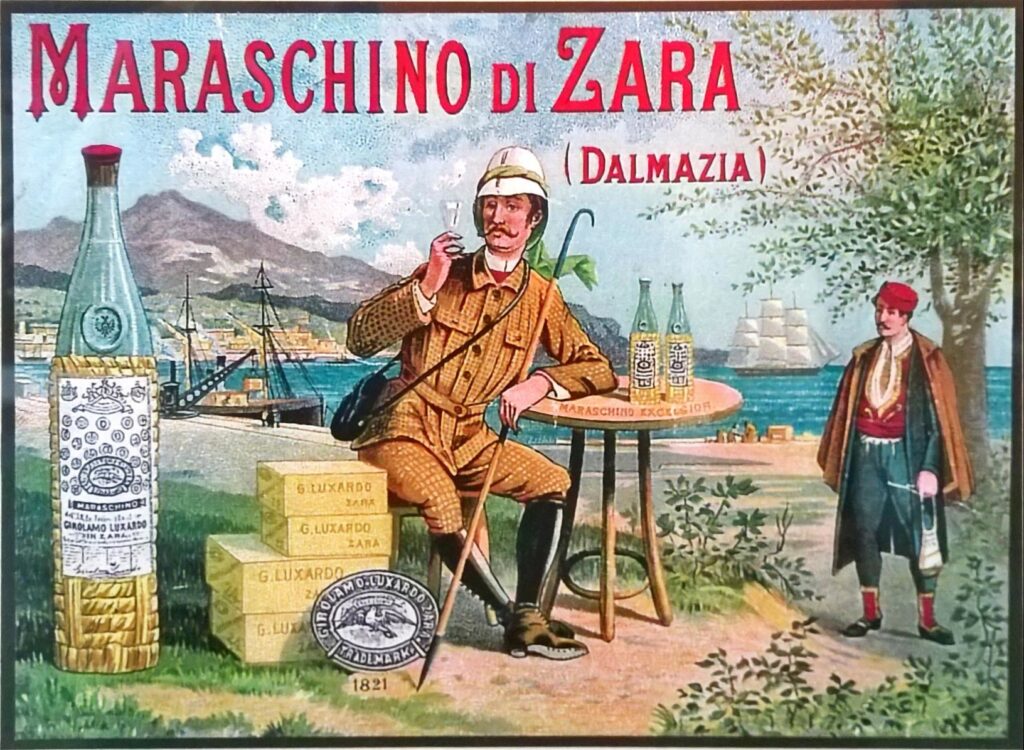
The designation Privileged Maraschino Factory “Excelsior” Girolamo Luxardo is still present in the company’s official name today. In 1913 the Zadar distillery was expanded with a modern facility, among the largest in the Austro-Hungarian Empire, marking the beginning of the brand’s expansion into international markets.
The war and reconstruction
The setback began in 1940 with the outbreak of the Second World War which led to the almost complete destruction of the plant in 1943. The subsequent occupation of the city by the communist partisans of Tito resulted in the confiscation of the factory and the dispersal of the family.
The business resumed from scratch only in 1947 in Torreglia, in the province of Padua, thanks to the initiative of Giorgio Luxardo, the only surviving brother of the fourth generation.
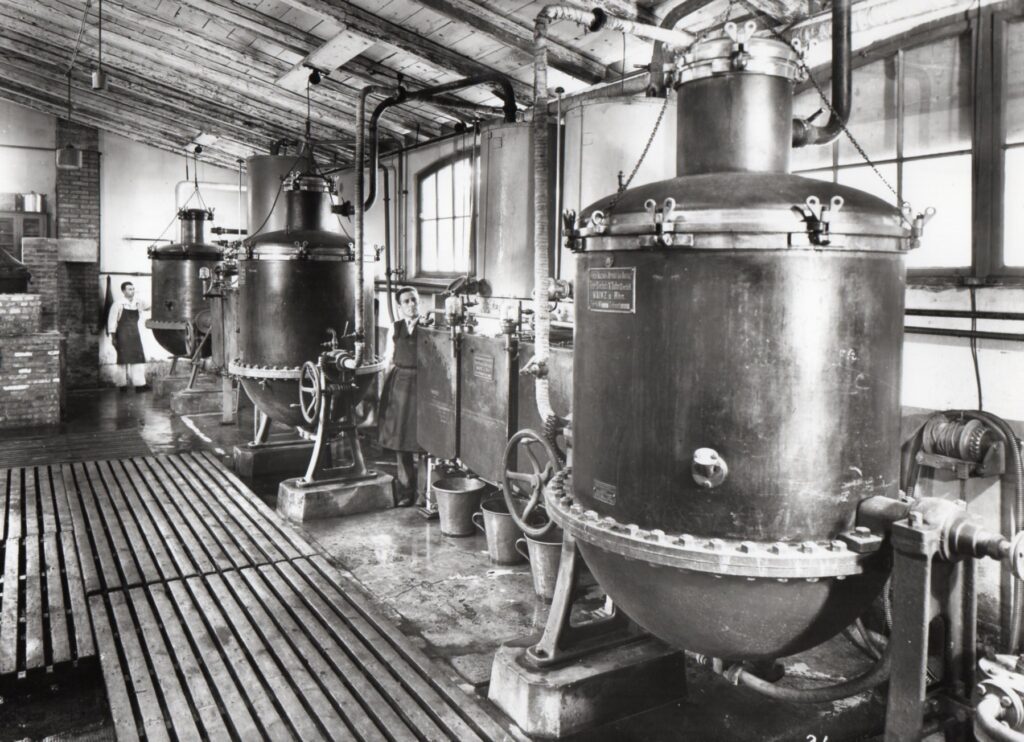
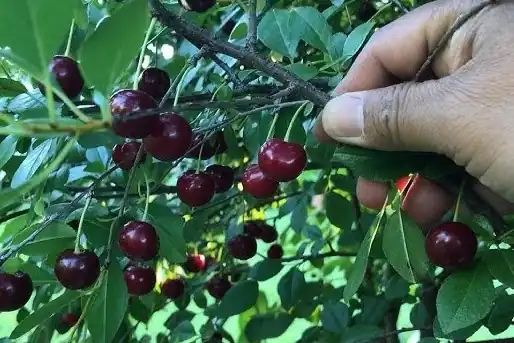
At the foot of the Euganean Hills, soils composed of volcanic rocks and calcareous sedimentary formations offered a favorable habitat for cultivating the “Marasca Luxardo” variety, smaller and more acidic than common cherries but rich in juice and particularly suited to industrial uses.
Company development and production
Nicolò III, Michele and Franco, the fifth generation, expanded the liqueur range and strengthened the company’s presence both on the domestic and international markets. From the 1980s onwards, a period of significant technological investment began, while never abandoning the direct control of the entire supply chain, from raw material to bottling.
Current production exceeds 6 million bottles per year and includes the historic Maraschino and Cherry Sangue Morlacco, as well as other typical Italian liqueurs such as Sambuca dei Cesari, Amaretto di Saschira, Limoncello, Aperitivo and others, together with a wide selection of aromatic specialties dedicated to artisanal pastry making.
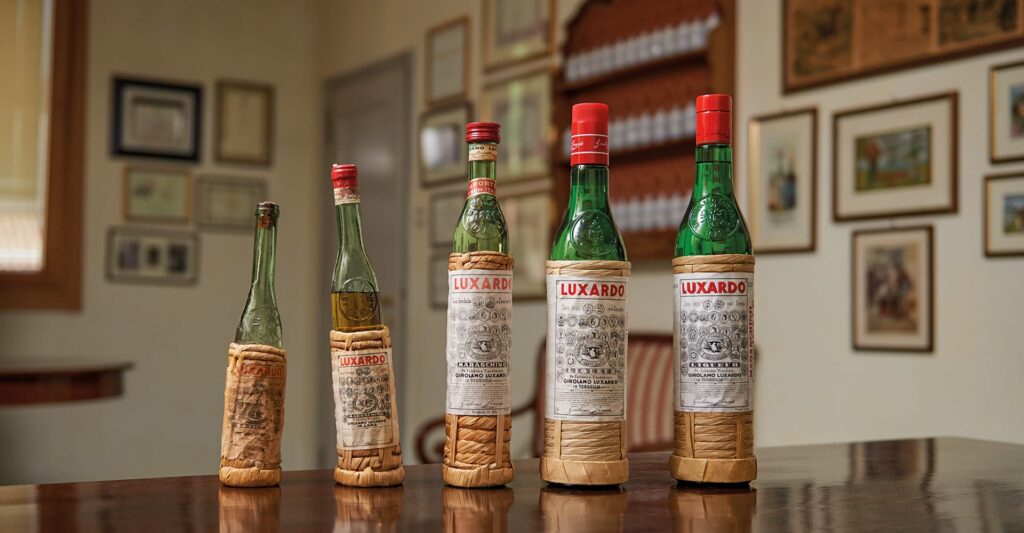
The museum and the link with D’Annunzio
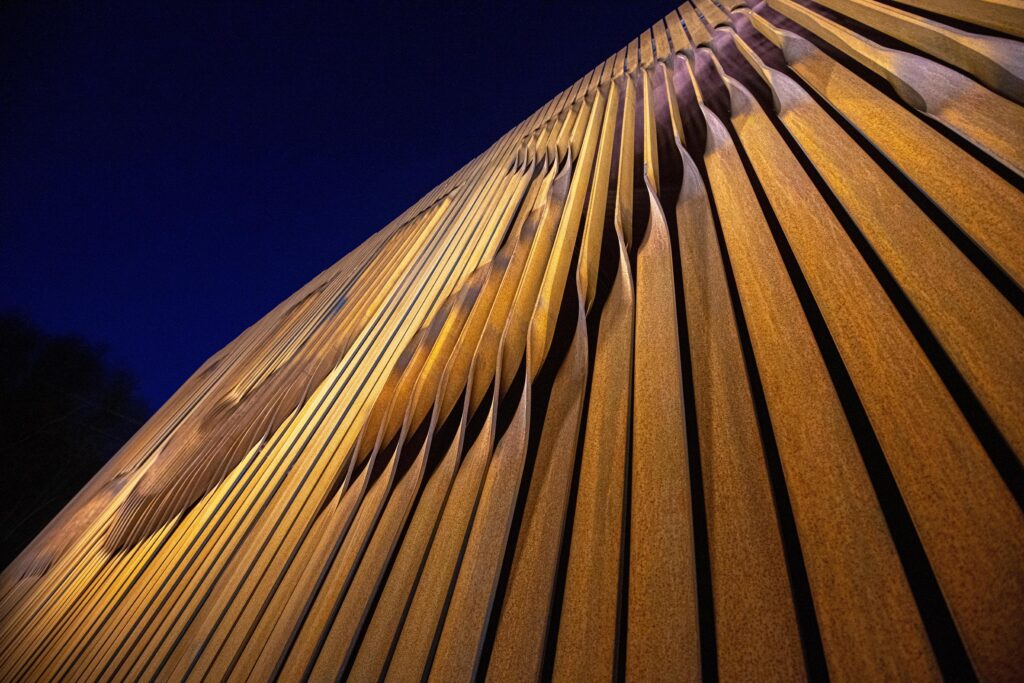
More than two hundred years of family history have been celebrated with the creation of a corporate museum designed by Studio Architetti Mar, set up on an unused floor of the factory. A distinctive external element is the façade characterized by a sequence of corten blades that bend and rotate, forming with the passage of sunlight a lettering that identifies the function of the building.
Inside, the circular layout of the rooms retraces the key stages of the long family history, which also includes a business relationship for the trade of marasca cherries with Antonio d’Annunzio, father of Gabriele.
It was precisely the “Commander of Fiume” who added Sangue to the name Morlacco of the cherry brandy derived from the illustration of a Dalmatian peasant “de l’état vénitien” created by Bartolomeo Pinelli in 1828. This liqueur, originally called Ratafià and later known in Levant markets by the Turkish name “Visnà”, became famous thanks to the label for the 1919 harvest signed by D’Annunzio, eventually becoming the quintessential drink of Fiume.
Image source: Luxardo
Margherita Toffolon
Viaggi del Gusto Magazine
Cherry Times - All rights reserved