The Chilean frozen fruit industry is undergoing a phase of recovery and expansion, driven by production changes, increased technological advancement, and a growing diversification of the offering.
This was explained by Gonzalo Bachelet, CEO of Vitafoods and president of ChileAlimentos, to Portalfruticola.com, highlighting how the sector has recorded steady growth after years of contraction.
In 2024, the sector posted a 26% increase in volume and a 30% rise in value, reaching 225 thousand tons exported and revenues of $715 million (approximately €658 million). The trend is continuing into 2025, with a 15% growth recorded in the first two months of the year.

A growing sector
“The sector is experiencing a significant recovery, with a much more professionalized industry, state-of-the-art facilities, and the ability to compete on equal footing with leading international players,” Bachelet stated.
Asked about the main product categories, the executive pointed to blueberries as the leading export item, accounting for around 46% of the total.
The growth of the “blue fruit” is partly due to a structural shift in production: a larger share of product that was once destined for the fresh market is now being redirected to frozen, due to increasing international competition and improved field yield optimization.
Chile pushes frozen: blueberries lead, cherries gaining ground
At the same time, raspberries are undergoing a phase of renewal. As of February 2025, exports show an increase of around 70% compared to the previous year. This recovery is linked to the introduction of new varieties, the relocation of production to the southern regions of the country, and the adoption of mechanical harvesting, which has allowed yields per hectare to triple.
“Raspberries have shifted from a declining product to an attractive opportunity once again, thanks to partnerships between industry and growers, long-term contracts, and investments in varietal renewal,” the executive explained.
Strawberries are also showing positive performance, with a 25% growth since the beginning of the year, consolidating expansion into new production areas and improving quality, taste, and yields.
As for blackberries, the trend remains more moderate but stable, positioning them as a complementary product within the frozen berries offering.
The rise of cherries
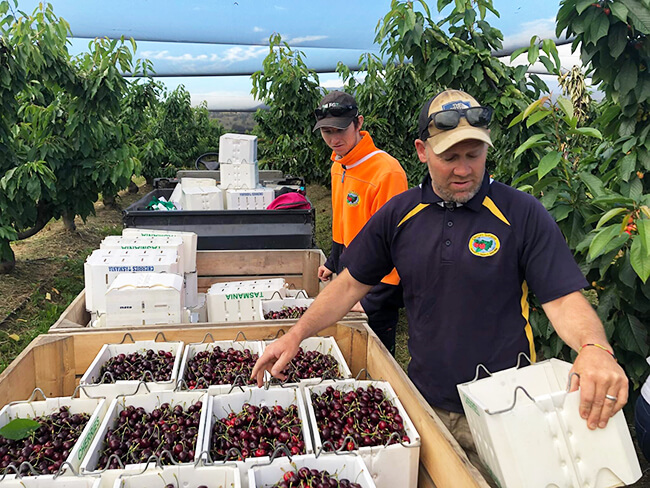
One of the most notable developments in the sector is the entry of cherries into the frozen segment. Although still representing smaller volumes compared to other berries, in 2024 they recorded a 97% increase, reaching approximately 17 thousand tons.
Their development is linked to the recovery of fruit not suitable for fresh export but perfectly suitable for frozen processing.
“We are talking about a very sweet product, with excellent color and flavor, which does not withstand long transport but achieves outstanding quality once frozen,” Bachelet noted.
Additionally, temporary factors have supported the performance of frozen cherries, such as production difficulties in Northern Hemisphere countries, including Turkey and some European regions. “This pushed prices last season, with increases of up to 50% for producers. However, this is a temporary dynamic, and its sustainability remains to be seen,” he added.
Frozen fruit markets
According to the president of ChileAlimentos, the United States remains the main destination market, with growing demand for innovative products, such as mixes combining cherries with traditional berries. This signals an industry increasingly focused on value creation and adapting to new consumption trends.
On the domestic market, consumption is still relatively limited, at around 10 thousand tons, but shows gradual growth, supported by greater supermarket presence and increasing consumer interest in frozen products.
Finally, Bachelet expressed optimism about the sector’s outlook: “The availability of raw material, the adoption of technologies, the opening of new markets, and the diversification of the offering outline a favorable scenario for long-term consolidation, strengthening Chile’s role in the global trade of this segment.”
Macarena Bravo
Text and image source: Portal Fruticola
Cherry Times - All rights reserved