Fruit cracking in sweet cherry is one of the major problems in modern cherry production, with losses that in the most severe cases can reach up to 100% of the harvest. A recent study from Ukraine investigated the physiological and morphological causes underlying fruit cracking, focusing on the decisive role of genotype and on varietal differences observed under controlled conditions (water immersion).
By analysing twelve local cultivars with different ripening times, the study outlined both the mechanisms leading to the formation of different types of lesions and the varietal resilience to cracking.
Cracking is essentially a mechano-physiological response to excessive water uptake through the cuticle, a process that leads to a rapid increase in cellular turgor until epidermal breakdown occurs. The type of lesion is not casual, but is closely related to the genetic background of the cultivar and to fruit shape.
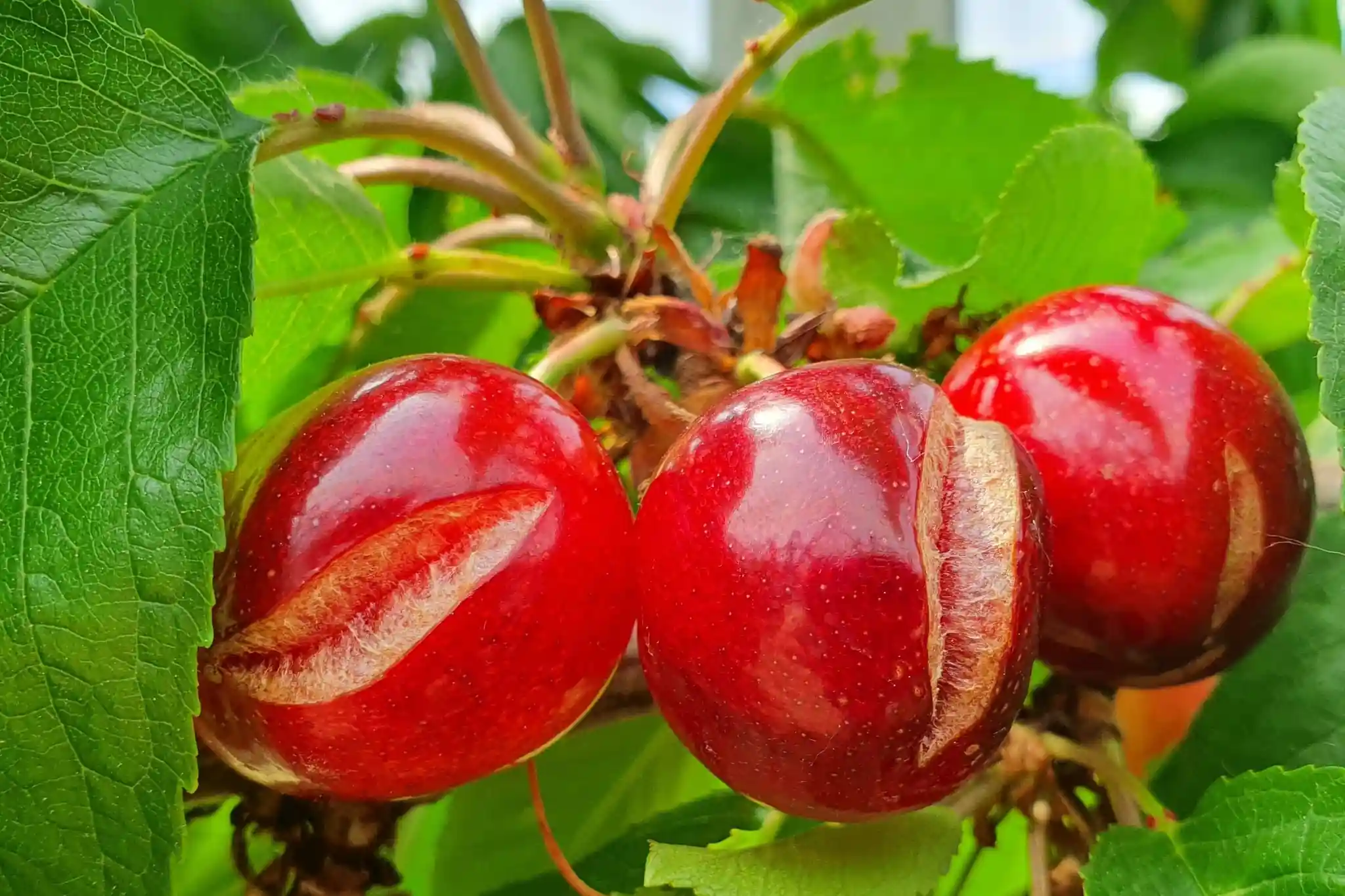
Cracking types and genetic traits
Lesions are classified into three categories: type A, near the peduncle cavity; type B, in the apical zone; and type C, lateral cracks. The first two types are generally superficial and may sometimes heal during ripening, whereas the third type is deep and can extend into the flesh down to the pit, promoting decay and significant losses in commercial quality.
The results highlight a clear relationship between ripening time and the prevalence of specific cracking types. Early-ripening cultivars typically exhibit lateral cracking (type C), resulting from more rapid water accumulation during the initial stages of fruit enlargement.
Mid-season cultivars show a higher incidence of apical cracking (type B), while late-ripening cultivars tend to combine peduncular and apical damage (types A and B). The consistency of these patterns over three consecutive years confirms the strong genetic control of the trait.
Influence of morphology and physiology
Morphological characteristics also influence susceptibility to cracking. An inverse correlation was found between cracking resistance and peduncle length: the longer the peduncle, the greater the exposure of the fruit to prolonged wetting, and thus the higher the likelihood of initial microcracks.
The relative mass of the pit also affects resistance: fruits with a proportionally larger pit tend to crack less, probably due to lower internal pressure exerted on the epidermis.
A further inverse correlation concerns soluble solids content: higher values generate greater cellular turgor and therefore increase susceptibility to cracking under conditions of rapid hydration.
Flesh firmness and cuticle factors
Another important aspect is the role of flesh firmness and cuticle properties. Although cultivars with firmer flesh generally show greater mechanical strength, firmness alone is not sufficient to predict cracking behaviour, as the interaction between cuticle characteristics, fruit shape and water dynamics is more decisive.
Some cultivars with relatively thin fruit skin, such as “Mirazh”, proved to be unexpectedly resistant, confirming that cracking cannot be attributed to a single physiological parameter.
Genetic solutions and future prospects
The study’s conclusions emphasise the importance of genetics in managing this problem. Although agronomic practices such as anti-rain covers, irrigation management or calcium applications can mitigate cracking, no strategy is as effective as the use of intrinsically tolerant cultivars.
Among the materials analysed, the cultivars “Mliivska žovta”, “Mirazh”, “Meotyda”, and “Amazonka” showed the highest resistance under stress conditions. Given the multifactorial complexity of fruit cracking, further genetic characterisation of the mechanisms underlying resistance is essential in order to accelerate breeding programmes and provide the cherry industry with new cultivars capable of combining quality, productivity and yield stability even under rainy conditions.
Source: Shubenko, L., Leus, V., Ya, M., & Donchenko, V. (2025). Characteristic features of cracking of sweet cherry fruit surface. Agrobiology, 1, 210–220. https://doi.org/10.33245/2310-9270-2025-195-1-210-220
Image source: SL Fruit Service
Andrea Giovannini
University of Bologna (IT)
Cherry Times - All rights reserved