In the heart of one of the most renowned cherry-growing areas in Spain, genetic research is entering a new phase. The Centro de Investigaciones Científicas y Tecnológicas de Extremadura (Cicytex) and the Agrupación de Cooperativas Valle del Jerte have launched a project aimed at making sweet cherry breeding faster and more efficient, with the goal of identifying the most promising genotypes for the Extremadura region in a shorter time.
A project running until 2030 to innovate Jerte cherries
The agreement, formalized in December 2025 through a technical assistance contract, will support the breeding program from 2026 to 2030. The objective is to introduce more advanced tools in a sector that is crucial to the valley’s economy, where cherry cultivation represents one of the main agricultural and cultural resources.
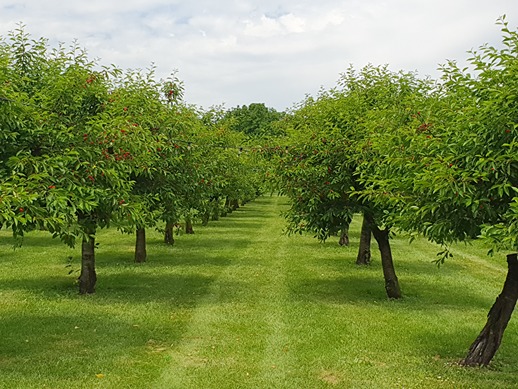
The Jerte Valley is home to over one and a half million cherry trees. Between late March and early April, their blossoming transforms the landscape into a vast white carpet, attracting thousands of visitors each year. The duration of the phenomenon generally ranges from 10 to 15 days, depending on altitude.
What the program includes
The project includes several operational activities: from designing crosses to the production and cultivation of seedlings, up to multi-year field evaluation of different plant materials before the pre-selection phase.
The most innovative element is the introduction of genomic selection, which will make it possible to identify key agronomic and commercial traits at an early stage. These include fruit size and color, flowering and ripening time, firmness, and self-compatibility. The aim is to reduce the typical time required for breeding and to make the selection of the best varieties more targeted.
Two operational phases and 1,000 trees to be analyzed
The service has been organized into two phases. The first will focus on the design and development of a genetic panel for sweet cherry and on genomic association studies. The second will involve DNA extraction from seedlings, subsequent analysis, and the production of periodic reports to guide decision-making within the breeding program.
The plan includes the analysis of at least 1,000 trees and the study of around 110 varieties from the Cicytex collection at the experimental farm in Cabrero, in the province of Cáceres. The estimated budget for the contract is €44,900.
A sector in transition
The initiative is part of a transformation phase for Jerte cherry production. According to the president of the Designation of Origin, the introduction of new varieties represents “a before and after” moment for the sector, in a context where the European market continues to expand.
Until now, the traditional offering of the designation has been concentrated on the four picota types and the Navalinda variety. Certified production potential has been around 4 to 5 million kilos, distributed between the domestic market and the United Kingdom. Today, however, the sector is also looking at growing demand for other cherries, often larger in size and with broader commercial prospects.
Conclusion
Genomics is emerging as a strategic ally for the future of Jerte cherries. In a context shaped by varietal competition, climate adaptation, and the need for greater production efficiency, the project promoted by Cicytex and local cooperatives aims to provide a stronger scientific foundation for the selection of new varieties. A step that could further strengthen the presence of Jerte cherries across the 25 European Union countries where they are already marketed.
Source: www.elperiodicoextremadura.com
Image source: Stefano Lugli
Cherry Times - All rights reserved