The average annual consumption per capita, equal to 1.7 kg, is one full kilogram lower than the level recorded six years ago.
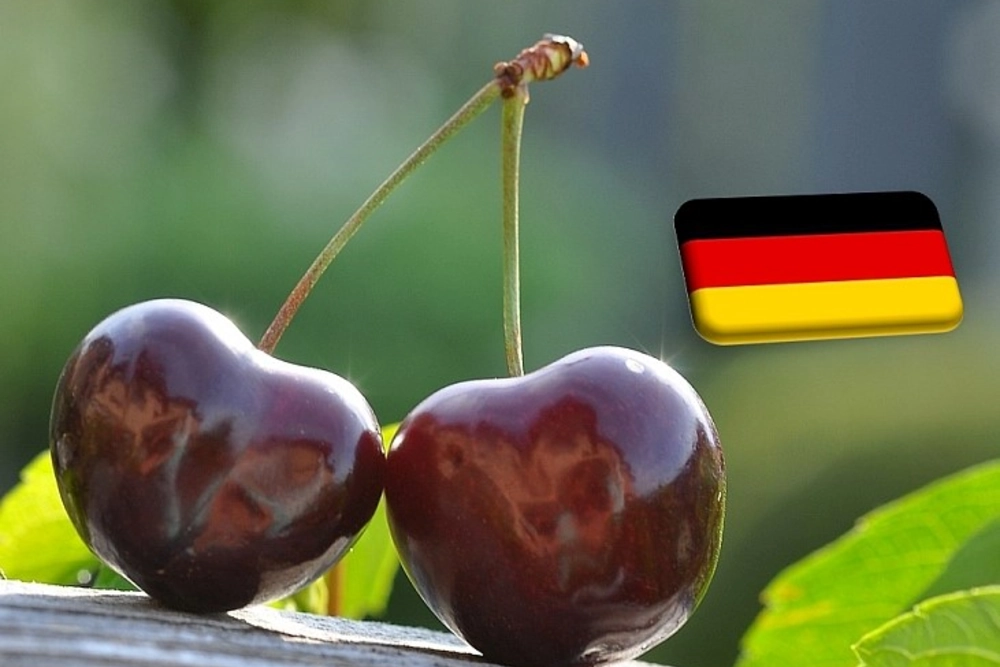
According to data from the Bundesinformationszentrum Landwirtschaft (BZL), in 2025 in Germany, annual per capita consumption of cherries and sour cherries, both fresh and processed, amounted to 1.7 kg, with a decrease of 1 kg over six years.
Based on data from the German Federal Statistical Office (Statistisches Bundesamt), in 2025 around 37.3 thousand tonnes of cherries and 9,800 tonnes of sour cherries were harvested, for a total of around 7,200 hectares cultivated.
Harvest
The harvested volume exceeded the previous year’s figure by 33%, following a year marked by particularly poor production.
The mild conditions during flowering, together with the absence of frost damage and hail, particularly favored cherry production results.
Almost half of the harvest came from the orchards of Baden-Württemberg, followed by Rhineland-Palatinate and Bavaria.
The German cherry season runs from June to August; however, domestic supply is not sufficient to fully cover consumer demand.
Imports
As a result, in 2025 Germany received 15.6 thousand tonnes of fresh cherries from Spain, 7,200 tonnes from Greece and 1,900 tonnes from Italy.
Due to the decline in Turkish production caused by late frosts, Spain replaced Turkey among the main supplier countries.
The main exporters of processed cherries were Poland (4,500 tonnes), the Netherlands (3,400 tonnes), Spain (1,200 tonnes) and Italy (1,000 tonnes).
In the German market, in 2025 around 70% of cherries were marketed as fresh fruit, while around 26% were destined for industrial processing.
Values
Thanks to their high water content, cherries have a low energy intake, but contain significant amounts of carbohydrates (13%), fruit acids, dietary fiber, as well as potassium, calcium and magnesium.
Among the B vitamins, they provide folic acid and also supply vitamin C, with a content of 15 mg/100 g.
The fruit’s characteristic red color is due to anthocyanins, which, thanks to their antioxidant action, can play a protective role for cells; the darker the skin color, the higher the anthocyanin content.
Text and image source: FruitWeb
Cherry Times - All rights reserved