The Greek cherry season is entering a new phase, with harvesting gradually shifting towards the higher-altitude areas of Pella. Operations are now underway in orchards located approximately 700 metres above sea level, while product availability remains exceptionally high.
However, the abundance of the harvest does not automatically translate into a positive season for the supply chain. Unprofitable prices, international competition, high labour costs and difficulties sourcing packaging materials are putting growers and packers under pressure.
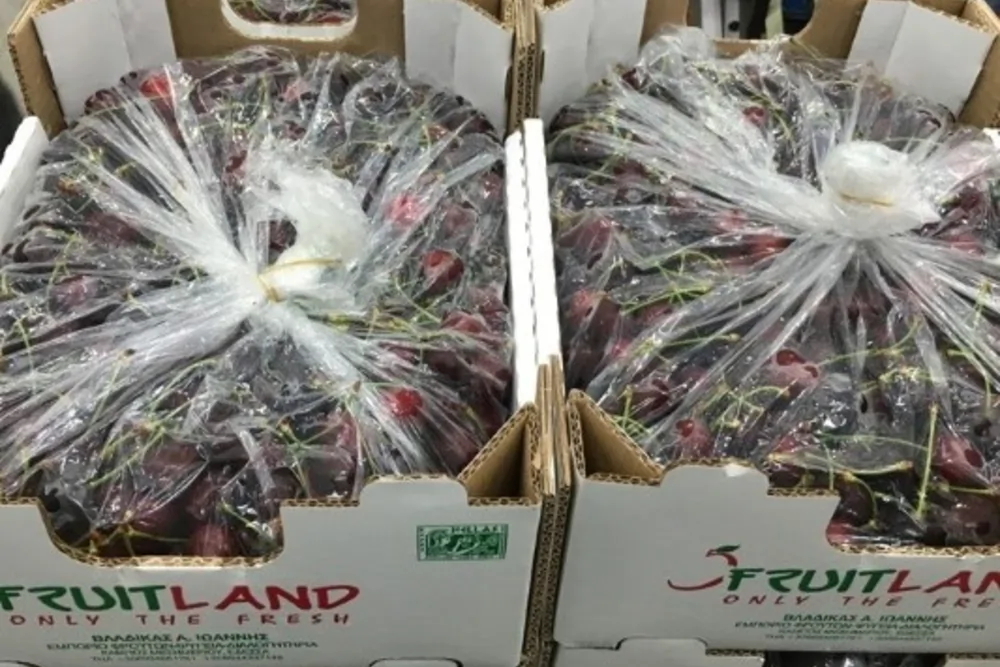
Record production, but variable fruit sizes
“This year’s harvest is extraordinarily abundant. We have never recorded such high production before,” says Ioannis Vladikas, owner of the Fruit Land packing company.
In terms of quality, fruit sizes are average overall, but there is considerable variability on the trees. The same tree may bear cherries ranging from 22 to 30 millimetres in diameter, although sizes between 24 and 26 millimetres are the most common.
This variability creates an additional challenge during the sorting and packing stages, particularly in a season characterised by exceptionally large volumes.
Abundant supply puts downward pressure on prices
Greek cherries are reaching export markets in excellent condition. Limited rainfall has caused no significant damage, helping to preserve the fruit’s commercial quality.
The main problem, however, remains the high availability of cherries on the market. Greece’s record production is being compounded by substantial volumes from Turkey, Italy and Spain.
“We are under pressure both because of our abundant harvest and because of the large volumes arriving from Turkey, Italy and Spain,” explains Vladikas.
Greek shipments to Central Europe are currently being sold at prices ranging from €2.10 to €2.20 per kilogram, levels considered extremely low by industry operators.
Producer prices follow the same downward trend
Prices paid to growers have followed the same trend. They currently range from €1.20 to €1.50 per kilogram, while prices of €1.80 per kilogram are uncommon and reserved exclusively for the highest-quality cherries.
Labour shortages push daily wages up to €70
According to the Greek entrepreneur, growers who achieved particularly high yields may still generate a profit from the season. However, harvesting costs are weighing heavily on their finances.
The shortage of workers has pushed daily wages up to €60–70. In the past, a significant share of the seasonal workforce employed for cherry harvesting came from Albania, but this source of labour has now declined considerably.
The combination of high wages and low selling prices is therefore squeezing profitability, even in the presence of record production.
Packers struggle with high volumes and material shortages
The season is also proving challenging for packing companies. Commercial performance has been uneven, alternating between favourable periods and phases in which operators have primarily focused on covering their costs.
Managing exceptionally large volumes is also testing the capacity of packing facilities. In several cases, shortages of packaging materials are making it more difficult to schedule operations and fulfil commercial commitments.
Vladikas gives the example of orders for 1,000 packages where only 500 are delivered, with the remainder postponed until a later date. This situation creates delays and disrupts the regular flow of produce along the supply chain.
A record season exposing the supply chain’s weaknesses
The Greek cherry season confirms the strong production potential of the cherry-growing areas of Pella, while simultaneously highlighting the sector’s vulnerabilities.
Without adequate prices and sufficient availability of workers and materials, the abundance of volumes risks becoming a logistical problem rather than an economic advantage.
The ability to organise harvesting, packing and marketing will therefore be crucial to limiting the impact of a season that is highly generous in terms of production but extremely challenging when it comes to margins.
Source: www.freshplaza.it
Image source: Fruit Land
Cherry Times - All rights reserved