The growing focus on the sustainability of fruit production systems calls for increasingly in-depth analyses of energy flows and greenhouse gas emissions associated with agronomic practices.
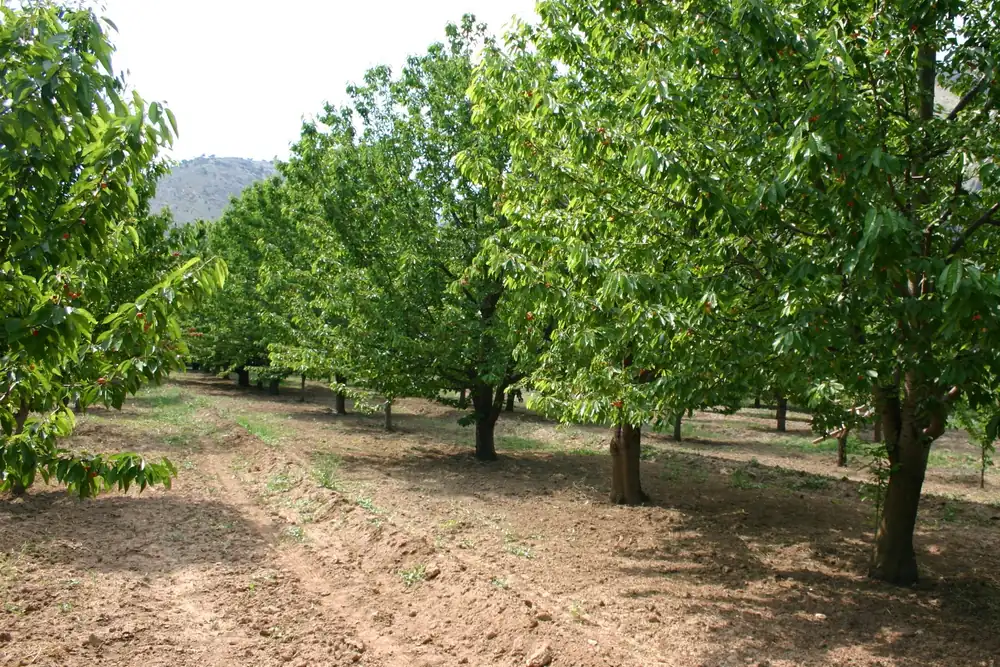
In this context, a recent study conducted in Konya Province, Türkiye, one of the main areas for white cherry cultivation, quantitatively assessed energy efficiency and greenhouse gas (GHG) emissions throughout the production cycle, providing useful insights to improve the environmental performance of the sector.
The data were collected through questionnaires administered to 30 growers during the 2025 production season.
The results show that the production system has a positive energy balance, with an energy output of 61,891 MJ ha−1 compared to an input of 16,273 MJ ha−1, corresponding to an energy use efficiency (EUE) index of 4.01.
Energy efficiency
This value indicates a strong ability of the system to convert input energy into final product, outperforming other fruit production systems reported in the literature.
Additional indicators, such as energy productivity (1.37 kg MJ−1) and specific energy (0.80 MJ kg−1), further confirm a relatively efficient use of energy resources, with limited losses throughout the production process.
Despite these positive aspects, the analysis of energy input composition highlights several structural criticalities.
In particular, about two-thirds of total energy consumption is concentrated in just two components: chemical fertilizers and electrical energy (37.7% and 34.9%), the latter mainly used for irrigation.
Energy inputs
The high share of nitrogen fertilization represents a key factor both in terms of energy consumption and environmental impact, while the energy demand for irrigation reflects a strong dependence on pump-based systems.
Another critical issue concerns the nature of the energy sources used: more than 84% of total energy derives from non-renewable sources, indicating a heavy reliance on fossil-based inputs.
This aspect is particularly relevant from a sustainability perspective, as it limits the potential for reducing the carbon footprint of the production system.
In terms of emissions, the system shows a total load of 1,185.7 kg CO2-eq ha−1, equivalent to approximately 0.06 kg CO2-eq per kg of product.
Emission sources
The breakdown of emission sources reveals that electricity is the dominant contributor (over 80% of total emissions), followed by nitrogen fertilizers (about 8%).
This confirms the crucial role of irrigation practices and nutrient management in determining the environmental impact of cherry production, in line with findings from other intensive fruit systems.
Overall, the study demonstrates that white cherry cultivation in Konya can be considered an energy-efficient production system, although still characterized by an input structure heavily dependent on non-renewable energy sources and energy-intensive practices.
Improving sustainability requires the adoption of targeted strategies, including optimization of nitrogen fertilization through precision agriculture techniques, implementation of energy-efficient irrigation systems, and integration of renewable energy sources, particularly solar energy for powering irrigation pumps.
Sustainable production
In conclusion, the transition toward more sustainable cherry production systems requires a systemic approach that integrates energy efficiency with emission reduction.
The implementation of an energy management framework focused on the rational use of resources is a key strategy to balance economic competitiveness with environmental protection, supporting the development of resilient and low-impact fruit production systems.
Source: Bozdemir Akçil, M., Candemir, S., Doğan, H. G., & Bayramoğlu, Z. (2026). Energy Use and Emission Efficiency in White Cherry Production: Evidence from Türkiye. Applied Fruit Science, 68(1), 54. https://doi.org/10.1007/s10341-025-01760-6
image source: Stefano Lugli
Andrea Giovannini
PhD in Agricultural, Environmental and Food Science and Technology - Arboriculture and Fruitculture, University of Bologna, IT
Cherry Times - ALl rights reserved