The challenge of maintaining cherry quality during the post-harvest phase continues to be a central issue for Chilean fruit production. Market requirements are driving the search for alternatives capable of extending shelf life without compromising fruit attributes.
In this context, emerging technologies such as ultrasound and nanobubbles may become promising tools to reduce microbial load and mitigate physiological damage, although their physiological effects still require deeper understanding.
Physiological indicators to assess post-harvest cherry quality
The challenge of maintaining cherry quality during the post-harvest phase continues to be a central issue for Chilean fruit production. Market requirements are driving the search for alternatives capable of extending shelf life without compromising fruit attributes.
In this context, emerging technologies such as ultrasound and nanobubbles may become promising tools to reduce microbial load and mitigate physiological damage, although their physiological effects still require deeper understanding.
Physiological indicators for evaluation
In this experimental trial, ‘Regina’ sweet cherries were evaluated after treatments with ultrasound at different power levels (W1, W2 and W3), with nanobubbles generated using different gases (N1, N2, N3), and with water and fungicide controls (B, C+, C-).
The cherries were stored under cold conditions for up to 45 days, recording quality and physiological status parameters, including fruit size (Cb), cluster mass (MG), firmness (Fz), total soluble solids (SS), acidity (Ac), electrolyte leakage rate (EL), CO₂ respiration rate (R2), internal chromatic coordinates (LI, aI, bI) and external chromatic coordinates (LE, aE, bE), as well as the presence of pitting (Pi), lizard skin (PL), cracking (Cr), decay (Pd), bruising (Mc) and peduncle dehydration (Pe).
To identify the most relevant variables for distinguishing treatment responses, Principal Component Analysis (PCA) was applied as a multivariate tool, along with Tukey’s test (p < 0.05) for comparisons among treatments.
General trends in physiological indicators
Positive correlations were observed between electrolyte leakage rate, acidity and the presence of pitting, suggesting that fruits with greater pulp damage or surface abnormalities also exhibit higher membrane integrity loss and changes in acidity.
This indicates that these parameters may represent reliable indicators of internal deterioration associated with visible physical damage.
A positive correlation was also identified between the presence of lizard skin, firmness and respiration rate, suggesting that some surface damage may coexist with fruits that maintain good firmness and show high metabolic activity, reflecting an active ripening process or a physiological response to surface stress.
Finally, external chromatic parameters a* and b*, as well as internal L* and b*, also showed positive correlations, indicating that treatments may induce significant changes both on the fruit surface and internally.
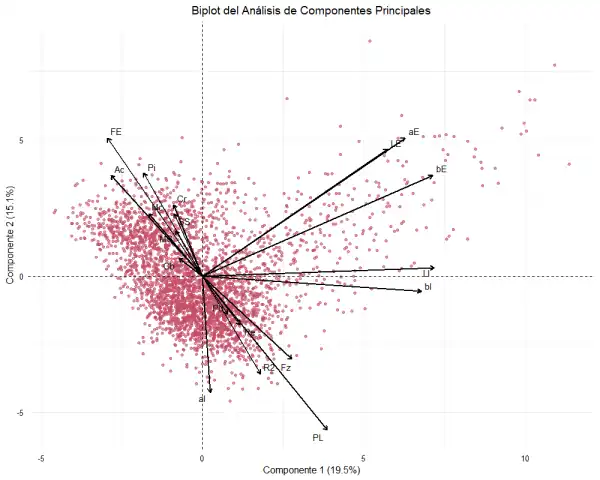 Figure 1. Biplot of the Principal Component Analysis (PCA) obtained from the standardization of quality and physiological parameters of cherries treated with emerging technologies, evaluated at the time of application and after 21, 34 and 45 days of storage.
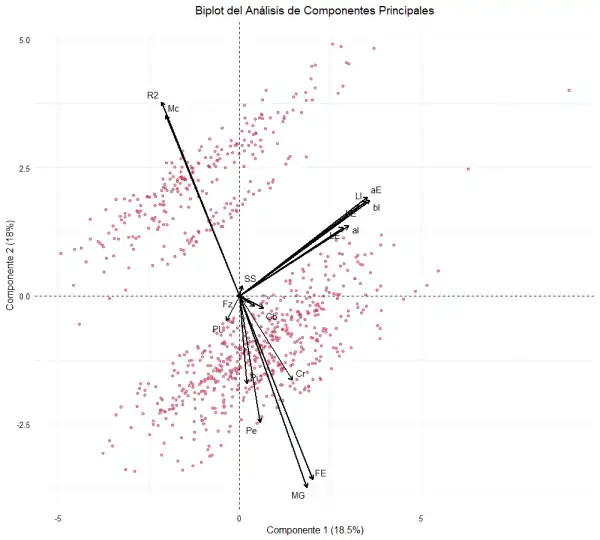 Figure 2. Biplot of the Principal Component Analysis (PCA) obtained from the standardization of quality and physiological parameters of cherries treated with emerging technologies at the time of treatment application.
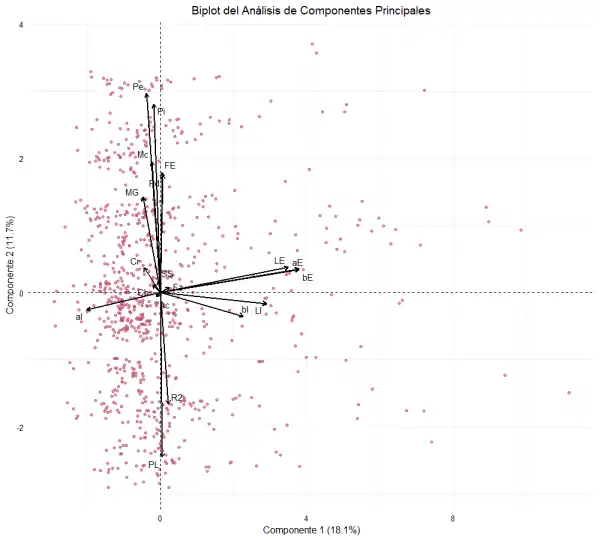 Figure 3. Biplot of the Principal Component Analysis (PCA) of quality and physiological parameters of cherries treated with emerging technologies after 45 days of cold storage.
Effect of treatments during application
During treatment application, internal and external chromatic coordinates maintained positive correlations, suggesting that treatment-related external factors influence these chromatic properties.
Similarly, the respiration rate showed a positive correlation with the presence of bruising, indicating that physical damage can alter fruit metabolic activity.
In addition, the electrolyte leakage rate showed a positive correlation with fruit mass, reflecting that larger fruits, with a greater amount of pulp and membranes, may exhibit greater electrolyte exchange.
Consequently, during treatment application, color variation, the presence of bruising and changes in respiration rate emerge as useful indicators for assessing treatment effects on fruit.
After 45 days of storage
After 45 days, chromatic coordinates continue to show positive correlations, confirming their usefulness in monitoring fruit changes.
Likewise, the electrolyte leakage rate now shows a positive correlation with pitting and peduncle dehydration, suggesting that this parameter is not only useful for evaluating treatments, but may also serve as an indicator of these disorders.
Finally, the respiration rate shows a positive correlation with the presence of lizard skin, confirming that certain epidermal damages may be associated with metabolic alterations in the fruit.
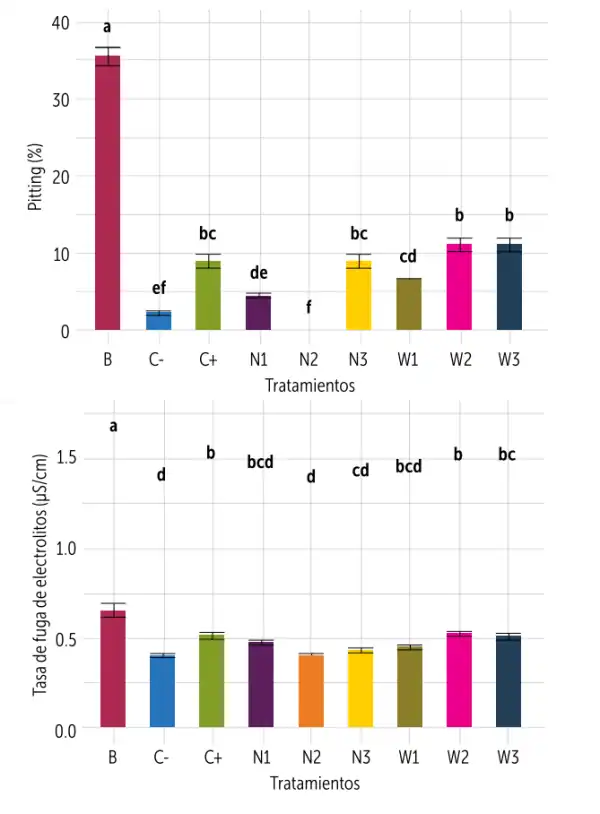 Figure 4. Electrolyte leakage rate (µS/cm) (A) and pitting incidence (%) (B) in cherries treated with emerging technologies and stored for 45 days. Bars represent mean ± standard error. Different letters indicate significant differences among treatments according to Tukey’s test (p ≤ 0.05).
Integrated trends: pitting and electrolyte leakage rate
As an example of the type of relationships observable through Principal Component Analysis (PCA), pitting and electrolyte leakage rate were jointly analyzed after 45 days of storage (Figure 4).
In this case, fruits showing a higher incidence of pitting also exhibited a higher electrolyte leakage rate, suggesting that visible damage is associated with loss of cell membrane integrity.
This behavior was particularly evident in treatment B, demonstrating how the combination of physiological indicators can help identify deterioration patterns and differentiate treatment responses.
Looking inside the data to understand physiology
The use of multivariate tools such as Principal Component Analysis (PCA) represents an effective way to interpret cherry responses to emerging technologies or other types of treatments under investigation.
Rather than comparing individual values, this approach allows observation of how treatments simultaneously influence different physiological processes, highlighting interactions that often escape univariate analyses.
Denise Aravena
Agricultural civil engineer
Cherry Times – All rights reserved