The increasing salinization of soils and irrigation water is one of the major threats facing modern fruit production, particularly in regions increasingly affected by climate change and limited water availability. In this context, the selection of rootstocks capable of maintaining high productivity under saline conditions has become a strategic priority.
A recent study investigated the response of the dwarfing cherry rootstock Gisela 5 (Prunus cerasus × Prunus canescens) under in vitro conditions, highlighting the main physiological and biochemical mechanisms activated in response to increasing concentrations of sodium chloride (NaCl).
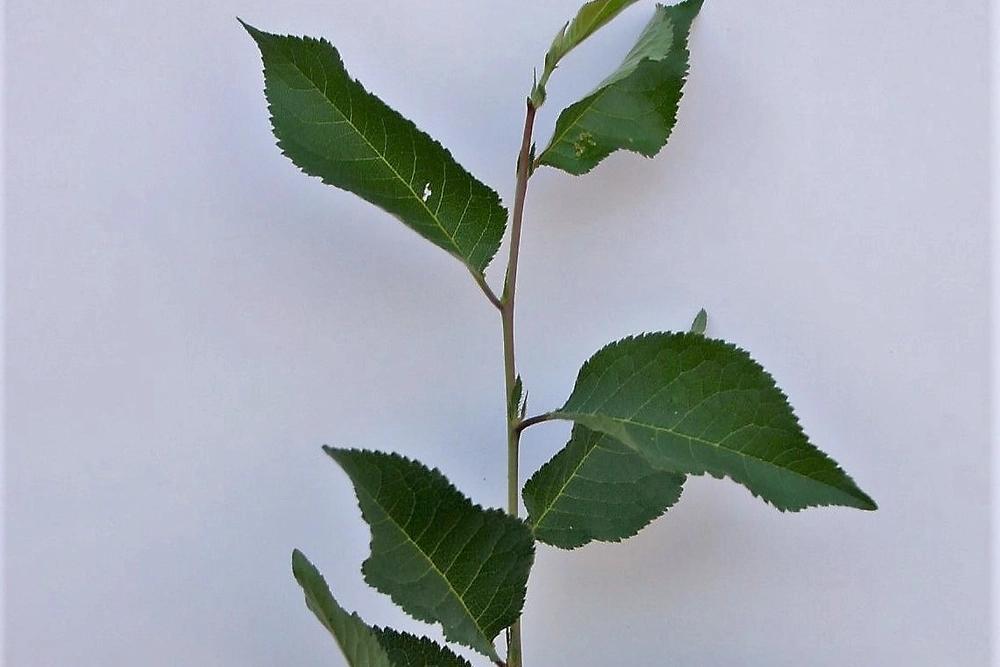
Plants were cultured for four weeks on a growth medium containing 0, 50, 100, and 150 mM NaCl, allowing researchers to evaluate the effects of salinity on growth, chlorophyll content, nutritional status, metabolite accumulation, and the activity of antioxidant enzymes. The results revealed a marked sensitivity of the rootstock to salt stress, with a progressive reduction in growth already evident at intermediate salinity levels.
Dry biomass declined by more than 50% at the highest NaCl concentration, while shoot vegetative growth was also significantly inhibited. Salt stress also caused a substantial loss of chlorophyll, accompanied by the progressive appearance of marginal chlorosis and leaf necrosis as NaCl concentration increased.
Photosynthetic damage and oxidative stress
These symptoms confirm the deterioration of the photosynthetic apparatus, one of the primary targets of salt-induced toxicity. In contrast, tissue water content remained essentially unchanged throughout the experiment, suggesting that the observed damage was not primarily caused by cellular dehydration but rather by the specific toxic effects of salt ions.
Regarding oxidative stress, the increased accumulation of malondialdehyde, a marker of lipid peroxidation and membrane damage, demonstrated that the production of reactive oxygen species is one of the major consequences of salt exposure.
At the same time, the rootstock responded by enhancing the activity of the main antioxidant enzymes, including superoxide dismutase, catalase, ascorbate peroxidase, peroxidase, and glutathione reductase. The activation of this defense system reflects the plant's attempt to counteract oxidative damage; however, this response was insufficient to prevent the progressive physiological deterioration observed at the highest salinity levels.
Ionic balance and nutrient loss
Salinity also profoundly altered the ionic balance within plant tissues. Sodium accumulation increased proportionally with the NaCl concentration in the culture medium, whereas chloride levels remained largely unchanged, indicating that the rootstock was able to effectively restrict chloride uptake.
Conversely, potassium, calcium, and magnesium concentrations declined significantly, compromising essential metabolic functions and membrane integrity. The resulting changes in the K and Na ratios indicate that sodium toxicity and nutrient imbalance are the primary factors responsible for the reduction in plant growth.
Overall, the study confirms that the Gisela 5 rootstock exhibits limited tolerance to salinity. Although it activates effective antioxidant defense mechanisms, these responses are insufficient to offset the detrimental effects of sodium accumulation and the disruption of mineral homeostasis.
Breeding and agronomic management
These findings provide valuable insights for breeding programs aimed at developing more salt-tolerant cherry rootstocks and offer useful guidance for the agronomic management of cherry orchards in areas increasingly affected by the salinization of soils and irrigation water.
Source: Erturk, U., Sivritepe, N., Yerlikaya, C., Bor, M., Ozdemir, F., & Turkan, I. (2007). Responses of the cherry rootstock to salinity in vitro. Biologia plantarum, 51(3), 597-600. https://doi.org/10.1007/s10535-007-0132-7
Image source: Stefano Lugli
Andrea Giovannini
PhD in Agricultural, Environmental and Food Science and Technology - Arboriculture and Fruitculture, University of Bologna, IT
Cherry Times - All rights reserved