Soil salinity is one of the main abiotic factors limiting the productivity of tree crops, particularly in areas irrigated with saline water or under unfavorable pedoclimatic conditions.
In such contexts, rootstock selection plays a strategic role in ensuring productivity and yield stability in sweet cherry cultivation.
A recent study investigated the response of two commercial rootstocks, ‘MaxMa 14’ and ‘Gisela 6’, to different levels of NaCl-induced salinity stress, highlighting differences in key morphological and physiological parameters.
The experiment
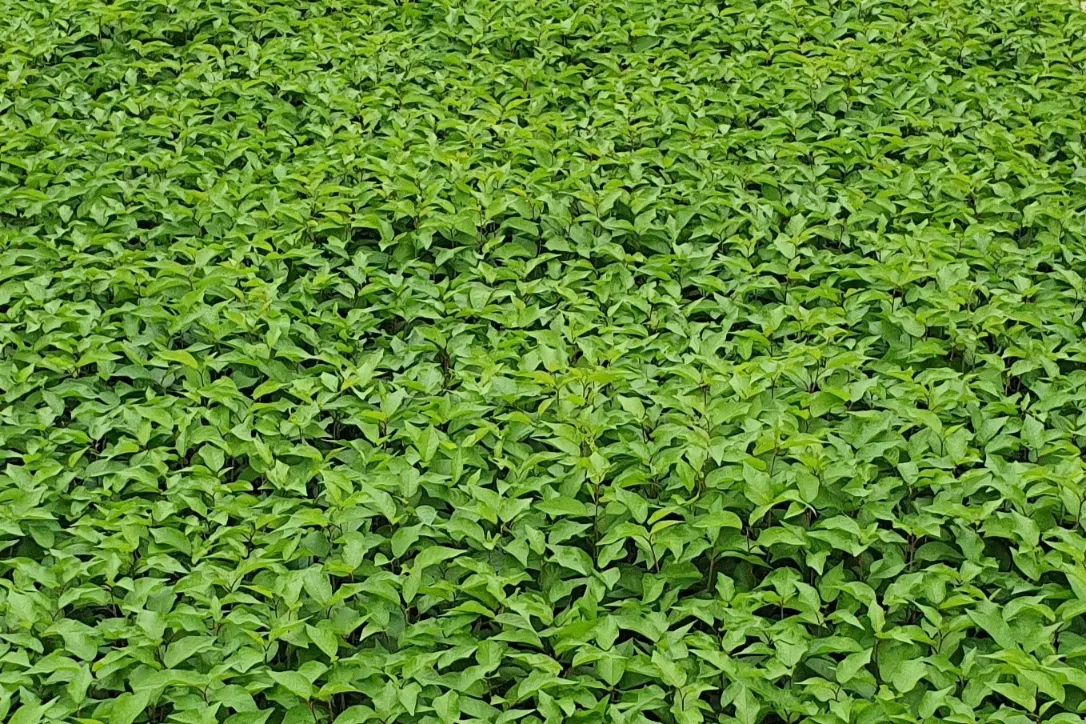
The experiment, conducted under controlled conditions over a four-month period, involved the weekly application of saline solutions at increasing concentrations (0, 1.022, 2.044, and 4.090 g NaCl L−1), allowing for the evaluation of salinity effects on vegetative growth, biomass accumulation, and plant physiological status.
The results show that increasing salinity leads to a progressive reduction in all measured growth parameters, including leaf number, leaf and root biomass, plant height, and leaf chlorophyll content. These findings confirm the well-known role of salinity in impairing water and nutrient uptake and disrupting metabolic processes.
However, a clear differentiation emerged between the two genotypes: ‘MaxMa 14’ demonstrated greater stability and adaptability under saline stress, maintaining higher values of leaf number, leaf biomass, and chlorophyll content even at the highest NaCl concentrations.
In contrast, ‘Gisela 6’ showed marked sensitivity exhibiting early stress symptoms even at low salinity levels, such as chlorosis, leaf necrosis, and nearly complete defoliation under more severe treatments.
In particular, the drastic reduction in leaf number and biomass observed in ‘Gisela 6’ suggests a limited capacity for ion exclusion or compartmentalization, leading to the accumulation of toxic ions at phytotoxic levels in leaf tissues.
Tolerance mechanisms
This differential behavior indicates that salinity tolerance mechanisms such as ion uptake regulation and osmotic adjustment are more efficient in ‘MaxMa 14’.
Although some parameters, such as root length and basal trunk diameter, did not show significant genotype × treatment interactions, the overall trend highlights the negative impact of salinity on both rootstocks, albeit with different intensity.
It is also noteworthy that no visible differences were observed during the early stages of the experiment, while stress symptoms appeared progressively over time, emphasizing the cumulative nature of salinity effects.
From an applied perspective, these results provide useful guidance for managing sweet cherry orchards in saline environments or in areas at risk of salinization.
The use of tolerant rootstocks such as ‘MaxMa 14’ can represent an effective strategy to mitigate the negative effects of salinity, improving orchard resilience and contributing to long-term yield stability.
Conversely, the use of sensitive rootstocks such as ‘Gisela 6’ should be avoided under such conditions, as it may result in a significant reduction in vigor and productivity.
Conclusion
In conclusion, the study confirms the importance of rootstock selection as a key agronomic strategy to address the challenges posed by increasing soil salinity, a problem further exacerbated by climate change.
Furthermore, the authors highlight the need for additional research aimed at elucidating the physiological and molecular mechanisms underlying salinity tolerance in sweet cherry.
Source: Slimbas, G., Giatsos, D., Gkalitsas, T., & Lazaridou, T. (2025). Response of two cherry rootstocks to salinity. AGROFOR International Journal, 10(3), 93-100. DOI: 10.7251/AGREN2503093S
Image source: Stefano Lugli
Andrea Giovannini
PhD in Agricultural, Environmental and Food Science and Technology - Arboriculture and Fruitculture, University of Bologna, IT
Cherry Times - All rights reserved