An unusually cool spring slowed the start of the stone fruit season in South Australia, affecting pre-Christmas demand for cherries. However, more favourable weather conditions after the holidays supported an excellent fruit ripening, particularly in orchards across the Adelaide Hills.
Late but sweet cherries
According to Penny Reidy, Marketing and Communications Manager at the South Australian Produce Market, “the sunshine that arrived after Christmas was crucial for cherry ripening. In previous seasons, rainfall during harvest had compromised quality, but this year growers were fortunate to avoid it.”
Traditionally, cherries play a central role on Australian Christmas tables, but with a delayed season, the peak demand window has shifted. “With the supply peak concentrated in January, post-Christmas demand has been more subdued. However, consumers can take advantage of excellent-quality fruit at more competitive prices, ideal for enhancing summer menus,” Reidy explained.
From Riverland to the Adelaide Hills
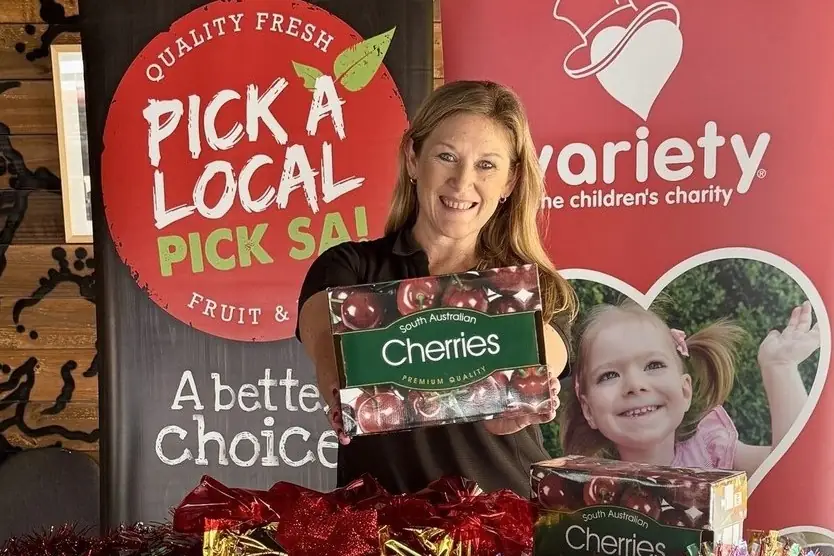
The first cherries of the season arrived in mid-November from the Riverland region, shortly before the traditional charity Cherry Auction held on 26 November, which this year raised 65,000 dollars (around €39,000) for the charity Variety SA. Varieties grown in the Adelaide Hills began harvesting between December and January, extending market availability.
“This week there is a real abundance of cherries. South Australian cherries are competing directly with Victorian varieties: supply is strong and quality is excellent,” Reidy commented. The market is also encouraging consumption through creative recipes shared on social media, moving beyond the traditional Christmas fruit bowl.
Large, flavourful cherries
What stands out at this advanced stage of the season is above all the size of the cherries. “We are harvesting large, sweet fruit; practically the best of the year’s production is on shelves right now,” Reidy highlighted.
The cloudy spring conditions affected not only cherries, but slowed the entire range of stone fruit across the region. Despite this, the overall abundance and final quality point to a positive commercial outcome and provide an additional incentive for summer consumption.
Text and image source: www.freshplaza.com
Cherry Times – All rights reserved