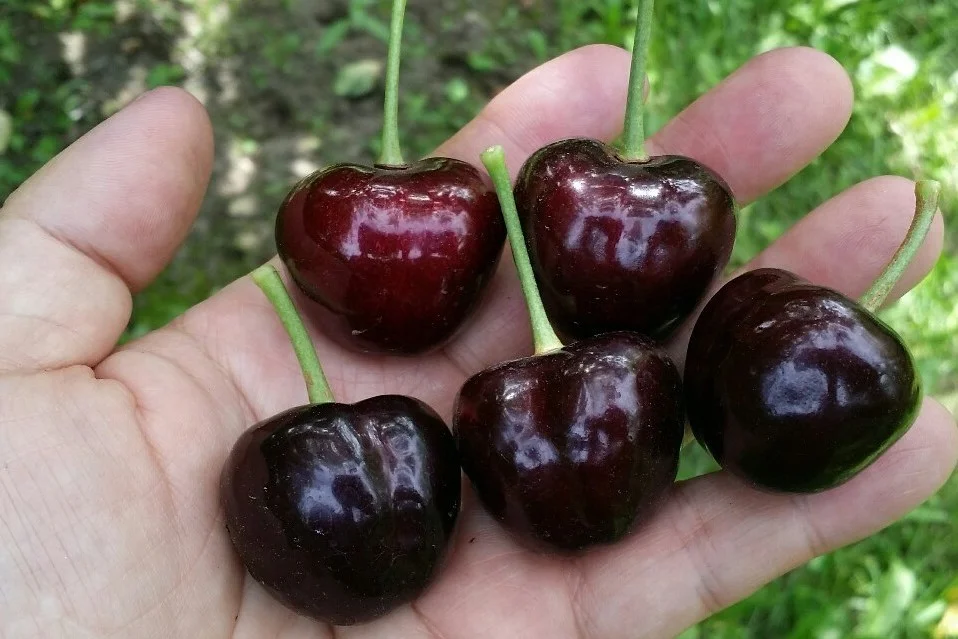
Sweet cherry is a crop of high economic value, but its productivity is strongly affected by adverse environmental factors such as drought, salinity, and hormonal stress.
In the context of climate change and the expansion of cultivation into marginal areas, improving tolerance to abiotic stresses has become a priority for modern sweet cherry production.
Within this framework, a recent study investigated the aldehyde-keto reductase (AKR) gene family, a group of enzymes involved in the detoxification of reactive metabolites and in the regulation of redox and hormonal processes.
Genomic and phylogenetic insights
Genomic analysis identified 38 PaAKR genes in the sweet cherry genome, a higher number than that reported for model species such as Arabidopsis and tomato, suggesting an evolutionary expansion driven by gene duplication events, particularly on chromosomes 1 and 6.
Phylogenetic analysis classified PaAKRs into several subfamilies, showing strong conservation of functional domains, especially Motif4, which is shared by all members and highlights the central role of these proteins in cellular metabolism.
Promoter sequence analysis revealed the presence of numerous cis-regulatory elements responsive to environmental and hormonal stresses, including ABRE for abscisic acid, MBS for drought, LTR for low temperature, and motifs related to salinity, wounding, and light responses.
This molecular architecture suggests that AKR genes are tightly integrated into the signaling networks that regulate plant adaptation to adverse conditions.
Expression patterns under stress
Gene expression analyses performed by qRT-PCR on sweet cherry seedlings subjected to PEG6000 (water stress), NaCl (salt stress), and ABA (hormonal stress) treatments confirmed this hypothesis.
Most PaAKR genes showed rapid induction within the first 12-24 hours of treatment, followed by modulation or downregulation at later time points, indicating an early stress response aimed at activating defense mechanisms.
In particular, eight genes: PaAKR3, PaAKR6, PaAKR10, PaAKR12, PaAKR17, PaAKR24, PaAKR28, and PaAKR34, were strongly responsive to all three stress conditions, identifying them as key candidates for multi-stress tolerance.
Among these, PaAKR3 displayed strong early induction under drought stress, suggesting a crucial role in water-stress signal perception and transduction. PaAKR28, mainly localized in the nucleus, may instead be involved in the transcriptional regulation of other stress-responsive genes.
Functional roles and applications
From a functional perspective, AKRs contribute to the reduction of toxic aldehydes and ketones produced during oxidative stress, limiting the accumulation of reactive oxygen species and protecting cellular membranes from lipid peroxidation.
Moreover, through interactions with ABA and ethylene metabolism, they influence important physiological processes such as stomatal closure and the synthesis of osmoprotectants.
The study concludes that the PaAKR family represents an important genetic resource for improving sweet cherry resilience to abiotic stresses.
The identification of stress-inducible genes and the characterization of their promoters provide concrete opportunities for breeding programs, both through marker-assisted selection and biotechnological approaches.
From an applied perspective, targeting these genes could contribute to the development of cultivars with enhanced tolerance to drought and salinity, ensuring greater yield stability and sustainability of sweet cherry production under increasingly challenging climatic conditions.
Source: Guo, Z., An, X., Zou, Y., & Deng, F. (2025). Identification of the AKR gene family in sweet cherry and its response to different abiotic stresses. Scientific Reports, 15(1), 29251. https://doi.org/10.1038/s41598-025-14284-6
Image source: Stefano Lugli
Andrea Giovannini
PhD in Agricultural, Environmental and Food Science and Technology - Arboriculture and Fruitculture, University of Bologna, IT
Cherry Times - All rights reserved