A microbial formulation developed by researchers at the Instituto de Investigaciones Agropecuarias (INIA) could open up new prospects for managing wood diseases affecting cherry, apple, blueberry and European hazelnut trees. The solution, named Trunkguard, has shown the ability to inhibit several pathogens while simultaneously stimulating the plants’ natural defenses.
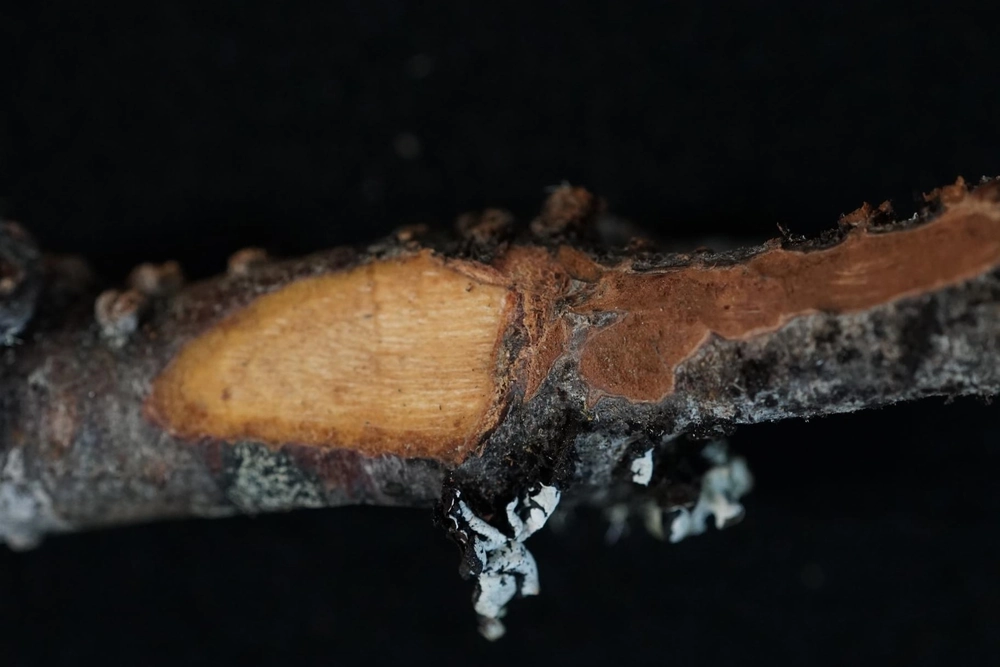
Wood diseases are among the most insidious threats facing the fruit-growing industry. Fungi can remain hidden inside trees for years, spreading without producing any clear warning signs. By the time symptoms become visible, the damage is often already extensive and difficult to control.
Yield losses of up to 66%
The main results of the project were presented in Chillán during the seminar “Manejo sustentable de hongos de madera en frutales”. The initiative, funded by the Agencia Nacional de Investigación y Desarrollo (ANID) through Fondef, brought together growers, consultants and professionals from the regions of Ñuble and Biobío.
Daina Grinbergs, plant pathologist and project coordinator, explained that the silent nature of these diseases makes diagnosis particularly complex. Fungi can colonize the tree’s internal tissues long before the first symptoms appear, with significant consequences for the productive capacity of orchards.
According to the researchers’ observations, yield reductions can reach 65% in European hazelnut, 45% in cherry, 66% in apple and 40% in blueberry.
Alongside these quantitative losses, fruit quality also declines, with smaller sizes and lower concentrations of certain nutrients. Affected trees also tend to have a shorter productive lifespan, making early replanting necessary and increasing the costs borne by growers.
Native microorganisms provide a new biological solution
The development of Trunkguard began with an observation made in several apple orchards affected by silver leaf disease. During monitoring activities, the research team identified trees that had shown symptoms in previous seasons but had subsequently managed to recover their productive condition.
Analyses showed that these plants hosted a more diverse microbiota than trees that remained diseased. The new biological formulation was developed from these native microorganisms.
Subsequent evaluations highlighted the inoculant’s ability to inhibit the growth of several fungi responsible for wood diseases. The pathogens examined included Chondrostereum, Cytospora, Callosphaeria, Eutypa and Nectria.
The team also identified several volatile metabolites produced by the selected microorganisms. These substances also proved capable of limiting the development of pathogens involved in wood infections.
Trunkguard activates plants’ natural defenses
The action of the formulation is not limited to directly controlling fungi. Tests showed that Trunkguard can stimulate the plants’ defense system by activating genes associated with the immune response in cherry, apple, blueberry and plum trees.
The most significant results emerged from greenhouse trials conducted on cherry plants. Under these conditions, the inoculant reduced the development of pathogens, limited discoloration of the woody tissues and promoted the plants’ defense response.
The evidence collected therefore points to a possible dual mechanism of action: on the one hand, the inhibition of fungi, and on the other, the strengthening of the host plant’s natural defenses.
Commercial orchards are the next challenge
Despite the promising results, Trunkguard must still undergo a new phase of validation before it can reach the market. Researchers plan to assess its performance in nurseries and commercial orchards, while also extending the trials to other fruit species.
Particular attention will be given to European hazelnut, a crop that has gained increasing importance in Chile in recent years. Daina Grinbergs reported that the product is already being evaluated against the fungi affecting this species, with results described as highly interesting.
Should the next trials confirm the performance observed under greenhouse conditions, Trunkguard could become a new biological alternative for controlling wood diseases.
This technology could potentially help protect not only yields and fruit quality, but also extend the productive lifespan of trees and make orchard health management more sustainable.
Source: www.reporteagricola.cl
Image source: OSU Plant Clinic 2023
Cherry Times - All rights reserved