According to EastFruit, FAO experts (UN) are completing this year a global Life Cycle Assessment (LCA) study in Uzbekistan’s fruit and vegetable sector.
The LCA analysis of perennial crops (apple, sweet cherry, grape) was conducted by considering the entire life cycle of the production ecosystem. The study shows that all perennial orchards act as natural climate resources. Even with inefficient furrow irrigation, apple orchards, cherry orchards and vineyards exhibit a negative carbon footprint thanks to long-term carbon accumulation in woody biomass and root systems. In fact, they already contribute to Uzbekistan’s progress toward achieving its NDC targets.
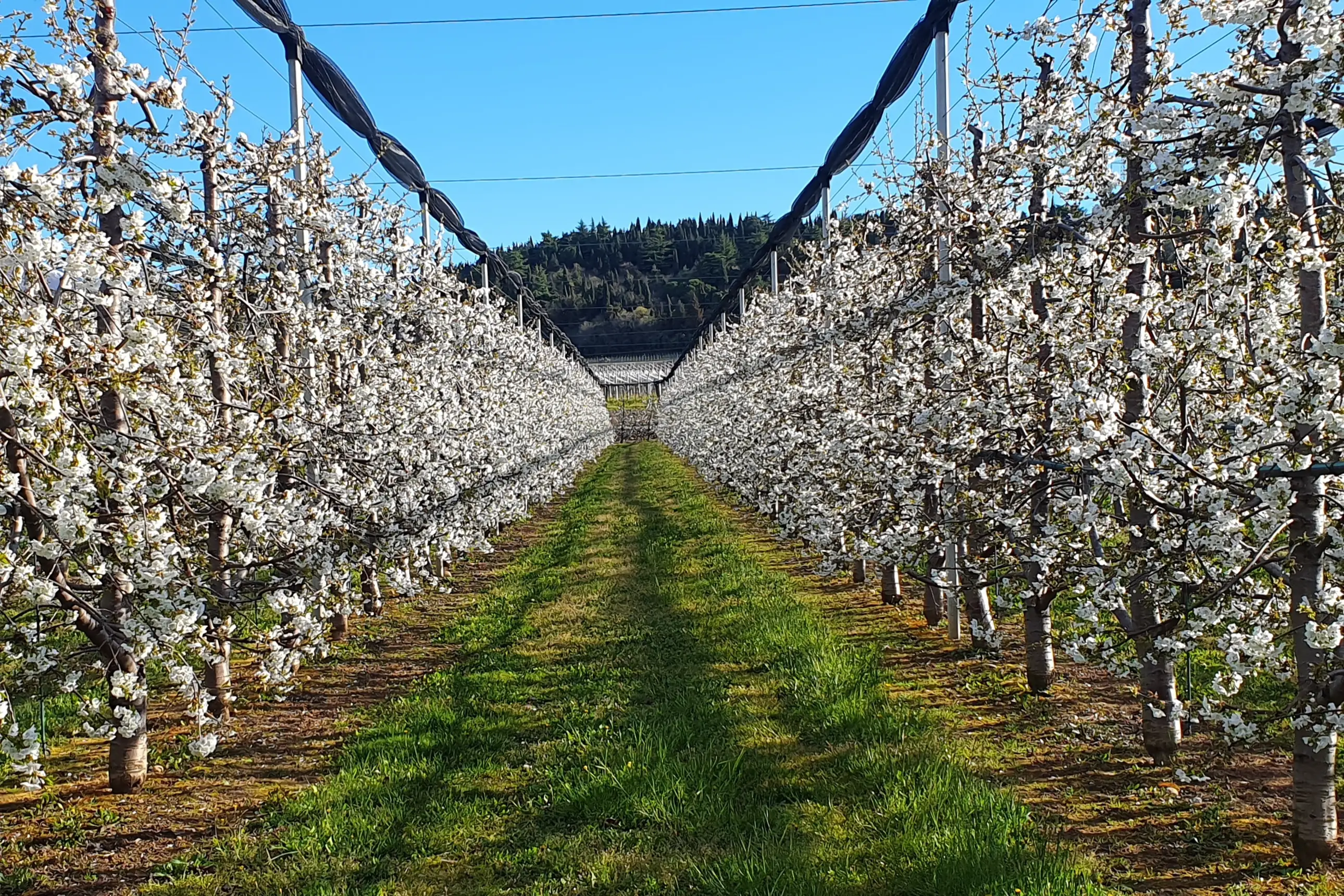
Sweet cherry is a crop of strong contrasts. It has the highest carbon sequestration potential (–105.3 kg CO₂/t), yet when grown under extensive systems, it is also the largest consumer of water (966 m³/t) and one of the main causes of eutrophication (18.5 kg PO₄³⁻-eq./t). This makes its modernization particularly important.
Vine and irrigation
The vine shows a hidden vulnerability in carbon sequestration. This crop has the lowest carbon sequestration among perennial species (–6.9 kg CO₂/t with furrow irrigation). The reason does not lie in plant biology, but in post-harvest management logistics, which account for a significant share of emissions.
The shift to drip irrigation and fertigation addresses the main environmental challenges of orchards. Drip systems, especially subsurface drip irrigation (SDI), drastically reduce water footprint (by 1.5 to 3.5 times) and eutrophication (by 2 to 4.5 times). In addition, they tend to improve carbon sequestration.
Subsurface drip irrigation vs. surface drip irrigation
Drip irrigation
Subsurface drip irrigation offers the greatest improvements in terms of water efficiency and eutrophication reduction. However, its impact on carbon footprint is not always greater than that of surface drip irrigation (for example, in the case of sweet cherry), due to additional CO₂ emissions associated with system installation.
Main environmental critical areas for perennial crops footprint: •negative carbon footprint (carbon sequestration); •water consumption and eutrophication; •nitrogen fertilizers (N); •electricity consumption.
Within the project, the effectiveness of optimization measures for perennial crop production was evaluated: Precision irrigation/fertigation systems — drip / subsurface drip •reduce water consumption by 2 times (drip) and 2.5–3.5 times (subsurface drip); •reduce eutrophication by 2–2.5 times (drip) and 3–4.5 times (subsurface drip); •decrease nitrogen application rates by 2–4 times per ton of product, significantly reducing fertilizer-related emissions.
Solar energy and impact
Solar energy (PV) The use of mini solar stations to power irrigation in intensive orchards (during canopy development and fruiting) transforms the emissions profile, eliminating the high share of CO₂ linked to electricity consumption. As a result, carbon sequestration in intensive orchards increases further, making them not only climate neutral, but actively climate-positive resources.
Combined effect The integrated use of subsurface drip irrigation technologies + renewable energy sources + smart monitoring systems increases carbon sequestration in orchards by 60–400% compared to traditional extensive systems, while addressing water scarcity and eutrophication challenges.
The full research results will be provided to the relevant government authorities in Uzbekistan to support future environmental policy decisions, with the aim of reducing the ecological impact of the country’s expanding fruit and vegetable sector.
Source: EastFruit
Image source: Stefano Lugli
Cherry Times - All rights reserved