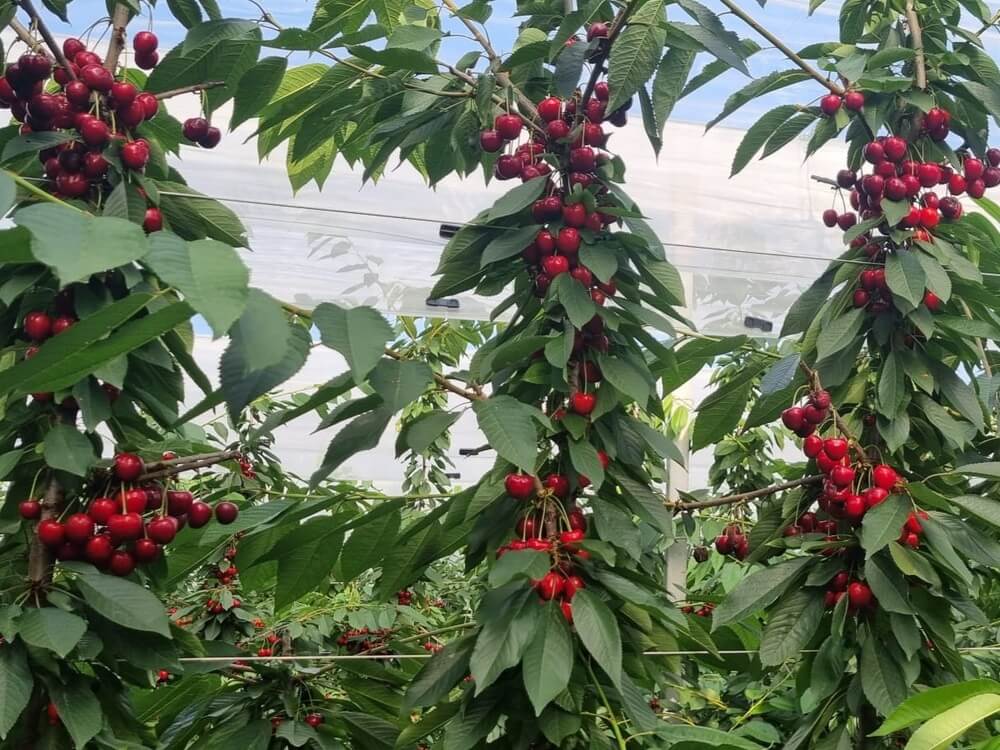
Growers of the cherry varieties Nimba*, Pacific Red*, Sweet Aryana® PA1UNIBO* and Sweet Gabriel® PA3UNIBO* were invited by ANA Chile to a two-day meeting on Thursday 19 October and Friday 20 October in Ovalle, where they were able to learn about the progress of their technical knowledge in the northern zone.
The first part of the event took place at the Hotel Limarí, where consultant Walter Masman and Lorena Pinto, pome and cherry product manager of ANA Chile, presented. During his speech, Walter Masman elaborated on the current season with low cold accumulation at national level and what was the observed response of these new varieties.
For her part, Lorena Pinto presented details of the behaviour of the varieties evaluated in the northern zone by ANA Chile. (Download the presentation)
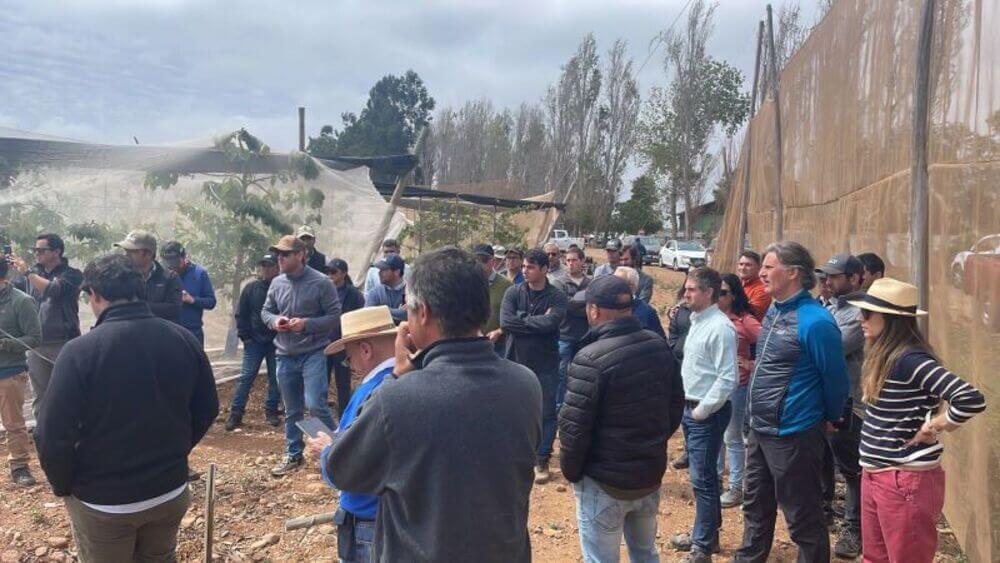
On the morning of Friday 20, the Field Day took place in a test block located in Recoleta, Ovalle - Region IV, where the group was able to observe in the field the varieties Sweet Aryana® PA1UNIBO*, Nimba*, Sweet Gabriel® PA3UNIBO*, compared to the control variety Brooks, all of which were planted in 2020 on the rootstocks Maxma 14 and Maxma 60. The Nimba* variety was found to be 5 days earlier than the Brooks control under the same conditions.
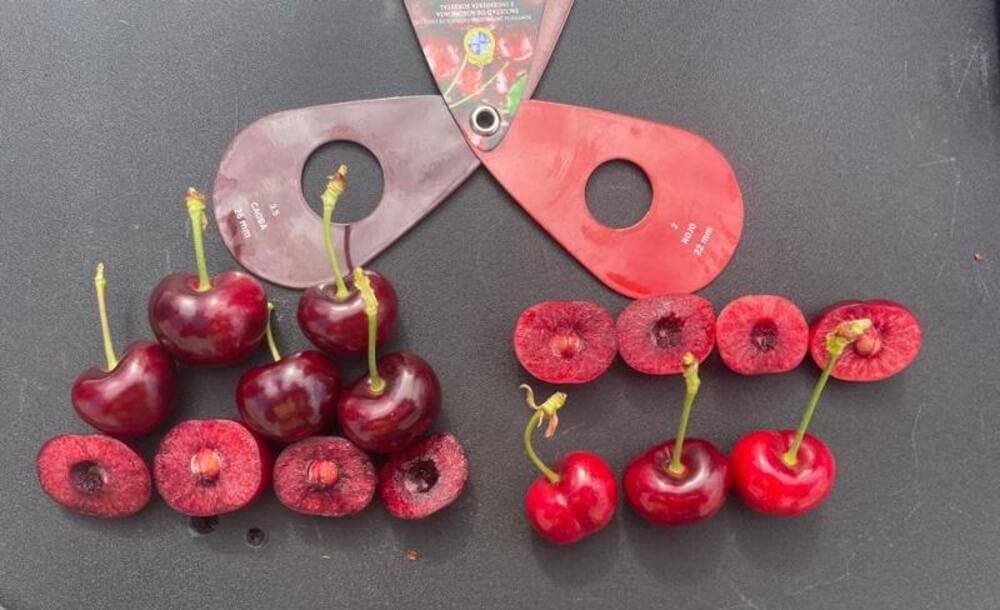
To conclude the day, an evaluation plot was visited in Tabalí, where the Nipama cherry, still under evaluation, could also be seen at harvest time. In the case of the Recoleta area, measurements indicated that it could have been harvested around 5 or 6 October with black net management, as is customary in the area. The results of the post-harvest evaluations of this and other varieties will be announced through new activities in the coming weeks.
Source: ANA Chile
Images: ANA Chile
Cherry Times - All rights reserved