Aqueous spot: a new epidermal physiopathy affecting cherries
13thJanuary 2026
Jesús Alonso 1,2,3
Óscar G. Bodelón 2
1 University Institute for Research on Agricultural Resources (INURA), University of Extremadura, Avda. de la Investigación s/n, Campus Universitario, 06006 Badajoz, Spain
2 Institute of Food Science, Technology and Nutrition, Spanish National Research Council (ICTAN-CSIC), C/ José Antonio Novais, 10, 28040 Madrid, Spain
3. Cherry Times technical-scientific committee
 Source: Alonso e Bodelon, 2026
The commercial quality of sweet cherry (Prunus avium L.) depends critically on skin integrity; accordingly, susceptibility to water-induced cracking remains one of the major economic constraints for production (Gutiérrez et al., 2021; Brüggenwirth & Knoche, 2016).
Within this spectrum of epidermal disorders, aqueous spot has recently been described as an emerging pre- and postharvest condition in sweet cherry: symptoms may initiate on the tree, yet their expression typically intensifies during cold storage, compromising marketability, particularly in early cultivars such as ‘Burlat’ (Serradilla et al., 2021).
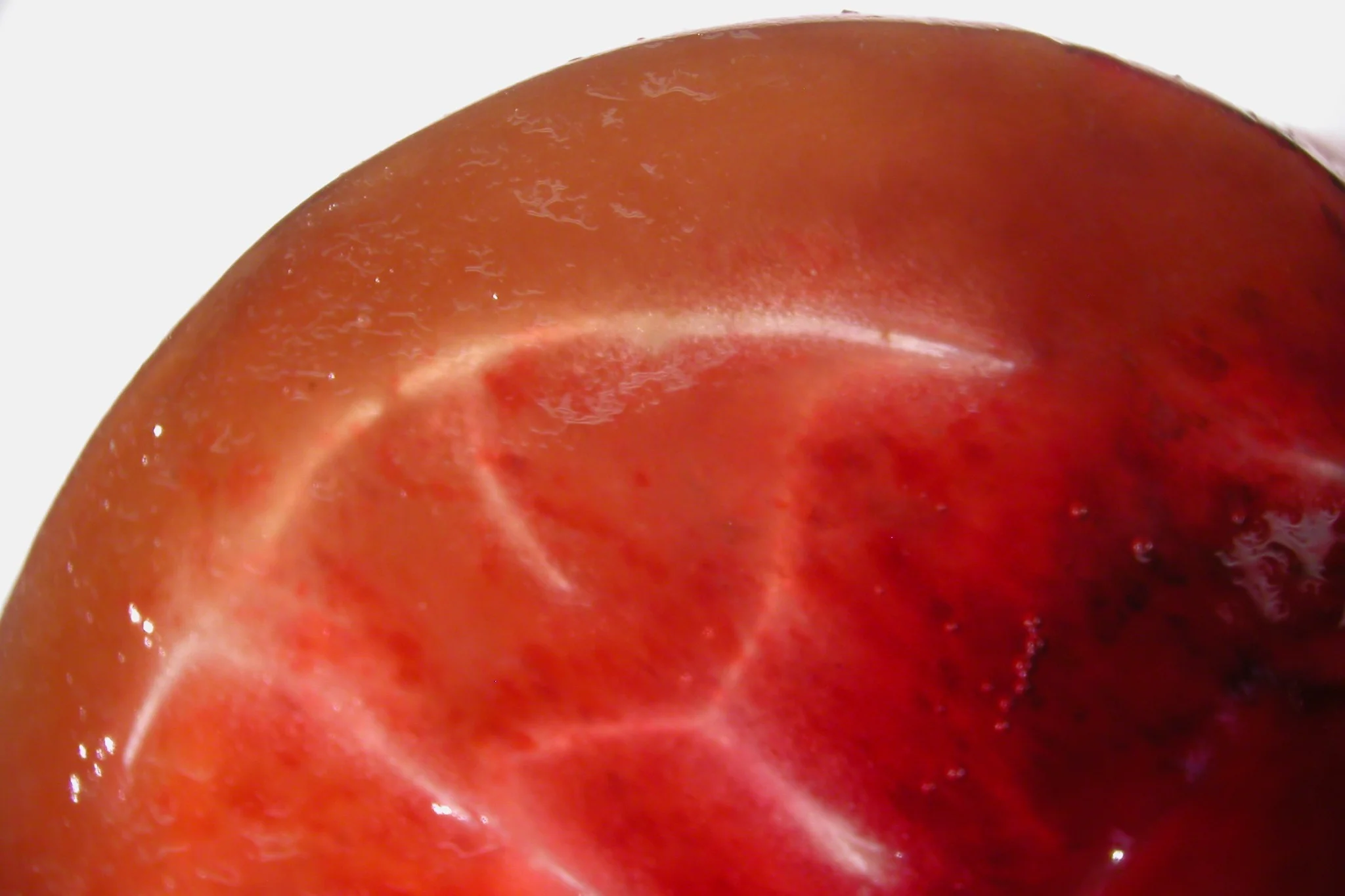
The characteristic external phenotype comprises depressed areas with a translucent, water-soaked appearance and, frequently, metallic-like discolorations, typically concentrated over the fruit “shoulders” and around the pedicel insertion (Fig. 1).
Insurance framework in Spain
In Spain, the Special Conditions of the Cherry Orchard Insurance Scheme (Line 317, 2025 Plan) frame this type of epidermal damage within rain-risk coverage and define it as “metallic-like discolorations and/or reabsorptions that cause degradation of the fruit epidermis as a consequence of persistent water on the fruit during ripening, leading to loss of commercial value” (Fig. 1).
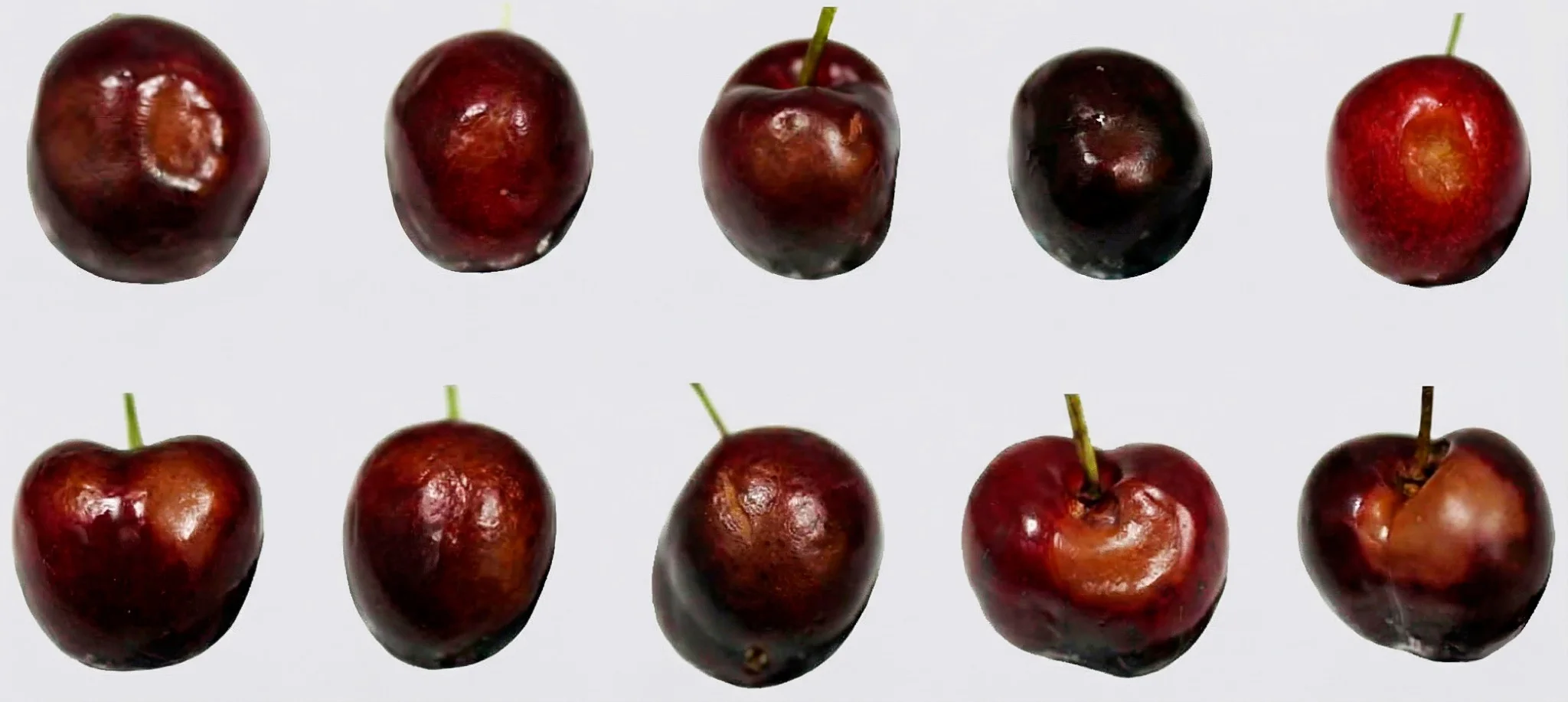 Figure 1. Representative external symptoms of aqueous spot in sweet cherry ‘Burlat’.
From a physiopathological standpoint, the published evidence supports a scenario in which a structural and physiological predisposition of the exocarp may facilitate subsequent progression associated with microbial colonisation.
In an initial stage, the process is linked to mechanical failure of the fruit’s protective barrier, exacerbated by agroclimatic sequences characterised by rainfall followed by temperature increases, which promote prolonged retention of liquid water on the fruit surface (Serradilla et al., 2021).
During stage III of fruit growth, the exocarp is subjected to high elastic strain: the fruit continues to expand rapidly while deposition of new cuticular membrane (CM) is limited, such that the cuticle operates close to its mechanical threshold (Knoche et al., 2004; Peschel & Knoche, 2012).
This vulnerability has been described in detail for ‘Burlat’, whose mechanical and structural traits place it at the lower end of the resistance range reported for sweet cherry skin.
Specifically, ‘Burlat’ exhibits low values of the modulus of elasticity (E) and fracture pressure (P_fracture), indicative of limited resistance to skin extension (Brüggenwirth & Knoche, 2016).
[...]
Want to know more? The full article is reserved for subscribers to the Cherry Times newsletter! Sign up for free to receive each new exclusive in-depth article directly in your inbox and stay up-to-date with quality advice and analysis. Don't miss this unique opportunity!
Sign up for free to the Cherry Times newsletter
Cherry Times - All rights reserved