The availability of genetically diverse cultivars adapted to local soil and climatic conditions is one of the fundamental pillars of progress in fruit production. In this context, international scientific cooperation plays a strategic role by promoting the exchange of genetic resources, broadening the breeding base, and accelerating crop improvement programs.
A recent study conducted by the Institute of Fruit Growing in Belarus analyzed the results of more than a decade of activities focused on the evaluation and utilization of fruit and berry crop cultivars developed by the Russian Research Institute of Fruit Crop Breeding (VNIISPK), one of the leading centers for genetic and varietal research in Eastern Europe.
As part of the collaboration between the two institutes, Belarusian genetic collections were enriched with 97 accessions belonging to several agronomically important species, including apple, pear, sour cherry, sweet cherry, and currant.
Evaluation
All introduced materials underwent comprehensive agronomic and biological characterization, with particular emphasis on productivity, fruit quality, and resistance to major biotic and abiotic stresses.
The objective was to identify cultivars suitable for direct cultivation under Belarusian environmental conditions while also selecting genotypes that could serve as valuable sources of desirable traits in breeding programs.
Overall, 27 cultivars and hybrids developed by VNIISPK were used as parental material in crossing programs aimed at generating new genetic combinations.
Hybridization
Hybridization activities involved the pollination of more than 41,000 flowers and resulted in the evaluation of over 3,900 seedlings. Among the most promising apple cultivars were Imrus, Orlovim, Aphrodite, Rozhdestvenskoye, Solnyshko, and Sinap Orlovsky, valued for their combination of high productivity, fruit quality, and resistance to major diseases.
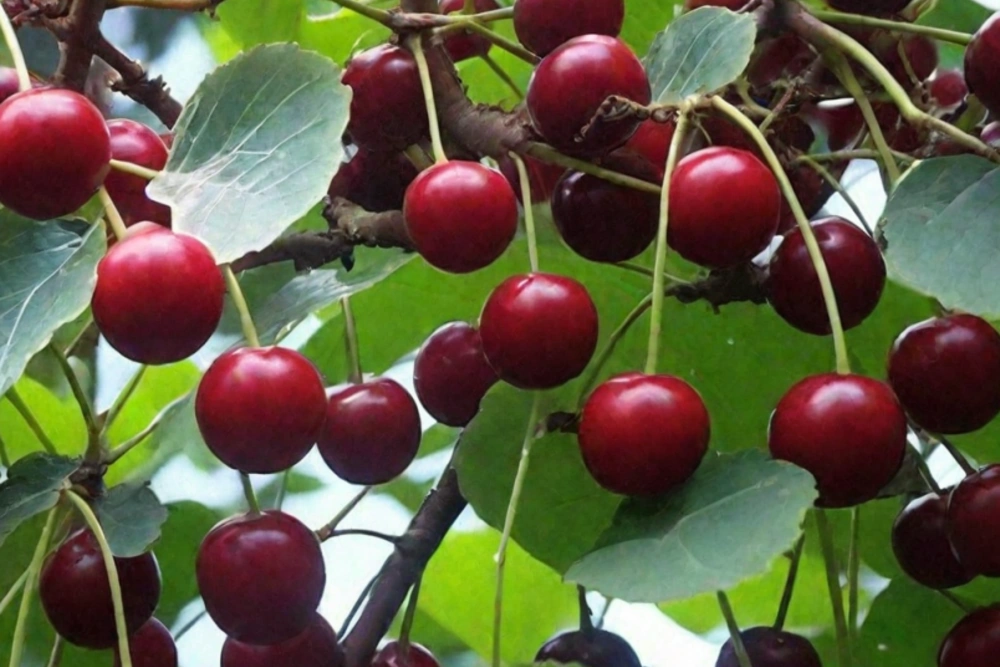
Similarly, several pear genotypes were selected for their strong agronomic performance and environmental adaptability, while the sour cherry cultivars Livenskaya, Rovesnitsa, and Turgenevka stood out for their productivity and tolerance to the most important fungal diseases.
Regarding black and red currants, several genotypes were used as sources of resistance to bud mites, aphids, and powdery mildew, as well as donors of high yield potential and large berry size.
Breeding
The use of these materials expanded the genetic base available for breeding and strengthened the capacity to develop more resilient cultivars.
The long-term evaluation activities led to the registration of ten cultivars in the State Register of Agricultural Plant Varieties of Belarus.
These included three apple cultivars (Imrus, Sinap Orlovsky, and Yubilyar), three sour cherry cultivars (Rovesnitsa, Turgenevka, and Livenskaya), two black currant cultivars (Lentyay and Orloviya), and two red currant cultivars (Bayana and Dana).
Adaptability
This achievement demonstrates both the effectiveness of the selection process and the genuine adaptability of the introduced cultivars to Belarusian climatic and production conditions.
The study confirms that the conservation and effective utilization of genetic collections are essential tools for addressing the challenges facing modern fruit production.
International germplasm exchange not only increases the availability of agronomically valuable traits but also accelerates the development of improved cultivars, thereby supporting innovation and enhancing the competitiveness of the fruit-growing sector.
Cherry Times - Tutti i diritti riservati
Source: Taranov, A. A., Palubiatka, I. G., & Frolova, L. V. (2025). Introduction and use of fruit and small fruit crops varieties breeded by the VNIISPK in Belarus. Contemporary horticulture, (4), 54-62. https://journal-vniispk.ru/2312-6701/article/view/353783
Image source: Procvetoc
Andrea Giovannini
PhD in Agricultural, Environmental and Food Science and Technology - Arboriculture and Fruitculture, University of Bologna, IT
Cherry Times - All rights reserved