In recent years, the Meda™ varietal program has selected early varieties, such as Meda Rex, Meda Fox, Meda Tiger, Meda Bull, Meda Taurus and Meda Dragon, all dark red in color and with good post-harvest storability.
Today it is launching the new bicolored variety Meda Swan (IVU 514), which is harvested 10 days earlier than the Rainier variety, a highly demanded and expensive variety on the Chinese market.
Origin and characteristics
This variety was selected in 2014 in California within the PFVC program.
After several years of evaluation, it was clearly differentiated among the many bicolored selections in the program.
The IVU 514®cv variety is very early, about 2–3 days before Early Robin and 10–12 days before Rainier, and shows excellent Brix levels at that time (from 19 to 21° Brix).
Its color and flavor are similar to those of Rainier (Fig. 1).
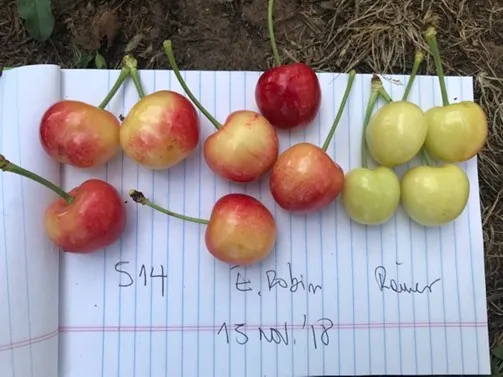 Fig. 1. IVU 514 fruit on the left, Early Robin in the center and Rainier on the right.
Post-harvest
For varieties to be successful in Chile, they must have good post-harvest characteristics; otherwise, it is impossible to ship them to markets that require at least 30 days of storage before arrival, such as China.
The IVU 514® variety was selected after several years of post-harvest evaluations.
This work was carried out by the technical departments of Chilean exporters, concluding that IVU 514® shows no physiological disorders after 30 days of storage and, above all, does not develop skin blemishes, a characteristic that causes greater deterioration in the Rainier variety after only a few days of storage.
No epidermal spotting. One of the biggest surprises of the post-harvest results was that over three seasons, with three different companies evaluating the IVU 514 variety, none of them showed spotting on their fruit (Fig. 2), unlike Rainier, for which this is one of the main defects.
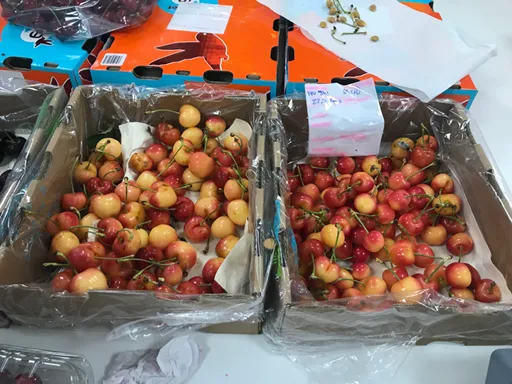 Fig. 2. On the left, IVU 501 with 40% spotting and IVU 514 with 0% spotting after 30 days (right). Source: Chilfresh
Storage and defects
The boxes were opened after 30 and 40 days of storage at the exporting company Chilfresh and, as shown in Fig. 3, a large difference can be seen between the IVU 501 variety, which shows a high percentage of spotting, and IVU 514, which shows no spotting and appears to be less sensitive to bruising (Fig. 4).
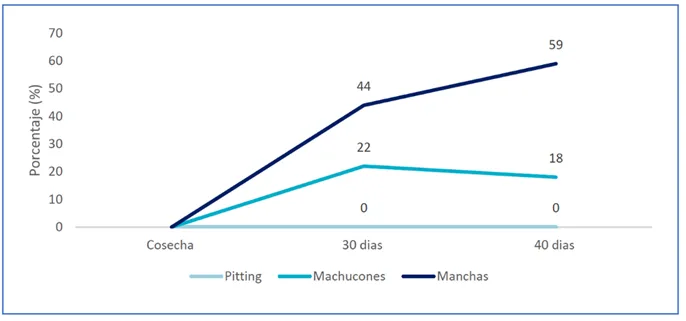 Fig. 3. Quality defects at 30 and 40 days after harvest for variety IVU 501. Source: Chilfresh
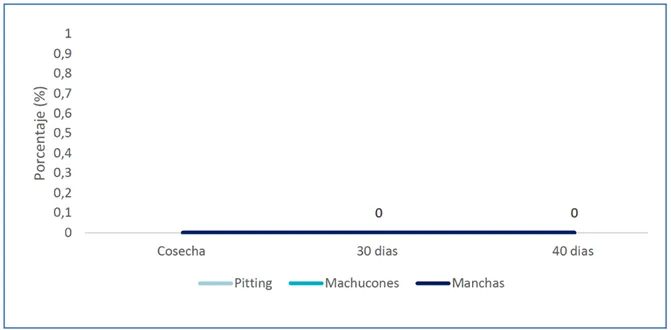 Fig. 4. Quality defects at 30 and 40 days after harvest for variety IVU 514® Source: Chilfresh
The same data were validated over several years by the companies Ranco and Cerasus, where results were similar (Fig. 5 and 6).
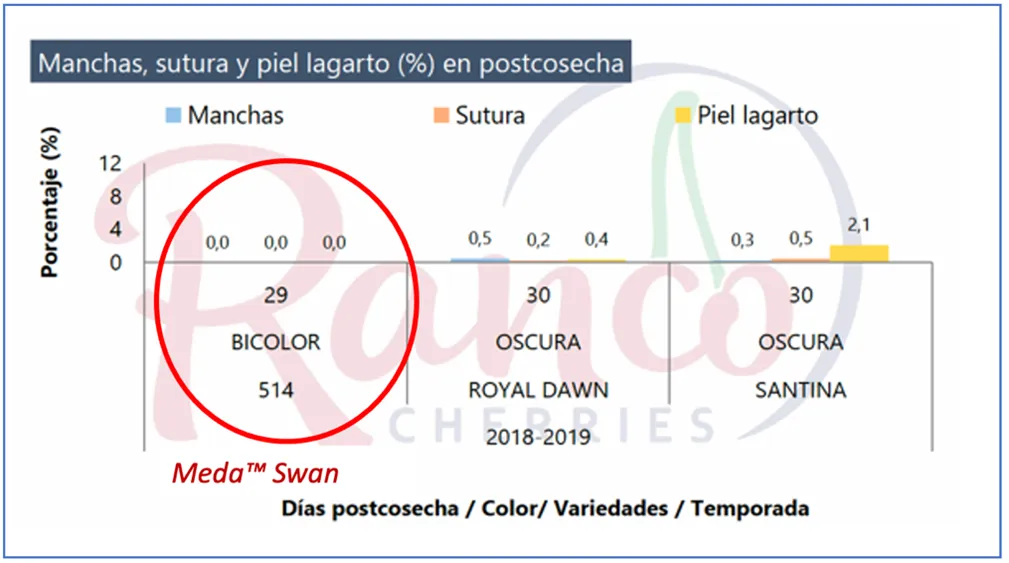 Fig. 5. The Meda Swan variety shows no spotting at 30 days. Source: Ranco
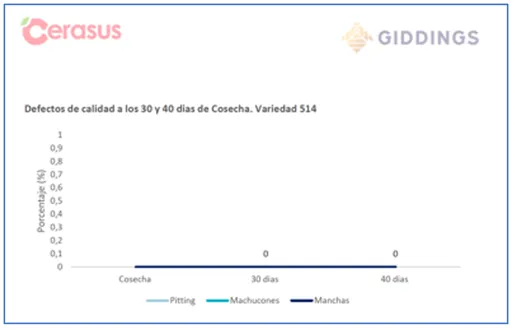
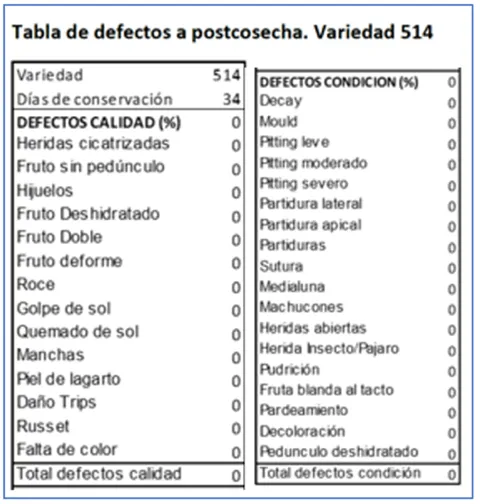 Fig. 6. Quality defects at 30 and 40 days after harvest for variety IVU 514® Source: Cerasus
Pedicels and harvest
In addition to showing no defects at 30 days, the Meda Swan variety (IVU 514®), like the entire Meda™ series, maintains 100% green pedicels after this storage period (Fig. 7).
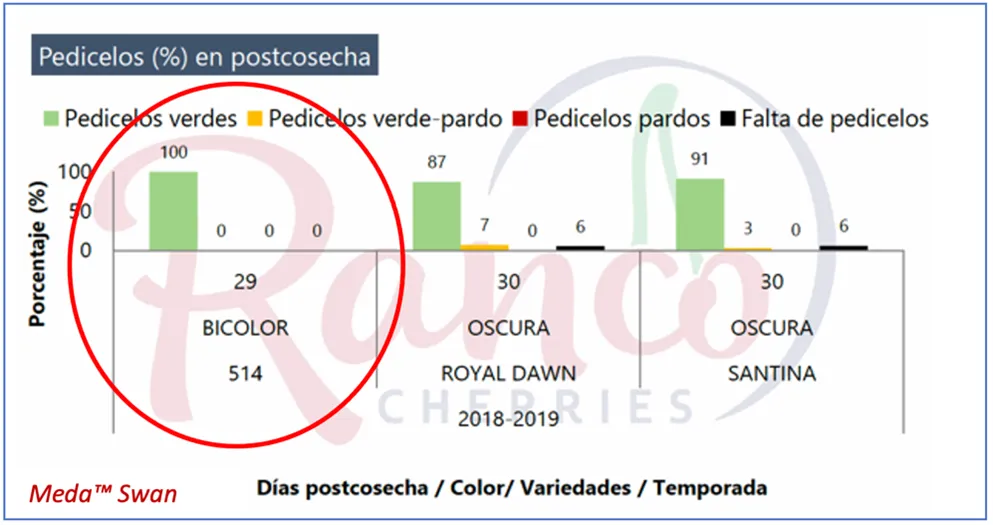 Fig. 7. The Meda Swan variety shows 100% green pedicels at 30 days. Source: Ranco
2025–2026 season harvest
This season we harvested the variety 10 days earlier than Rainier and the first boxes were shipped by sea to China (Fig. 8 and 9), where, in addition to excellent color, average sizes ranged between 28 and 32 mm.
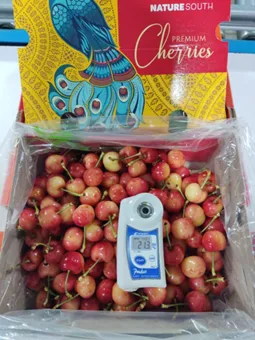 Fig. 8. Packed box of Meda Swan, 21 brix, 10 days before Rainier
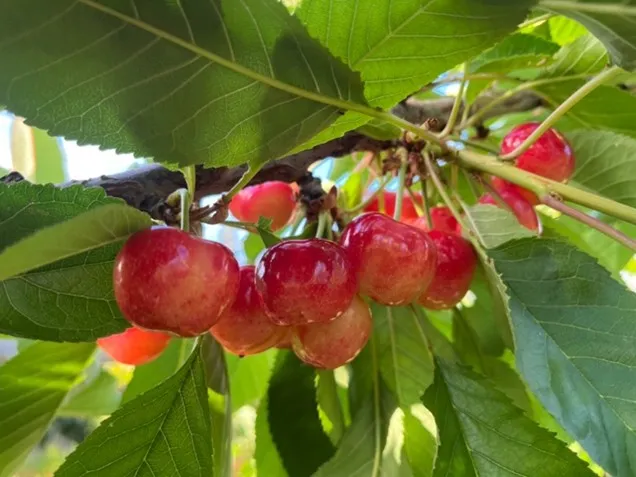
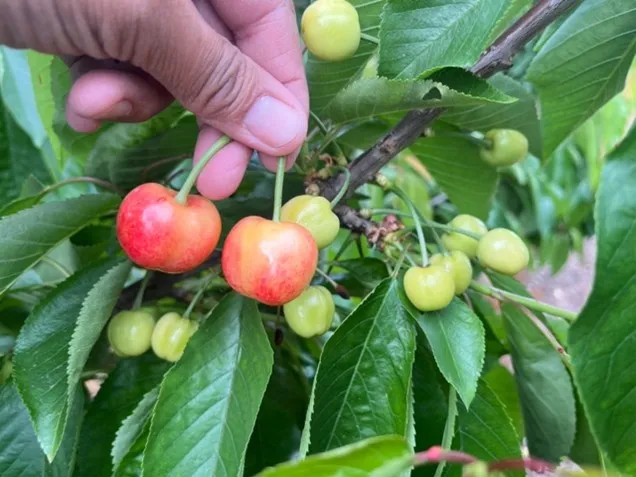 Fig. 9. Meda Swan fruit at harvest and comparison with Rainier in the same orchard.
Business model
Meda Swan will be managed as part of the Meda™ variety group, which currently includes 12 associated exporters in Chile, and all of them or their associated growers will have access to the variety.
In 2026, the first commercial plantings of this new variety will begin in Chile.
After several years of validation, both in the orchard and on the market, we believe this is the only way to provide a new product or a new variety to today’s Chilean growers.
Alejandro Navarro Diaz
CEO Medacherry
Opening image source: Medacherry
Cherry Times - All rights reserved