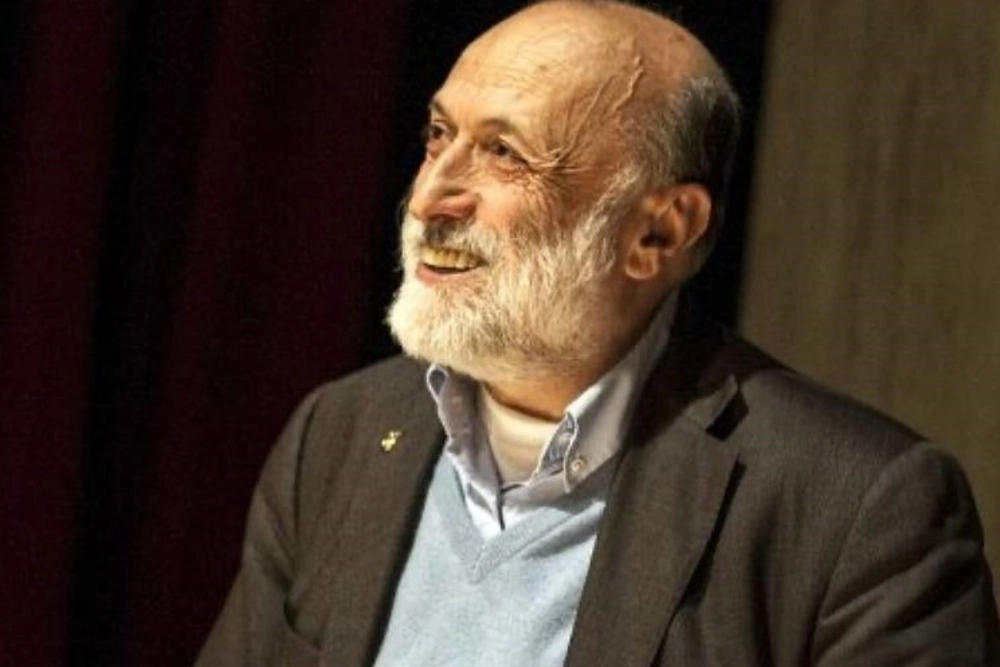
Some encounters do not merely remain in memory, but become a lens through which to reinterpret one’s work. For those who write, as for many others who are part of the Slow Food movement, meeting Carlo Petrini was one of those moments: every conversation or public address was able to restore meaning, depth and, above all, direction to something that too often risks being reduced to a technical or managerial discussion.
Carlo’s passing leaves open a question he himself would never have stopped asking: what kind of agriculture do we want?
Biodiversity as infrastructure
One of the most fertile aspects of his thinking is the idea that biodiversity is not an accessory element of agriculture, but its deepest infrastructure. Without genetic, varietal and landscape diversity, the system loses resilience and becomes more exposed to climate, economic and phytosanitary crises.
It was an insight that anticipated what scientific research now measures with increasingly precise tools. The agricultural model that Slow Food documents and criticizes reduces biodiversity by focusing on specialization and efficiency in intensive production: a choice that responds to economic needs in the short term, but weakens the system in the long term.
The global figures are difficult to ignore. Over the last century, more than 90% of cultivated agricultural varieties have disappeared from farmers’ fields. Of the approximately 6,000 plant species used for food, only nine crops now account for 66% of global agricultural production, an unprecedented concentration in the history of agriculture. Slow Food has responded to this crisis by building the Ark of Taste, an international catalog that now includes more than 6,600 endangered products from over 130 countries, offering each year an increasingly clear picture of what we are losing: plant varieties, animal breeds, rural knowledge and landscapes.
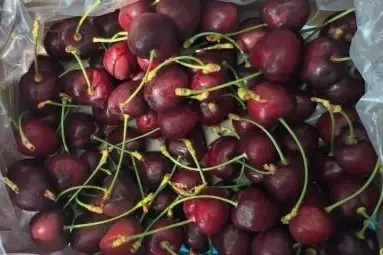
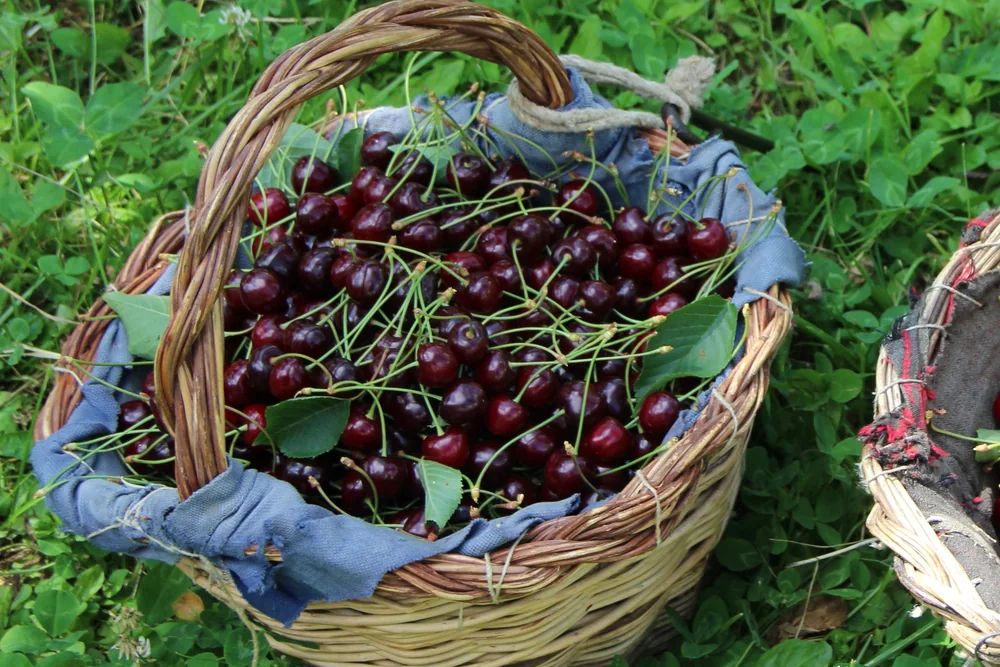
In the world of sweet cherry growing, the selection of modern commercial cultivars, which began between the late nineteenth and early twentieth centuries, triggered the decline of traditional local varieties throughout Europe. More recently, this trend has continued with the spread of intensive monocultural practices and the concentration on a limited number of cultivars with high economic performance, resulting in the loss of entire European traditions of cherry cultivation. At the genetic level, diversity in sweet cherry appears to have narrowed due to the repeated use of a small number of founder clones in breeding programs, and the main American and European commercial varieties now show a very restricted genetic base. It is precisely on this base that the future of sweet cherry production will be played out.
Production specialization: efficiency at what cost?
The dominant agricultural model follows a precise logic in which the main assets are increasingly high-performing and globally uniform varieties, developed in highly specialized growing areas that complement one another over time, concentrate supply and optimize costs. In the short term, this model can work, but in the long term, according to the analysis of the founder of Slow Food, this approach generates fragility and negative externalities. The lack of crop diversity, combined with the heavy use of fertilizers and pesticides, has frequently led to high incidences of pests and diseases, erosion and loss of soil fertility: a vicious circle in which the more the system is simplified, the more dependent it becomes on chemical inputs to compensate for what biological diversity would naturally provide. European research, within the Commission-funded DiverIMPACTS project, has clearly shown the opposite mechanism: where crop diversification is adopted, agriculture becomes more resilient and less dependent on chemical fertilizers and pesticides. Where more species and more varieties coexist, pathogens find fewer uniform hosts on which to spread, natural predators find more habitats, and the soil maintains a better biological balance. Intensive monoculture, by contrast, provides pathogens with an ideal environment.
Recent history offers an example that illustrates the fragility of this model. Turkey, the world’s leading producer with nearly 100,000 hectares dedicated to the crop, has built in recent decades a model strongly oriented toward exports and volume growth. In 2025, late frosts of exceptional intensity caused production to collapse by 60% and exports by 85%, leaving a gap of thousands of tons that the global market was unable to fill. This episode clearly shows how excessive dependence on a few major production hubs makes the entire agri-food system more fragile.
These events are no longer isolated episodes but recurring ones, increasingly clear signs of structural vulnerability. Petrini had expressed this with a clarity that is difficult to ignore: “The current food production system is not democratic and certainly not sustainable. Ever longer, more complex and more standardized globalized food supply chains have long since severed many of the relationships between ecological units that once made food production the result of a healthy relationship with nature.” It is precisely on this diagnosis that Slow Food built its response, based on communities of producers rooted in their territories and native varieties integrated into diversified agricultural systems. Some call it nostalgia, but Petrini himself responded to those who accused him of looking backwards: “This is true modernity.”
A Presidium as a form of cultural resistance
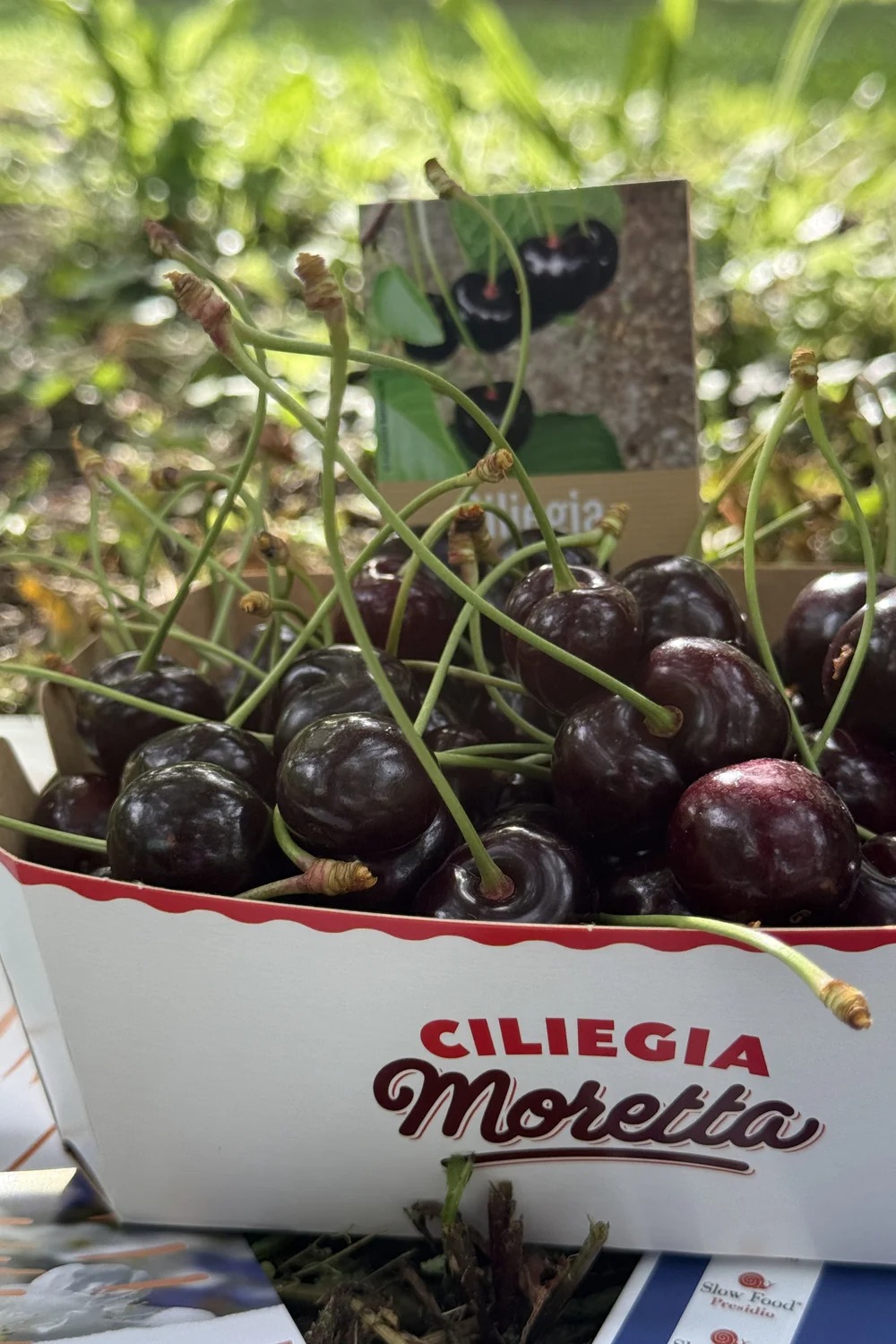
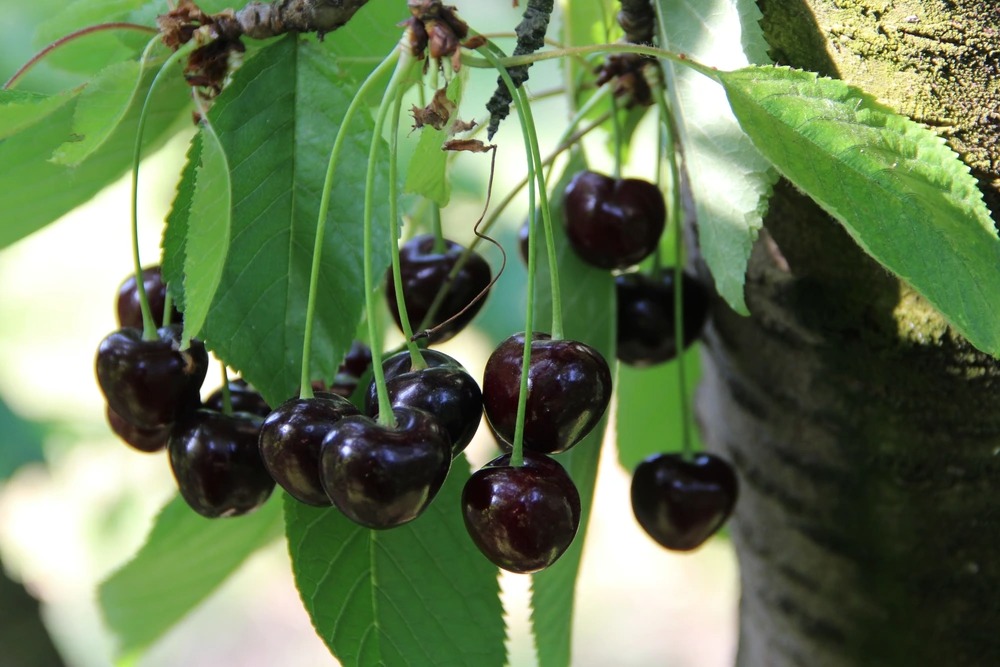
It is from this perspective that the work of the Slow Food Presidia gains value. The Presidia are concrete projects that support small producers committed to safeguarding traditional varieties, breeds and products at risk of disappearance, based on communities of farmers who share production protocols, sustainable cultivation practices and a common vision of the territory. Among them, the Moretta di Vignola Cherry Presidium, for which I serve as coordinator, represents, like many others, an experience that is not only about protecting a fruit variety, but about trying to defend an agricultural system, a landscape and a rural culture that risk being eroded by production standardization.
The Moretta di Vignola, a Prunus avium cultivar selected over the centuries in the hills of Modena, is not simply a cherry. It is the result of centuries of adaptation, of a close relationship between soil, microclimate and peasant knowledge: a variety that tells the story of a territory because it arises from a logic of balance rather than maximization, from crops that intertwined and supported one another, and through which farmers found an economic and productive stability that none of them could have achieved alone.
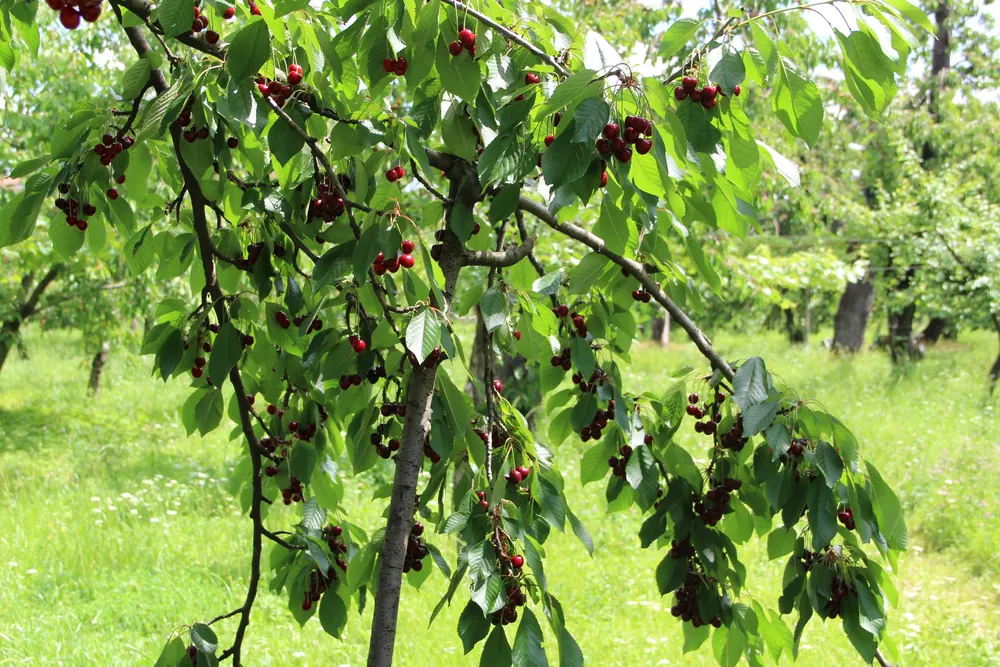
The Moretta Cherry Presidium works every day within complexity not as a theoretical exercise, but as a daily practice: in managing difficult seasons, defending quality, and constantly balancing production needs with the protection of genetic heritage, through cultivation practices that respect natural rhythms.
A vision that generates the future
The lesson that comes from experiences such as the Presidia and from figures such as Petrini is countercultural: the future is not built by reducing complexity, but by learning how to govern it.
In an increasingly unpredictable world, where the demand for environmental sustainability has become unavoidable, biodiversity proves not to be a return to the past, but a key to the future. Technological innovation can become a fundamental tool for supporting a different model, with precision agronomic management and the reduction of chemical inputs, while traceability systems and the enhancement of short supply chains can help protect traditional varieties and agricultural models.
Riccardo Marinelli
Slow Food Moretta Cherry Presidium
Cherry Times - All rights reserved