Recent advances in third-generation sequencing technologies are revolutionizing the genomics of tree species, enabling the construction of increasingly complete and accurate reference genomes.
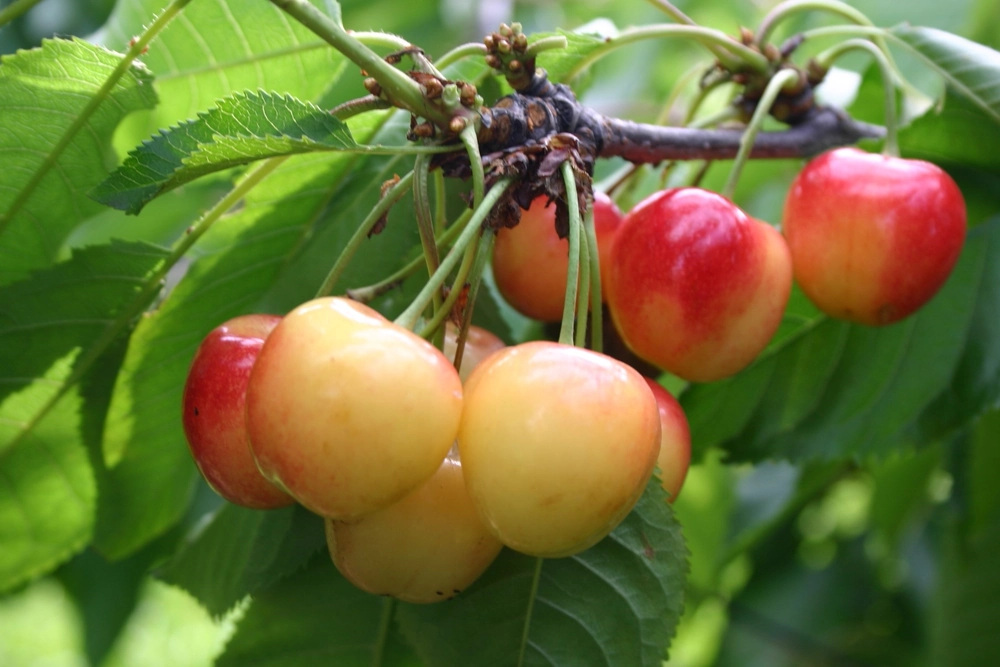
In this context, a recent study produced chromosome-scale genome assemblies for two cultivars of major agronomic importance in Chile: ‘Santina’ and ‘Regina’.
The integrated approach, based on the combination of PacBio HiFi, Oxford Nanopore, Hi-C, and Iso-Seq transcriptomic data, enabled the generation of highly contiguous genomes, with sizes ranging from approximately 354 to 357 Mbp and contig N50 values exceeding 19 Mbp, representing some of the most complete genomic resources currently available for this species.
Assembly quality and completeness
One of the most relevant aspects concerns the high quality and completeness of the assemblies, highlighted by BUSCO (Benchmarking Universal Single-Copy Orthologs) values above 99%, indicating near-complete coverage of conserved plant genes.
In addition, a substantial portion of the genome over 80% was anchored to chromosomes, allowing for a reliable and functionally meaningful representation of genome structure. The possibility of obtaining phased assemblies, i.e., resolved into the two haplotypes, represents a further advancement. This enables the capture of allelic and structural variation between parental genomes, a crucial feature for highly heterozygous species such as sweet cherry.
Integration of transcriptomic data
A key contribution derives from the integration of long-read transcriptomic data (Iso-Seq), which significantly improved gene annotation. Although the total number of predicted genes is lower than in previous assemblies, the proportion of functionally annotated proteins is higher, suggesting a reduction in false predictions and greater accuracy.
This aspect is particularly important for functional genomics and breeding applications, where annotation quality directly affects the identification of candidate genes associated with agronomically relevant traits.
The study also provides new insights into the structure and variability of key loci. Analysis of the S-locus, responsible for gametophytic self-incompatibility, confirmed the presence of specific alleles in the two cultivars and revealed structural variation in intergenic regions, including the insertion of transposable elements.
Moreover, a mutation in the SFB4 gene associated with self-compatibility in ‘Santina’ was identified, further clarifying the genetic mechanisms underlying this trait.
Dormancy regulation and DAM locus
Another important finding concerns the DAM locus involved in dormancy regulation. The identification of variants mainly located in non-coding regulatory regions, including a specific deletion in the DAM1 promoter in ‘Santina’, suggests a potential role in modulating chilling requirements and flowering time.
This type of information is highly relevant in the context of climate change and phenological adaptation, where phenological adaptation is a key factor for production sustainability. Finally, the use of long-read technologies enabled the identification of a fusion transcript between the DAM3 and DAM4 genes, potentially involved in integrating environmental signals regulating dormancy.
Although the functional role of this transcript requires further investigation, its discovery highlights the added value of new sequencing platforms in understanding transcriptomic complexity.
Overall, these results provide a high-quality genomic reference resource and open new perspectives for comparative genomics, marker-assisted selection, and the development of breeding strategies in sweet cherry, contributing to innovation in modern cherry production.
Source: Urra, C., Gaete-Loyola, J., Bui, Q. T., Povea, P., Carrasco, N., Moraga, C., Vidal, E., A., & Almeida, A. M. (2026). Chromosome-scale genome assembly of the Santina and Regina varieties of Prunus avium. Tree Genetics & Genomes, 22(2), 6. https://doi.org/10.1007/s11295-026-01732-1
Image source: Stefano Lugli
Andrea Giovannini
PhD in Agricultural, Environmental and Food Science and Technology - Arboriculture and Fruitculture, University of Bologna, IT
Cherry Times - All rights reserved