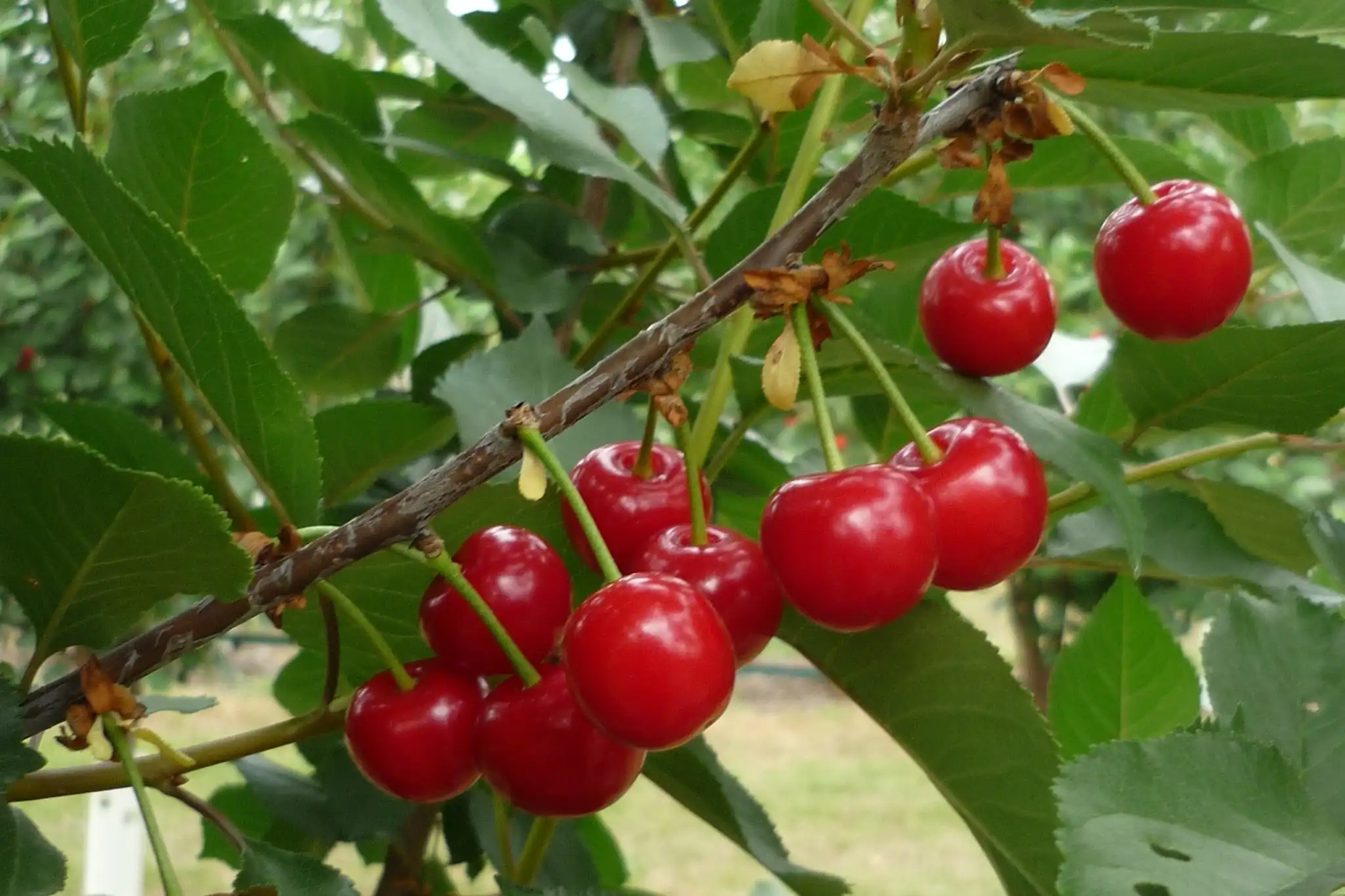
Postharvest preservation of sour cherries is one of the main critical points of the supply chain, due to their high perishability linked to intense respiratory activity, rapid loss of firmness, and susceptibility to browning and fungal infections.
A recent study from Ukraine analyzed the effectiveness of pre-harvest treatments based on chitosan and salicylic acid, used individually or in combination, applied to the cultivars “Alfa” and “Pamiat Artemenko”.
According to the results, the mixture consisting of 1% chitosan and 100 mg L−1 salicylic acid proved to be the best option for extending shelf life, improving commercial quality, and reducing weight loss and microbiological contamination during refrigerated storage.
Combined treatment and storage
The combined treatment with the two compounds made it possible to extend the storage period up to 30 days, compared to only 15 days in the untreated control.
This improvement was achieved thanks to the semipermeable film formed on the fruit surface by chitosan, which modulated gas exchange, limited transpiration, and reduced respiration intensity.
The presence of salicylic acid further enhanced the fruit’s physiological response, helping maintain antioxidant levels and greater tissue integrity.
From a production standpoint, application of the mixture resulted in an increase of marketable product ranging from +7.8% to +8.6% compared to the control, along with a reduction in defects of 3.9-5.0% and a decrease in weight loss by up to 2.3 times.
Microbiological effects and fruit integrity
Natural weight losses remained below 3%, a valuable result for highly perishable fruits such as sour cherries.
Moreover, microbiological analyses showed that treatment with chitosan and salicylic acid reduced the number of mesophilic aerobic and facultative anaerobic microorganisms by 5.2 times compared to the control, and the number of yeasts and molds by 6.3 times, highlighting a strong antimicrobial effect.
This activity is mainly attributed to chitosan, whose polycationic structure interacts with microbial cell membranes, compromising their stability and inhibiting proliferation.
This aspect is particularly important in postharvest management of sour cherries, which are notoriously sensitive to pathogens such as Monilinia spp., Botrytis cinerea, and Penicillium expansum.
Organoleptic qualities and practical relevance
From an organoleptic standpoint, fruits treated with the chitosan–salicylic acid combination maintained characteristics equivalent to fresh fruit, with excellent ratings (5 points) for texture, color, flavor, and overall appearance.
In contrast, fruits treated with salicylic acid alone showed scores closer to the control, with intermediate performance especially in aroma evaluation.
The effectiveness of the mixture therefore stems from its dual action: physical barrier and biochemical protection.
The conclusions suggest the use of chitosan combined with salicylic acid as a sustainable, cost-effective, and practical solution aligned with the needs of modern sour cherry production, which aims to reduce agrochemical use and maintain high postharvest quality.
Future directions and sustainability
Given the high rates of sour cherry deterioration during storage and transport, the researchers highlight the importance of further exploring the potential of edible coatings, especially those based on polysaccharides, as tools to reduce losses along the supply chain and increase the competitiveness of fresh products on the market.
Source: Vasylyshyna, O., Poltoretskyi, S., Didur, V., & Voitsekhivskyi, V. (2025). The effect of the preharvest treatment of sour cherry fruit (Prunus cerasus L.) with chitosan and mixture of chitosan and salicylic acid on fruit quality. Acta agriculturae Slovenica, 121(2), 1-8. https://doi.org/10.14720/aas.2025.121.2.21461
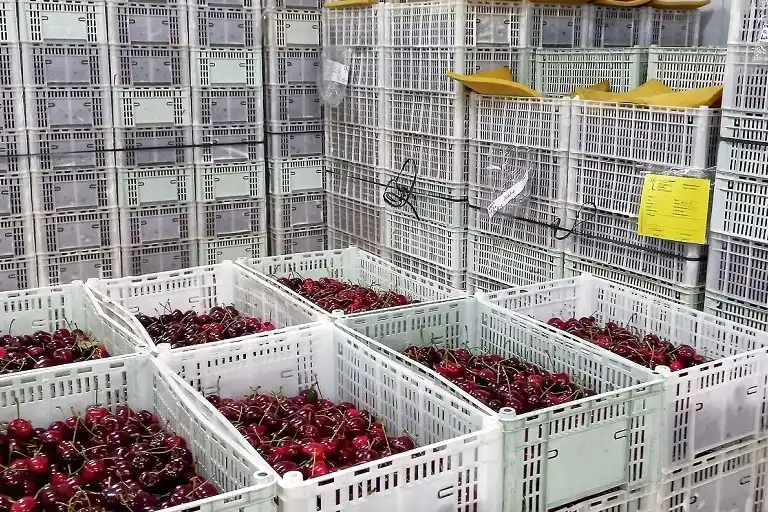
Image source: SL Fruit Service
Andrea Giovannini
University of Bologna (IT)
Cherry Times - Tutti i diritti riservati