July 9, 2026
Jesus Alonso - CTS Cherry Times
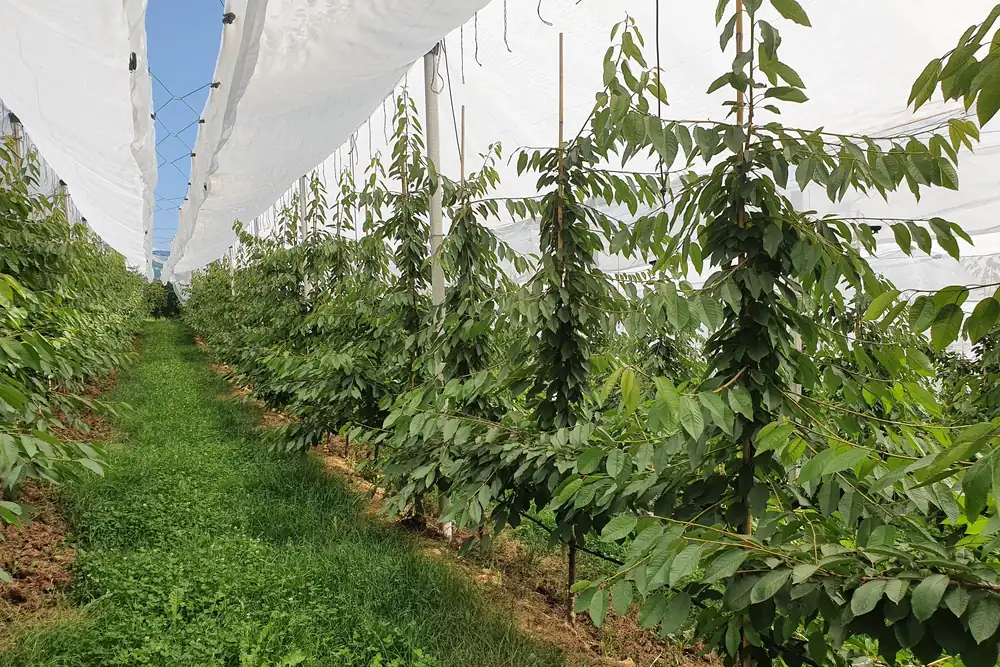 Source: Stefano Lugli
This article, written exclusively for Cherry Times readers by Jesús Alonso, a Spanish researcher and member of the magazine’s scientific committee, examines the physiological and agronomic factors that determine orchard establishment, fruit quality and production stability in sweet cherry (Prunus avium L.) cultivation systems intended for fresh-market cherry production.
The central thesis is that marketable production does not depend on a single cultural practice, but rather on an integrated sequence that begins in the previous production cycle with floral induction and flower bud formation; continues through the fulfillment of winter chilling requirements, spring heat accumulation, flowering, pollination and fruit set; and culminates in the stages of fruit growth, ripening and harvest.
The article, divided into two parts, integrates several aspects:
In the first part, published last Tuesday, the choice of production area, cultivar and rootstock; dormancy; frost sensitivity; and reproductive dynamics were examined.
This second part addresses cultural technique topics such as irrigation management, crop load, canopy management and mineral nutrition; the phenomenon of rain-induced cracking; protected cultivation systems; and adaptation to climate change.
The approach adopted relates physiological mechanisms to agronomic evidence in order to support context-specific technical decisions, avoiding the transformation of thermal models, critical thresholds or cultural interventions into universal prescriptions.
Preharvest factors for optimal sweet cherry production
Fruit development: water, crop load, canopy, and nutrition
Sweet cherry fruit growth is commonly described as a double-sigmoid pattern organized into three physiological phases.
Phase I is dominated by cell division and initial mesocarp growth; during Phase II, external growth slows while embryo development and endocarp hardening proceed; and in Phase III, or the fruit-enlargement phase, intense cell expansion resumes, associated with water influx, sugar accumulation, color development, and commercial ripening.
This sequence explains why irrigation, crop load, canopy light environment, and nutrition do not exert the same effect across phases: an intervention that is beneficial in one window may be irrelevant or even counterproductive in another (Wani et al., 2014; Vignati et al., 2024).
During the enlargement phase, fruit vascular dynamics undergo a critical shift.
[...]
Would you like to learn more about this topic? The full article is reserved for subscribers to the Cherry Times newsletter! Subscribe free of charge to receive every new exclusive in-depth article directly in your inbox and stay constantly updated with quality insights and analysis. Do not miss this unique opportunity!
Subscribe free of charge to the Cherry Times newsletter
Cherry Times - All rights reserved