In recent years, interest in functional foods has increased, driven by the need to identify natural matrices rich in bioactive compounds.
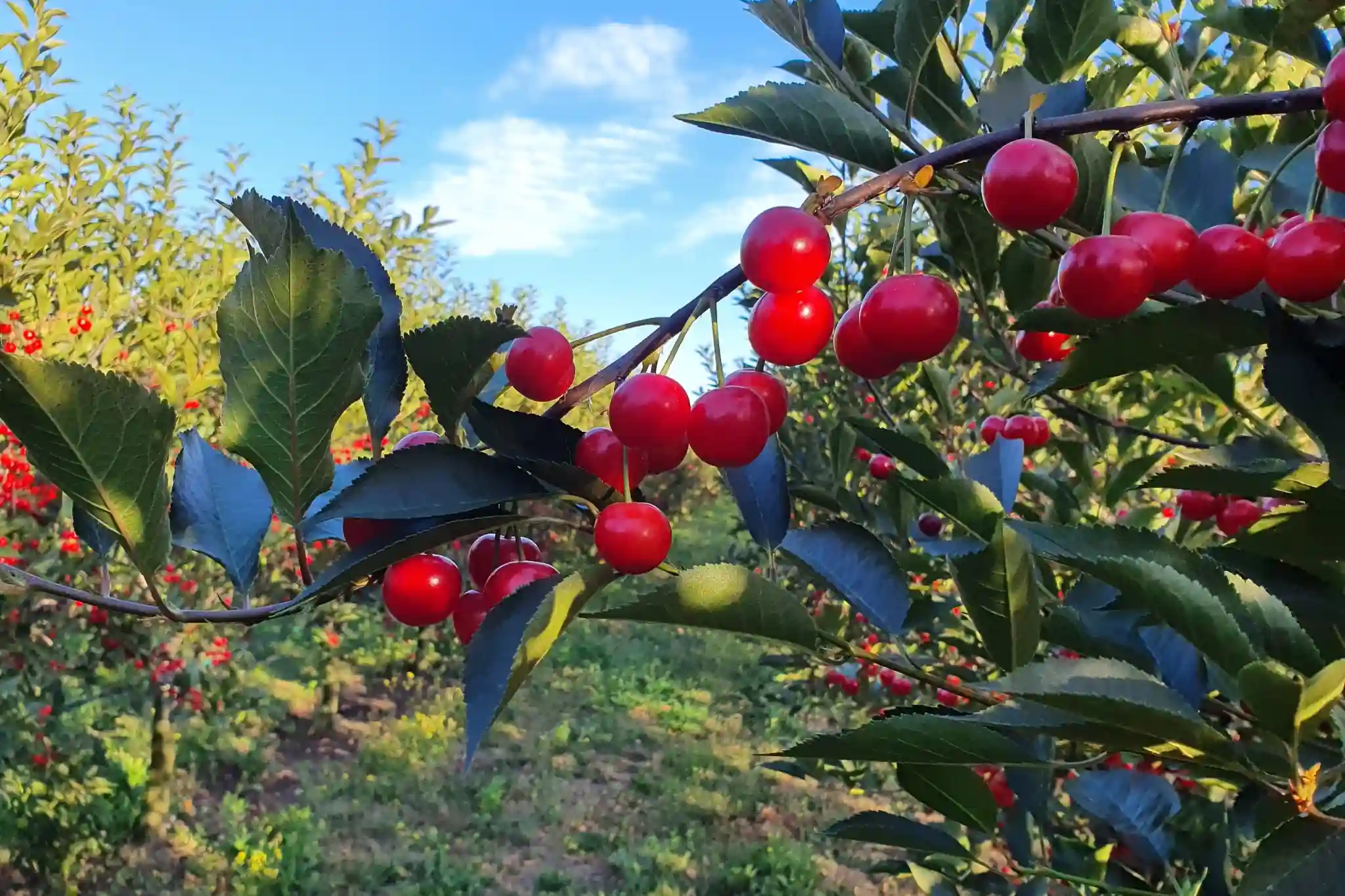
In this context, tart cherry (Prunus cerasus L.) represents a highly promising source due to its high concentration of polyphenols, particularly anthocyanins, flavonoids, and phenolic acids.
A recent U.S. review, published in 2025, analyzed the scientific literature from 2018 to 2025, excluding studies related to athletic performance and focusing on broader nutraceutical and therapeutic applications, highlighting both interesting findings and important research gaps.
Polyphenolic composition and variability
The bioactive compounds found in tart cherry depend strongly on the specific polyphenolic fraction present, and this composition varies considerably depending on cultivar, ripening stage, pedoclimatic conditions, and agronomic practices.
Polyphenols are generally classified into non-flavonoids (such as hydroxycinnamic and hydroxybenzoic acids) and flavonoids.
Among the former, hydroxycinnamic acids appear to be particularly abundant: some studies suggest they may account for up to 54% of total polyphenols in frozen products, whereas others report much lower percentages (8–15%).
This discrepancy may be related to differences in the analytical methods used.
Key compounds and processing stability
Among the most relevant compounds, chlorogenic and neochlorogenic acids are frequently reported, along with the presence of resveratrol and phlorizin.
Among flavonoids, anthocyanins represent the most well-known and technologically relevant fraction for the supply chain, also due to their role in the intense red coloration.
The main anthocyanin identified is cyanidin-3-glucosylrutinoside, followed by cyanidin-3-rutinoside and other derivatives.
However, a crucial technical issue concerns stability: industrial processing (such as concentration and drying) can reduce anthocyanin content by 67–78% compared with raw frozen fruit.
This information is particularly relevant for those developing functional ingredients, as it indicates that processing choices and storage conditions directly affect the nutraceutical characteristics of the final product.
Health effects and biological mechanisms
The bioactive components in sour cherries have shown several beneficial effects, including antioxidant and anti-inflammatory activity, antihypertensive and cardioprotective effects, modulation of uric acid metabolism (with implications for gout), potential neuroprotective and antimicrobial properties, improved sleep quality, and possible anti-aging and anticancer roles.
The most consistent evidence appears to relate to oxidative stress and inflammation: in vitro studies report reductions in reactive oxygen species (ROS) and modulation of key pathways (such as NF-κB and MAPK), while in vivo studies in animals and humans indicate improvements in oxidative biomarkers, reduced lipid oxidation, and decreased inflammatory markers (such as TNF-α and MCP-1).
The use of by-products such as stems, leaves, and pits is also of interest, as in some cases they have demonstrated antioxidant activity and cellular protection, offering promising opportunities for the valorization of agro-industrial waste.
Limitations and future directions
Despite its potential, the review highlights important limitations: many studies are short-term, involve small sample sizes, and use non-standardized dosages, making it difficult to define reliable protocols.
The most critical gap concerns bioavailability: although some metabolites have been detected in plasma and urine, detailed fecal analyses are still lacking, even though they are essential to understand actual absorption and interactions with the gut microbiota.
For example, anthocyanins may be relatively stable in the stomach but can degrade significantly during intestinal digestion, reducing the fraction that is effectively absorbable.
Therefore, without robust pharmacokinetic data, the relationship between ingested dose and health benefit remains only partially understood.
Conclusion and industrial implications
In conclusion, tart cherry stands out as a raw material of great interest for the development of functional foods and nutraceuticals due to its complex polyphenolic profile.
However, for real industrial and clinical application, long-term randomized studies, product standardization (especially regarding anthocyanin content), and a complete characterization of bioavailability are required.
These prerequisites are essential to establish tart cherry as a functional ingredient with scientifically proven health benefits.
Source: Jawad, M., Hillman, A. R., & Brannan, R. G. (2025). Tart cherry (Prunus cerasus L.): Polyphenols, bioactivity, and bioavailability beyond exercise. Food Bioscience, 107612. https://doi.org/10.1016/j.fbio.2025.107612
Image source: Stefano Lugli
Andrea Giovannini
PhD in Agricultural, Environmental and Food Science and Technology - Arboriculture and Fruitculture, University of Bologna, IT
Cherry Times - All rights reserved