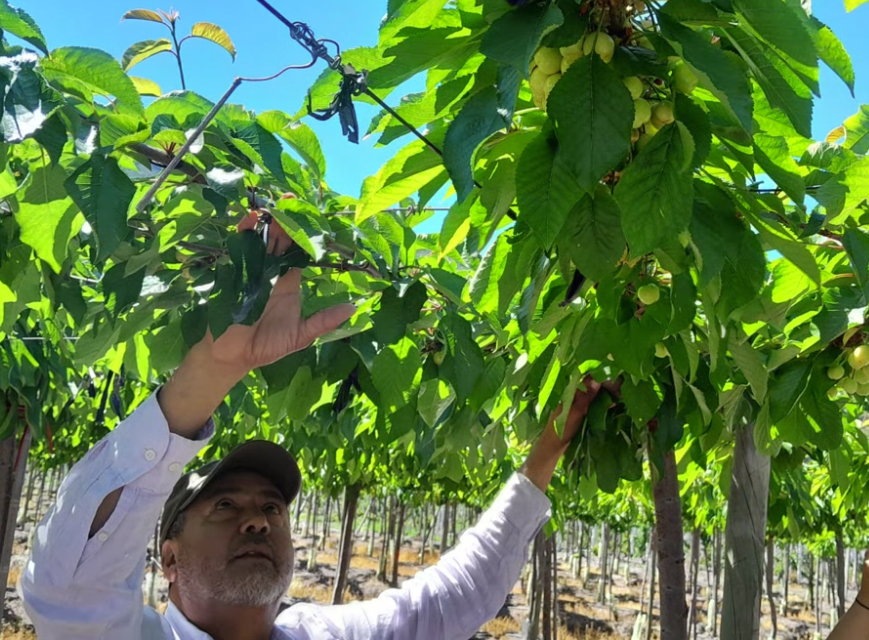
Gaining an in-depth understanding of the mechanisms behind “surface pitting” in cherries, a defect that significantly deteriorates fruit quality during cold storage, is the goal of a Fondecyt Regular research project awarded to Claudia Fuentealba, professor at the Faculty of Agronomic and Food Sciences.
The study aims to identify the physiological and structural factors that determine the resistance or susceptibility of different cherry varieties, addressing key aspects such as cellular water balance, membrane stability, and cell wall integrity.
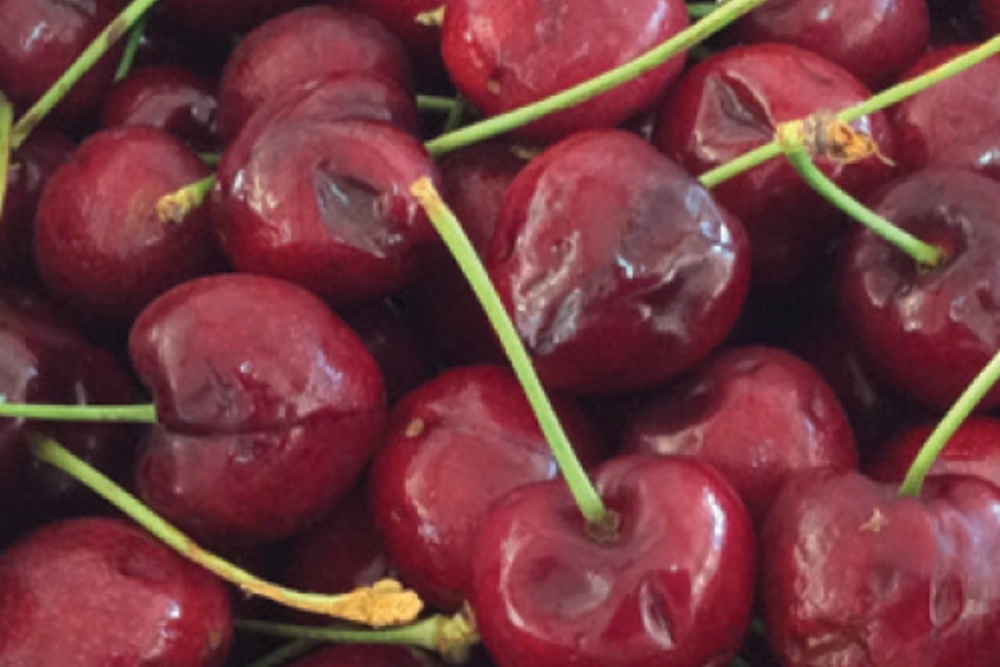
“It is a physiological disorder that appears as a depression on the surface of the skin. The defect forms as an indentation and deepens over time. This directly affects cherry quality, as consumers look for smooth, shiny, firm, and turgid fruit. Pitting therefore has a negative impact on price and on the perception of quality,” added the researcher, who is Director of the PhD Program in Agri-Food Sciences at PUCV.
Cherry cultivation
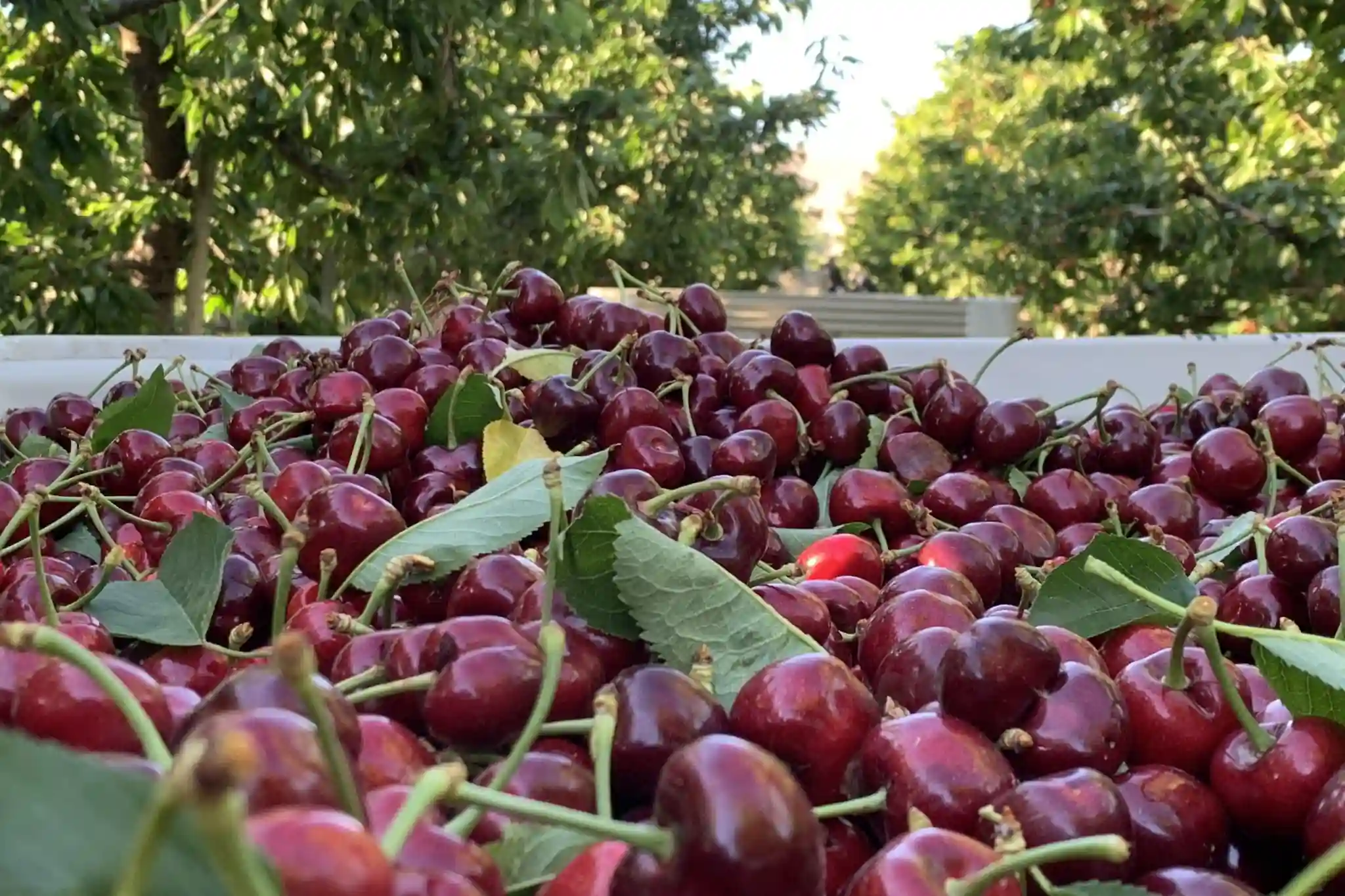
Cherry cultivation is currently the most important crop for the country’s fruit exports, generating revenues of more than 3.5 billion dollars per year, approximately 3.25 billion euros. However, surface pitting is one of the main quality problems, affecting up to 43% of production. This damage is mainly caused by impacts during handling and worsens under cold storage conditions, especially considering that much of the fruit is exported to distant markets such as China.
“From an economic standpoint, cherry is one of the most widely grown fruits in Chile. Around 90% of production is exported, and Chilean fruit has a brand identity associated with high quality: not only in nutritional terms, but also in terms of appearance, with large fruit free from defects. For this reason, even though the damage may seem minor at an individual level, its impact is significant when measured on a scale of tonnes,” Fuentealba emphasized.
The causes
Despite the economic impact of pitting in cherries, the causes of this phenomenon are still not fully understood, which has limited the development of effective solutions. Previous research conducted by Professor Fuentealba’s team has highlighted the existence of varietal differences in resistance to the damage, associated with defense mechanisms such as higher antioxidant activity and changes in cell wall composition. These elements suggest that each variety’s response to low temperatures is a determining factor.
In this regard, the PUCV professor stated that “the challenge is to investigate the causes in greater depth. We know what causes it, and we also know that some varieties are more resistant while others are more susceptible to this disorder.”
Project methodology
The project methodology involves the study of three cherry varieties widely grown in Chile, which will be subjected to different storage conditions and different stages of ripeness. To this end, a multidisciplinary approach will be adopted, integrating physical measurements, advanced chemical analyses, and molecular tools. The parameters evaluated will include firmness, color, chemical composition, internal cellular pressure, and changes in the fruit’s structural components.
It should be noted that the study is directly aligned with the objectives of the Institutional Strategic Development Plan 2023-2029 of the Pontificia Universidad Católica de Valparaíso, particularly in its emphasis on promoting frontier research and strengthening the generation of knowledge, creation, and innovation with impact.
The interdisciplinary nature of the study, together with its focus on solving concrete problems in the agro-export industry, helps position the university as a benchmark in the agri-food sector, connecting advanced science with real production needs.
Cristián Croce
Department of Strategic Communication, University of Valparaíso, Chile
Image source: Mundoagro
Cherry Times - All rights reserved