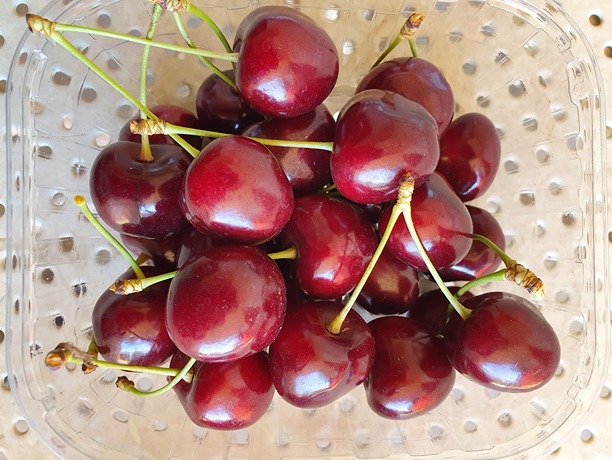
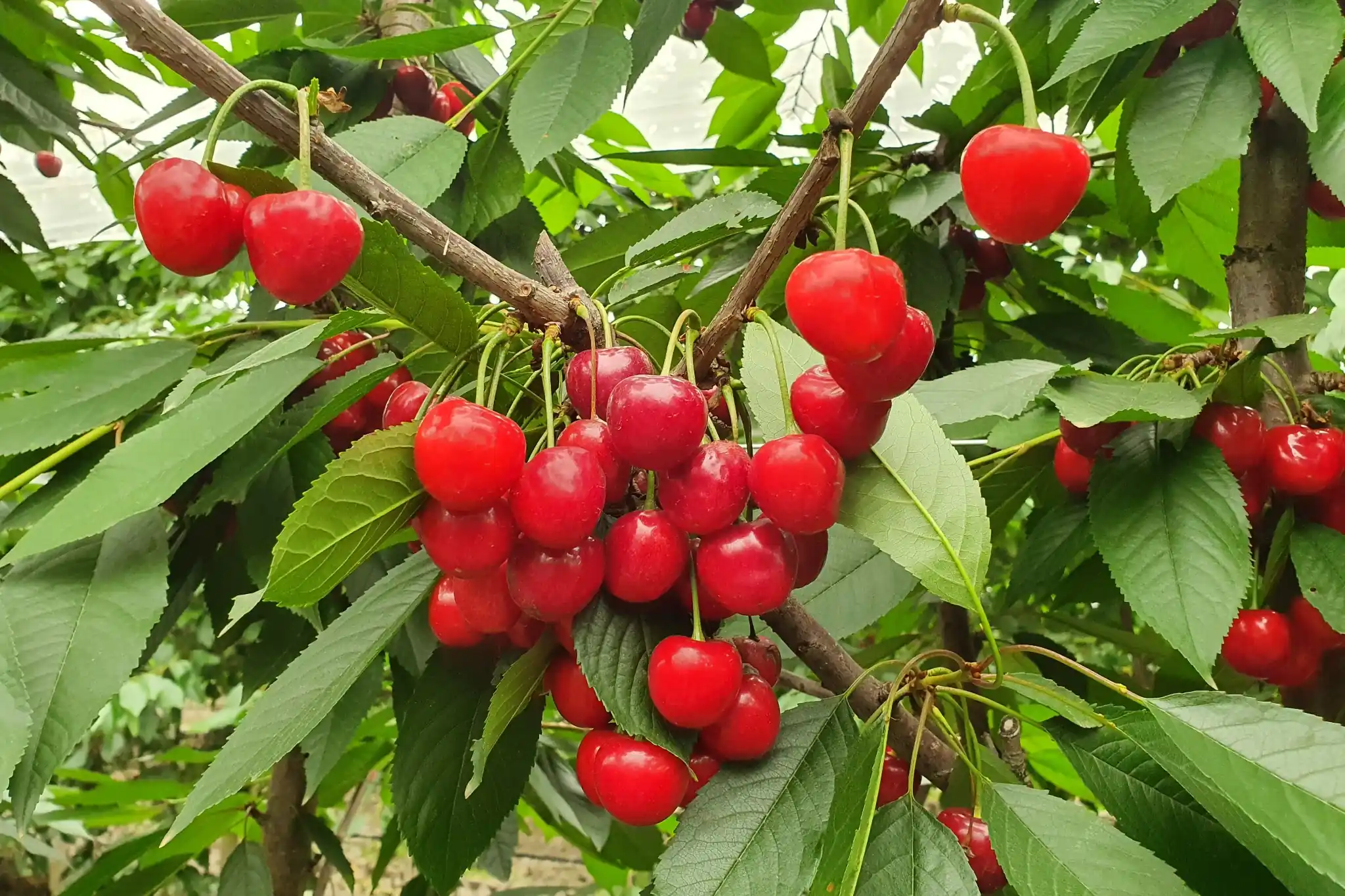
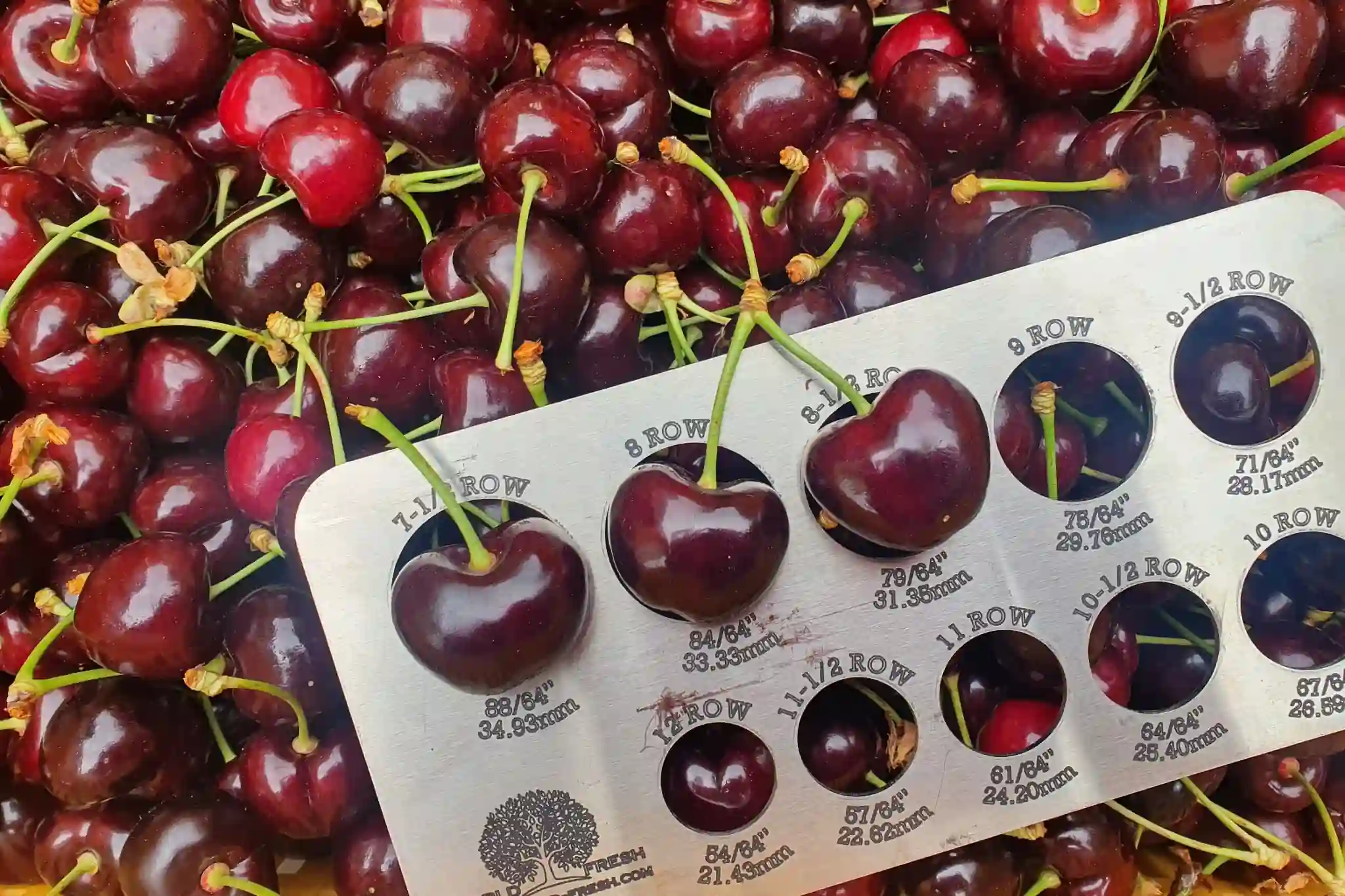
Sweet cherries are highly valued by the market for their organoleptic quality and nutritional value, but they are also among the most challenging fruits to manage in the postharvest period due to their thin skin, high respiration rate, and strong susceptibility to dehydration and fungal infections.
A recent study evaluated the effectiveness of two widely used postharvest management strategies that are rarely investigated together: a 4% calcium chloride (CaCl2) treatment and modified atmosphere packaging (MAP), applied individually or in combination, to maintain quality and biochemical stability of sweet cherries during cold storage.
The trial was carried out on the cultivar ‘0900 Ziraat’ grafted onto ‘MaxMa 14’, with fruits stored for 24 days at 0 °C and 90% relative humidity.
To assess quality retention during storage, key parameters were monitored, including weight loss, decay incidence, soluble solids content (SSC), titratable acidity, pH, and respiration rate, as well as organic acids, vitamin C, and major phenolic compounds.
The results showed
The results showed that the CaCl2+MAP combination was the most effective strategy in limiting quality deterioration.
Weight loss, which reached 7.14% in the control at the end of storage, was significantly reduced by the CaCl2+MAP treatment, limiting dehydration through reduced transpiration and slowed metabolic activity.
Respiration rate was also strongly reduced, with an overall decrease of 77% during the storage period, and the lowest values recorded in the CaCl2+MAP treatment, confirming the synergistic effect between reduced oxygen availability in the packaging and enhanced cell membrane stability induced by calcium.
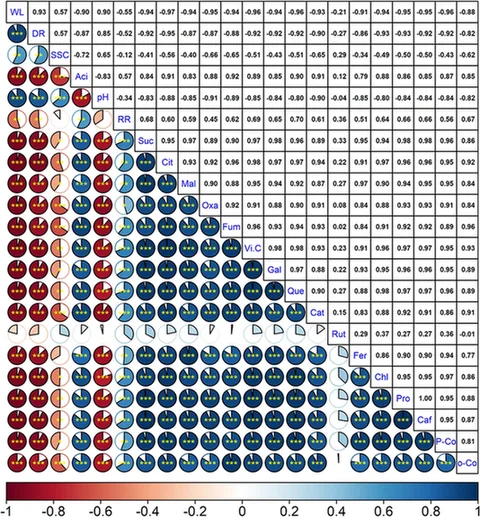 Image 1. Correlation between fruit biochemical properties and quality criteria. The color scale that disappears from dark to light shows the correlation values between − 1 and + 1. *,**, and *** indicates significance at p ≤ 0.05, p ≤ 0.01, and p ≤ 0.001, respectively. WL: weight loss, DR: decay, SSC: soluble solid contents, Aci: acidity, RR: respiration rate, Suc: succinic acid, Cit: citric acid, Mal: malic acid, Oxa: oxalic acid, Fum: fumaric acid, Vi.C: vitamin C, Gal: gallic acid, Que: quersetin, Cat: catechin, Rut: rutin, Fer: ferulic acid, Chl: chlorogenic acid, Pro: protocatechuic acid, Caf: caffeic acid, p-Co: p-coumaric acid, o-Co: o-coumaric acid. Source: Ayşen Melda Çolak et al., 2025.
From a quality perspective
From a quality perspective, the CaCl2+MAP combination allowed more stable titratable acidity levels to be maintained by limiting the consumption of organic acids during respiration, and it also reduced the increase in pH, an important parameter linked both to flavor and to susceptibility to microbial development.
The increase in sugars, often associated with water loss and progression of ripening, was also more limited in the combined CaCl2+MAP treatment, suggesting delayed senescence.
Bioactive compounds such as vitamin C and organic acids (malic, citric, succinic, and oxalic acids) showed a progressive decline in all treatments, but CaCl2+MAP was the most effective in limiting these losses, better preserving nutritional components.
A similar trend was
A similar trend was observed for phenolic compounds (gallic acid, quercetin, catechin, rutin, caffeic acid, and chlorogenic acid), which are essential for antioxidant capacity and nutraceutical value.
Phenolic degradation during storage was marked in the control, whereas the CaCl2+MAP combination ensured greater stability, likely due to reduced activity of oxidative enzymes under lower oxygen conditions and the structural reinforcement of tissues induced by calcium.
Source: Çolak, A. M., Çelik, K., Gündeşli, M. A., Gündoğdu, Ö., Küçüker, E., Berk, S. K., Aglar, E., & Gundogdu, M. (2025). Physiological effects of MAP and calcium chloride treatments on biochemical metabolites and quality stability by reducing respiration rate in sweet cherry fruit during storage. BMC Plant Biology, 25(1), 1-14. https://doi.org/10.1186/s12870-025-07454-1
Image source: Stefano Lugli
Andrea Giovannini
PhD in Agricultural, Environmental and Food Science and Technology - Arboriculture and Fruitculture, University of Bologna, IT
Cherry Times - All rights reserved