We are in the midst of the cherry processing season, and with it comes one of the most intense and demanding periods for our sector.
This is a time when production accelerates, schedules tighten, and operational risks increase.
In this context, a concept that we in the Department of Occupational Safety and Health have discussed endlessly tends to resurface far too often as “self-care.”
And here I want to be clear: taking care of yourself alone is not enough.
The problem with self-care
For years we’ve repeated the message of self-care almost like a mantra.
But when it is used in isolation, without a solid preventive system supporting it, it becomes an empty, individualistic and deeply unfair concept, bordering on negligence.
In many cases, the message is not “take care of yourself,” but “handle it on your own.”
When responsibility is placed entirely on the employee:
- The structural flaws of the system are made invisible.
- The lack of real training is normalized and replaced by brief, generic inductions.
- Workers are expected to manage risks for which they lack the tools, time, or authority.
- Self-care becomes a sort of moral shield to justify that “enough” has been done.
Taking care of oneself isn’t wrong, but it is insufficient and even risky if used as the central pillar of occupational health and safety management.
The cherry season
The cherry season is a perfect example.
Work increases in intensity, pressure, and complexity.
Workers face physical and organizational risks that cannot be solved simply by saying “pay more attention.”
At this time, what truly makes a difference is:
- Preventive planning, proactive and cross-functional.
- Interdepartmental coordination to avoid workloads incompatible with safety.
- Clear protocols that are actually applied.
- Competent, present supervision.
- Training that promotes critical thinking, not just paperwork compliance.
Dynamic prevention
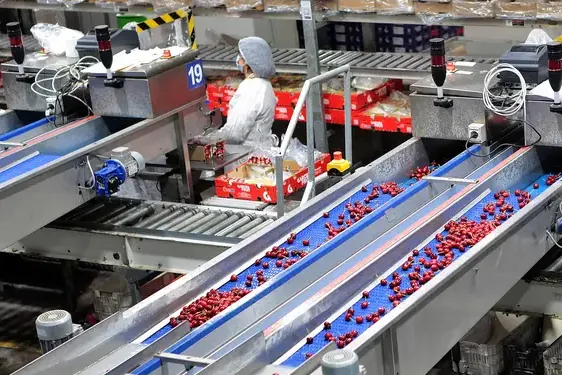
During cherry season, everything moves fast: decisions, processes, hands at work, shifting schedules.
And just as fruit doesn’t wait, prevention cannot be static either.
Safety is not a printed manual; it is a living system.
Every shift presents deviations that must be corrected immediately, snap decisions, emerging risks and evolving conditions.
The dynamics of the work require constant adaptability.
But correcting deviations does not mean improvising.
It means having clear criteria and a solid system that allows coherent action even under changing conditions.
Prevention and humanity
In this sense, cherry season and prevention are similar: both require rhythm, observation, timely response and understanding of how conditions change day by day.
However, there is a key difference:
Cherries are a product. Prevention protects people.
And this is where the true importance of preventive work lies.
While the fruit moves through processes, volumes and timelines, we work with decisions that directly impact the integrity, health and lives of those who make the season possible.
It’s not just about keeping operations flowing, but ensuring that everyone returns home safe and sound at the end of the day.
This is the line between production and efficiency, and prevention and humanity.
A new model
When we understand that prevention is dynamic and requires immediate adjustments and clear decisions in the field, we stop focusing on “take care of yourself” and move toward a model where:
- The organization cares.
- Leaders protect.
- Systems support.
- People participate, but are not left to carry the burden alone.
“I take care of myself, I take care of you, we take care of each other.”
Image source: Framlandgrab
Camilo Valdés
Corporate Risk Prevention Manager
Cherry Times - All rights reserved